• Fri frakt över 249 kr
  • •
  • Snabba leveranser
  • •
  • Billiga böcker
Kundservice

Du är på sajten för privatpersoner.

Företag, bibliotek eller offentlig verksamhet?

Du handlar på classic.bokus.com, där alla dina funktioner finns intakta.
Till classic.bokus.com
Bokus logotyp. Gå till startsidan.
  • Erbjudanden
  • Nyheter
  • Student
  • Topplistor
  • Barn & ungdom
  • Bokus Play
  • E-böcker
  • Pocketböcker
  • Spel & pussel

10% rabatt på allt med kod: NYSTART10 →

Sidfot

Mina sidor

    Hjälp

    • Kundservice
    • Vanliga frågor och svar
    • Frakt och leverans
    • Retur vid ångerrätt
    • Reklamera vara
    • Betalning
    • Köpvillkor
    • Allmänna villkor
    • Information om webbplatsens tillgänglighet

    Om Bokus

    • Om oss
    • Pressrum
    • För studenter
    • För företag
    • För bibliotek och offentlig verksamhet
    • För leverantörer
    • Hållbarhet

    Populärt

    • Aktuella erbjudanden
    • Presentkort
    • Studentlitteratur
    • Nya böcker
    • Topplistor
    • Signerade böcker
    • Engelska böcker

    Inspiration

    • Boktips
    • BookTok
    • Populära bokserier
    • Barnbokskaraktärer
    • Populära författare
    Logotyp för Bokus
    Följ oss på Facebook (extern länk)Följ oss på Instagram (extern länk)Följ oss på YouTube (extern länk)Följ oss på TikTok (extern länk)
    bokus @ CookiesAnpassa cookiesIntegritetspolicyKöpvillkor
    Till Citymail hemsida (extern länk)Till Budbee hemsida (extern länk)Till Postnord hemsida (extern länk)Till Schenker hemsida (extern länk)Till Early Bird hemsida (extern länk)Till Walleys hemsida (extern länk)
    1. Samhälle och politik
    2. Samhälle och kultur
    3. Kultur och medier
    4. Kulturvetenskap

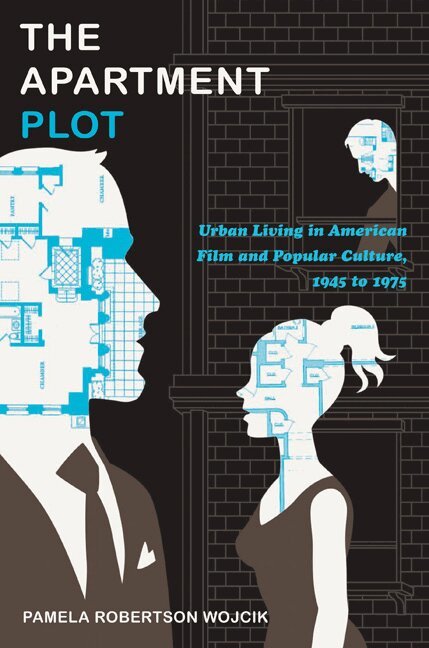
    Apartment Plot

    Urban Living in American Film and Popular Culture, 1945 to 1975

    AvPamela Robertson Wojcik

    Häftad, Engelska, 2010

    376 kr

    Beställningsvara. Skickas inom 5-8 vardagar. Fri frakt över 249 kr.

    Beskrivning

    Rethinking the significance of films including Pillow Talk, Rear Window, and The Seven Year Itch, Pamela Robertson Wojcik examines the popularity of the “apartment plot,” her term for stories in which the apartment functions as a central narrative device. From the baby boom years into the 1970s, the apartment plot was not only key to films; it also surfaced in TV shows, Broadway plays, literature, and comic strips, from The Honeymooners and The Mary Tyler Moore Show to Subways are for Sleeping and Apartment 3-G. By identifying the apartment plot as a film genre, Wojcik reveals affinities between movies generally viewed as belonging to such distinct genres as film noir, romantic comedy, and melodrama. She analyzes the apartment plot as part of a mid-twentieth-century urban discourse, showing how it offers a vision of home centered on values of community, visibility, contact, mobility, impermanence, and porousness that contrasts with views of home as private, stable, and family-based. Wojcik suggests that the apartment plot presents a philosophy of urbanism related to the theories of Jane Jacobs and Henri Lefebvre. Urban apartments were important spaces for negotiating gender, sexuality, race, and class in mid-twentieth-century America.

    Produktinformation

    • Utgivningsdatum:2010-11-11
    • Mått:159 x 236 x 24 mm
    • Vikt:603 g
    • Format:Häftad
    • Språk:Engelska
    • Antal sidor:342
    • Förlag:Duke University Press
    • ISBN:9780822347736

    Utforska kategorier

    • Kulturvetenskap inom Samhälle och politik
    • Film inom Kultur

    Mer om författaren

    Pamela Robertson Wojcik is Associate Professor in the Department of Film, Television, and Theater and Director of the Gender Studies Program at the University of Notre Dame. She is the author of Guilty Pleasures: Feminist Camp from Mae West to Madonna, also published by Duke University Press, and the editor of Movie Acting: The Film Reader.

    Recensioner i media

    “Exhaustively researched and brimming with insightful observations, The Apartment Plot is a gift for those intent on studying the architecture that amps the plotline.” - Michael Dalton (M/C Reviews) “Pamela Robertson Wojcik's intriguing book takes an original approach to Hollywood cinema. Her subject is the apartment as setting, which, in films of the post-war decades, she claims, became a space where ‘a philosophy of urbanism’ could be dramatized ‘at a time when the meaning and status of urban living were undergoing a sea change.’ Wojcik argues persuasively that the ‘apartment plot’ imbues films with recurrent themes that transcend genre and director.” - Alexander Jacoby (TLS) “With her volume Wojcik deftly connects the apartment plot to social history. She also offers dozens of close readings of films-readings that often contradict (or at the very least complicate) conventional wisdom about those films. . . . Wojcik offers an almost encyclopedic account of apartment-centered films, such that any postwar film and media scholar will find Wojcik’s careful analysis useful.” - Kathy M. Newman (American Quarterly) “Wojcik . . .succeeds in demonstrating the value of focusing on the apartment, and mise-en-scÈne more generally, as a heuristic device. Doing so enables her to explore continuities between an otherwise diverse body of films, revealing how cinema both represents and participates in the production of discourses about urban architectures and experiences. As such, the volume makes a valuable contribution to our understandings of the relations among cinematic representations, architecture, and everyday life.” - Hilary Radner (Journal of American History) “Wojcik’s insightful analysis, supported by thorough research, contrasts privacy and community, sight and sound, urban and suburban, married and single life, white and African American neighborhoods, and upper- and lower-class milieus. . . . Recommended. Upper-division undergraduates and above.” - S. R. Kozloff (Choice) “Working with an admirably wide range of additional materials, including periodical and advice literature, advertising, fiction, television, music, building blueprints, and comics . . . Wojcik balances her many disciplines carefully. The book’s overall argument for the ‘apartment story’ as a distinct and important genre, and Wojcik’s embedding of her case studies in migration trends, cultural and social concerns, and shifting ideas about the city and its alternatives is a fresh and convincing addition to studies of postwar media.” - Miriam G. Reumann (Sixties)

    Innehållsförteckning

    • List of Illustrations  viiPreface  ixIntroduction: A Philosophy of Urbanism  11. A Primer in Urbanism: Rear Window's Archetypal Apartment Plot  472. "We Like Our Apartment": The Playboy Indoors  883. The Great Reprieve: Modernity, Femininity, and the Apartment  1394. The Suburbs in the City: The Housewife and the Apartment  1805. Movin' On Up: The African American Apartment  220Epilogue: A New Philosophy for a New Century  267Notes  279Bibliography  289Index  303