• Fri frakt över 249 kr
  • •
  • Snabba leveranser
  • •
  • Billiga böcker
Kundservice

Du är på sajten för privatpersoner.

Företag, bibliotek eller offentlig verksamhet?

Du handlar på classic.bokus.com, där alla dina funktioner finns intakta.
Till classic.bokus.com
Bokus logotyp. Gå till startsidan.
  • Erbjudanden
  • Nyheter
  • Student
  • Topplistor
  • Barn & ungdom
  • Bokus Play
  • E-böcker
  • Pocketböcker
  • Spel & pussel

10% rabatt på allt med kod NYSTART10 →

Sidfot

Mina sidor

    Hjälp

    • Kundservice
    • Vanliga frågor och svar
    • Frakt och leverans
    • Retur vid ångerrätt
    • Reklamera vara
    • Betalning
    • Köpvillkor
    • Allmänna villkor
    • Information om webbplatsens tillgänglighet

    Om Bokus

    • Om oss
    • Pressrum
    • För studenter
    • För företag
    • För bibliotek och offentlig verksamhet
    • För leverantörer
    • Hållbarhet

    Populärt

    • Aktuella erbjudanden
    • Presentkort
    • Studentlitteratur
    • Nya böcker
    • Topplistor
    • Signerade böcker
    • Engelska böcker

    Inspiration

    • Boktips
    • BookTok
    • Populära bokserier
    • Barnbokskaraktärer
    • Populära författare
    Logotyp för Bokus
    Följ oss på Facebook (extern länk)Följ oss på Instagram (extern länk)Följ oss på YouTube (extern länk)Följ oss på TikTok (extern länk)
    bokus @ CookiesAnpassa cookiesIntegritetspolicyKöpvillkor
    Till Citymail hemsida (extern länk)Till Budbee hemsida (extern länk)Till Postnord hemsida (extern länk)Till Schenker hemsida (extern länk)Till Early Bird hemsida (extern länk)Till Walleys hemsida (extern länk)
    1. Samhälle och politik
    2. Sociologi och antropologi
    3. Antropologi

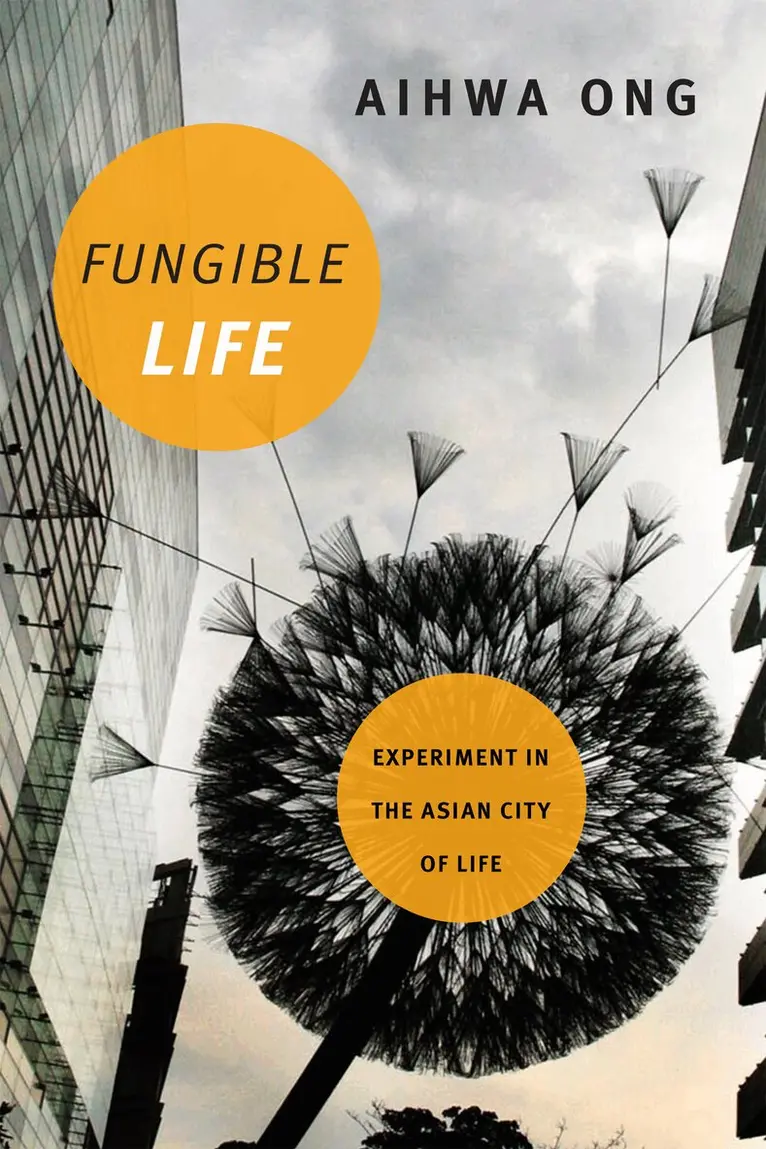
    Fungible Life

    Experiment in the Asian City of Life

    AvAihwa Ong

    Häftad, Engelska, 2016

    388 kr

    Beställningsvara. Skickas inom 5-8 vardagar. Fri frakt över 249 kr.

    Fler format och utgåvor

    Inbunden

    1 586 kr

    E-bok

    568 kr

    Beskrivning

    In Fungible Life Aihwa Ong explores the dynamic world of cutting-edge bioscience research, offering critical insights into the complex ways Asian bioscientific worlds and cosmopolitan sciences are entangled in a tropical environment brimming with the threat of emergent diseases. At biomedical centers in Singapore and China scientists map genetic variants, disease risks, and biomarkers, mobilizing ethnicized "Asian" bodies and health data for genomic research. Their differentiation between Chinese, Indian, and Malay DNA makes fungible Singapore's ethnic-stratified databases that come to "represent" majority populations in Asia. By deploying genomic science as a public good, researchers reconfigure the relationships between objects, peoples, and spaces, thus rendering "Asia" itself as a shifting entity. In Ong's analysis, Asia emerges as a richly layered mode of entanglements, where the population's genetic pasts, anxieties and hopes, shared genetic weaknesses, and embattled genetic futures intersect. Furthermore, her illustration of the contrasting methods and goals of the Biopolis biomedical center in Singapore and BGI Genomics in China raises questions about the future direction of cosmopolitan science in Asia and beyond.

    Produktinformation

    • Utgivningsdatum:2016-10-28
    • Mått:152 x 229 x 17 mm
    • Vikt:431 g
    • Format:Häftad
    • Språk:Engelska
    • Antal sidor:312
    • Förlag:Duke University Press
    • ISBN:9780822362647

    Utforska kategorier

    • Antropologi inom Samhälle och politik
    • Asiens historia inom Historia och arkeologi
    • Etiska frågor och debatter inom Samhälle och politik

    Mer om författaren

    Aihwa Ong is Robert H. Lowie Distinguished Chair in Anthropology at the University of California, Berkeley, the author of Neoliberalism as Exception: Mutations in Citizenship and Sovereignty and Flexible Citizenship: The Cultural Logics of Transnationality, and the coeditor of Asian Biotech: Ethics and Communities of Fate, all also published by Duke University Press.

    Recensioner i media

    "Anyone interested in cosmopolitan flows of knowledge and risk will find this book of value, as the phenomena that it describes and the methodologies that Ong uses seem to me to be readily transferable. .  . .  I particularly enjoy the way Ong fits the situated nature of her own authorship, including her Asian background, her family history of cancer and so on, seamlessly into her account. . . . [A] beautiful and engaging piece of writing and an important contribution to a wide spectrum of knowledge."- Flora Samuel (Times Higher Education) "Embracing a new frontier, Ong’s latest work tackles our fear of the unknown in genomic research, concerns about multiple levels of research ethics, and our curiosity about genomic research’s implications for Chinese and Asian identity, which in turn has implications for human identity as a whole. This book on biomedical research is suitable for graduate students and scholars interested in the production of knowledge, science and technology studies, medical anthropology and sociology, ethnic studies, public health, and broadly Asian Studies."- Fang Xu (New Books Asia) "This book is an essential contribution to a comparative anthropology of biosentinels through a refined and accessible ethnography of two biotech centers in Singapore and Shenzhen, showing how a future is taking shape in which Asia will play a prominent role." - Frederic Keck (Medical Anthropology Quarterly) "Ong's book is a deep dive in the complex role of the state, universities, firms, research stars, and knowledge about genetics in shaping the development of Singapore, in particular, as a key space in the development of scientific knowledge. After reading it you can better understand why universities like Duke and Imperial College seek (and need) to have a formal institutional presence in Singapore, and in association with key national partner universities like NUS and NTU. The Ong book, thus, provides insights on the geographical-, historical-, and sectoral -specific developments that these universities are currently navigating." - Kris Olds (Inside Higher Ed) “Fungible Life is an important addition to the growing literature in area-specific science studies, and an important intervention in the anthropology of science scholarship on racialised science. . . . Well worth the investment for anyone interested in how race, ethnicity and science are made in Asia today.” - Katherine A. Mason (The Asia Pacific Journal of Anthropology) “Ong skillfully provides an accessible and lucid account of the intersection of ethnicity, biopolitics and uncertainties in Asia’s bioscientific world. Fungible Life is a valuable addition to fields such as the anthropology of Asia, medical anthropology, and science and technology studies. It is also highly accessible for readers of various levels.” - Yifeng Cai (Social Anthropology) "The productive uncertainties and ethnic heuristics that Aihwa Ong examines in her study of Singapore’s Biopolis enrich our understanding of ethnicity in postgenomic Asia. These are the major contributions of Fungible Life." - Wen-Ching Sung (American Ethnologist)

    Innehållsförteckning

    • Prologue: Enigmatic Variations  ixAcknowledgments  xxiiiIntroduction: Inventing a City of Life  1Part I. Risks1. Where the Wild Genes Are  292. An Atlas of Asian Diseases  513. Smoldering Fire  73Part II. Uncertainties4. The Productive Uncertainty of Bioethics  935. Virtue and Expatriate Scientists  1136. Perturbing Life  136Part III. Known Unknowns7. A Single Wave  1578. "Viruses Don't Carry Passports"  1749. The "Athlete Gene" in China's Future  197Epilogue: A DNA Bridge and an Octopus's Garden  223Notes  239Bibliography  257Index  271