• Fri frakt över 249 kr
  • •
  • Snabba leveranser
  • •
  • Billiga böcker
Kundservice

Du är på sajten för privatpersoner.

Företag, bibliotek eller offentlig verksamhet?

Du handlar på classic.bokus.com, där alla dina funktioner finns intakta.
Till classic.bokus.com
Bokus logotyp. Gå till startsidan.
  • Erbjudanden
  • Nyheter
  • Student
  • Topplistor
  • Barn & ungdom
  • Bokus Play
  • E-böcker
  • Pocketböcker
  • Spel & pussel

10% rabatt på allt med kod: NYSTART10 →

Sidfot

Mina sidor

    Hjälp

    • Kundservice
    • Vanliga frågor och svar
    • Frakt och leverans
    • Retur vid ångerrätt
    • Reklamera vara
    • Betalning
    • Köpvillkor
    • Allmänna villkor
    • Information om webbplatsens tillgänglighet

    Om Bokus

    • Om oss
    • Pressrum
    • För studenter
    • För företag
    • För bibliotek och offentlig verksamhet
    • För leverantörer
    • Hållbarhet

    Populärt

    • Aktuella erbjudanden
    • Presentkort
    • Studentlitteratur
    • Nya böcker
    • Topplistor
    • Signerade böcker
    • Engelska böcker

    Inspiration

    • Boktips
    • BookTok
    • Populära bokserier
    • Barnbokskaraktärer
    • Populära författare
    Logotyp för Bokus
    Följ oss på Facebook (extern länk)Följ oss på Instagram (extern länk)Följ oss på YouTube (extern länk)Följ oss på TikTok (extern länk)
    bokus @ CookiesAnpassa cookiesIntegritetspolicyKöpvillkor
    Till Citymail hemsida (extern länk)Till Budbee hemsida (extern länk)Till Postnord hemsida (extern länk)Till Schenker hemsida (extern länk)Till Early Bird hemsida (extern länk)Till Walleys hemsida (extern länk)
    1. Samhälle och politik
    2. Sociologi och antropologi
    3. Antropologi

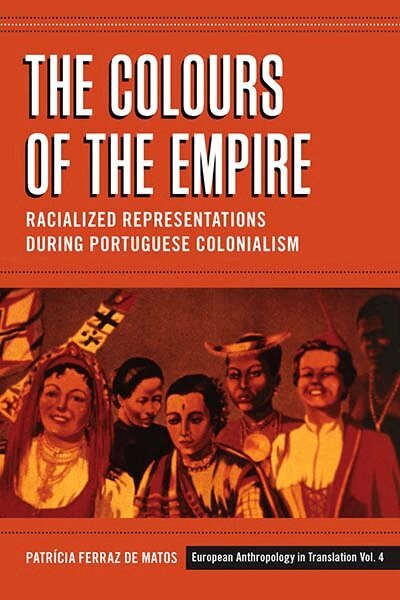
    Colours of the Empire

    Racialized Representations during Portuguese Colonialism

    AvPatrícia Ferraz de Matos

    Inbunden, Engelska, 2013

    Del i serien European Anthropology in Translation

    1 916 kr

    Beställningsvara. Skickas inom 5-8 vardagar. Fri frakt över 249 kr.

    Fler format och utgåvor

    E-bok

    325 kr

    Beskrivning

    The Portuguese Colonial Empire established its base in Africa in the fifteenth century and would not be dissolved until 1975. This book investigates how the different populations under Portuguese rule were represented within the context of the Colonial Empire by examining the relationship between these representations and the meanings attached to the notion of ‘race’. Colour, for example, an apparently objective criterion of classification, became a synonym or near-synonym for ‘race’, a more abstract notion for which attempts were made to establish scientific credibility. Through her analysis of government documents, colonial propaganda materials and interviews, the author employs an anthropological perspective to examine how the existence of racist theories, originating in the eighteenth and nineteenth centuries, went on to inform the policy of the Estado Novo (Second Republic, 1933–1974) and the production of academic literature on ‘race’ in Portugal. This study provides insight into the relationship between the racist formulations disseminated in Portugal and the racist theories produced from the eighteenth century onward in Europe and beyond.

    Produktinformation

    • Utgivningsdatum:2013-02-01
    • Mått:152 x 229 x 21 mm
    • Vikt:576 g
    • Format:Inbunden
    • Språk:Engelska
    • Serie:European Anthropology in Translation
    • Antal sidor:308
    • Förlag:Berghahn Books
    • ISBN:9780857457622

    Utforska kategorier

    • Antropologi inom Samhälle och politik
    • Europas historia inom Historia och arkeologi
    • Slaveri inom Historia och arkeologi

    Mer om författaren

    Patrícia Ferraz de Matos is an anthropologist whose work focuses on the history of Portuguese anthropology and Portuguese colonialism. She received the Victor de Sá Prize of Contemporary History 2005 from the Cultural Council of the University of Minho, Portugal, when this work was first published in Portuguese. Her doctoral thesis was devoted to analyzing the work of the Portuguese anthropologist Mendes Correia and the production of the Anthropology School of Porto. At present she is a post doctoral researcher in the Institute of Social Sciences at the University of Lisbon where she works on the international networks underlying the forging of scientific knowledge.

    Recensioner i media

    “The translation of this work from Portuguese to English is an important contribution to the study of national traditions in anthropology, frequently overlooked by scholarly research that tends to focus more on the English, American, and French cases.” · Journal of Royal Anthropological Institute“…makes a contribution to the growing weight and relevance of the Portuguese archive to colonial and imperial studies. It covers particularly the 1930s and 1940s as apogee decades of dictator António de Oliveira Salazar's fascist type regime, the longest of its kind in Europe (1926–1974).” · American Anthropologist“…a unique volume that traces discourse and representation on ‘race’ and racism within Portugal and the ‘overseas territories’. An exemplar of the new vigour with which the Portuguese academy has developed over the last decade… this is an important book on the history of the concept of ‘race’ in Portugal and the uses made of it with respect to concepts of the nation and for the political and economic rationales of the Salazar state.” · Journal of Iberian and Latin American Studies“(…) a most worthy volume, that Portuguese and non-Portuguese scholars alike with an interest in issues of race and representation will appreciate.” · Journal of Tourism and Cultural Change“[This book] offers an impressive inventory of colonial movies, exhibitions, speeches and writings that will be of great use. Readers interested in the history of colonial ideas and the role of anthropological knowledge in the colonial enterprise will find in this work a complete, well-documented case.” · Social Anthropology/Anthropologie sociale

    Innehållsförteckning

    • Tables and illustrationsAcknowledgementsAcronyms and abbreviationsIntroductionChapter 1. Origins of a prejudice:the roots of racial discriminationThe discovery of human variety:early formulationsThe emergence of ‘modern’ racismRacialism under attackChapter 2. Discourse, images, knowledge:the place of the colonies and their populations in the Portuguese Colonial EmpireThe formation of Portuguese colonialism and ‘colonial knowledge’The Colonial Act and the ‘creation’ of the IndígenaColonial propaganda:‘marketing the empire’Colonial representations in primary and secondary school readersCinema and colonialism in action:moving pictures on colonial themes (1928-53)Recurrent images and prejudicesThe production of ‘anthropological knowledge’ of the coloniesRacial purity, miscegenation and the appropriation of mythsChapter 3. Exhibiting the empire, imagining the nation:representations of the colonies and the overseas Portuguese in the great exhibitionsThe age of the great exhibitionsRepresentations of the Portuguese colonies, 1924-31A ‘Guinean village’ at the Lisbon Industrial Exhibition (1932)The Portuguese Colonial Exhibition of 1934:concept and objectivesRepresentations of the Portuguese colonies, 1934-39The Exhibition of the Portuguese World (1940):concept and objectivesColonial representations in Portugal dos PequenitosThe status of the colonized populations at the exhibitions: the exotic vs. the familiarConclusionsAppendix I: FilmAppendix II: Texts from the padrões of Portugal dos PequenitosBibliography