• Fri frakt över 249 kr
  • •
  • Snabba leveranser
  • •
  • Billiga böcker
Kundservice

Du är på sajten för privatpersoner.

Företag, bibliotek eller offentlig verksamhet?

Du handlar på classic.bokus.com, där alla dina funktioner finns intakta.
Till classic.bokus.com
Bokus logotyp. Gå till startsidan.
  • Erbjudanden
  • Nyheter
  • Student
  • Topplistor
  • Barn & ungdom
  • Bokus Play
  • E-böcker
  • Pocketböcker
  • Spel & pussel

10% rabatt på allt med kod: NYSTART10 →

Sidfot

Mina sidor

    Hjälp

    • Kundservice
    • Vanliga frågor och svar
    • Frakt och leverans
    • Retur vid ångerrätt
    • Reklamera vara
    • Betalning
    • Köpvillkor
    • Allmänna villkor
    • Information om webbplatsens tillgänglighet

    Om Bokus

    • Om oss
    • Pressrum
    • För studenter
    • För företag
    • För bibliotek och offentlig verksamhet
    • För leverantörer
    • Hållbarhet

    Populärt

    • Aktuella erbjudanden
    • Presentkort
    • Studentlitteratur
    • Nya böcker
    • Topplistor
    • Signerade böcker
    • Engelska böcker

    Inspiration

    • Boktips
    • BookTok
    • Populära bokserier
    • Barnbokskaraktärer
    • Populära författare
    Logotyp för Bokus
    Följ oss på Facebook (extern länk)Följ oss på Instagram (extern länk)Följ oss på YouTube (extern länk)Följ oss på TikTok (extern länk)
    bokus @ CookiesAnpassa cookiesIntegritetspolicyKöpvillkor
    Till Citymail hemsida (extern länk)Till Budbee hemsida (extern länk)Till Postnord hemsida (extern länk)Till Schenker hemsida (extern länk)Till Early Bird hemsida (extern länk)Till Walleys hemsida (extern länk)
    1. Historia och arkeologi
    2. Historia
    3. Historia: särskilda händelser och ämnen
    4. Socialhistoria och kulturhistoria

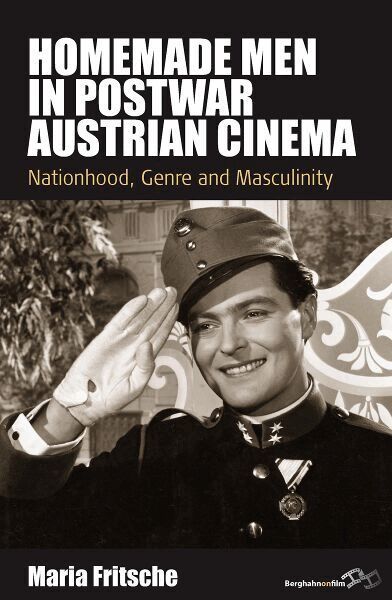
    Homemade Men in Postwar Austrian Cinema

    Nationhood, Genre and Masculinity

    AvMaria Fritsche

    Inbunden, Engelska, 2013

    Del i serien Film Europa

    1 916 kr

    Beställningsvara. Skickas inom 5-8 vardagar. Fri frakt över 249 kr.

    Fler format och utgåvor

    E-bok

    325 kr

    Beskrivning

    Despite the massive influx of Hollywood movies and films from other European countries after World War II, Austrian film continued to be hugely popular with Austrian and German audiences. By examining the decisive role that popular cinema played in the turbulent post-war era, this book provides unique insights into the reconstruction of a disrupted society. Through detailed analysis of the stylistic patterns, narratives and major themes of four popular genres of the time, costume film, Heimatfilm, tourist film and comedy, the book explains how popular cinema helped to shape national identity, smoothed conflicted gender relations and relieved the Austrians from the burden of the Nazi past through celebrating the harmonious, charming, musical Austrian man.

    Produktinformation

    • Utgivningsdatum:2013-05-01
    • Mått:152 x 229 x 21 mm
    • Vikt:558 g
    • Format:Inbunden
    • Språk:Engelska
    • Serie:Film Europa
    • Antal sidor:228
    • Förlag:Berghahn Books
    • ISBN:9780857459459

    Utforska kategorier

    • Socialhistoria och kulturhistoria inom Historia och arkeologi
    • Europas historia inom Historia och arkeologi
    • Film inom Kultur

    Mer om författaren

    Maria Fritsche is a film historian and Associate Professor at the Department of History at the University of Trondheim in Norway, where she is currently investigating the American Marshall Plan film campaign in post-war Europe.

    Recensioner i media

    “An extraordinary work, in Postwar Austrian Cinema adds to its lucid presentation of the social and aesthetic dynamics of Austrian national cinema after 1945 a welcome number of superb readings of better and lesser-known films. The period is unlikely to be served by a more thoughtful and attentive analysis any time soon.” • Austrian History Yearbook“Fritsche’s study expertly interweaves micro- and macro history, text and context, theory and empirical depth, film studies and historiography, which makes her book not only a standard work of film history, but also, and in particular, of Austrian postwar history.” • L’Homme“The book is meticulously researched and demonstrates both insight and fine scholarship. It makes an important part of Austrian film history accessible to the international scholarly community and beyond.” • Film & History“Fritsche succeeds in her theoretically concise and clearly structured empirical study to show that Austrian postwar film fulfilled an important function in reformulating masculine stereotypes and their social role… Fritsche’s study offers an excellent and essential work on the socio-political effects of  cinema in postwar Austria.” • OZP – Austrian Journal of Political Science“Fritsche has written a solid, detailed, and highly suggestive study of postwar Austrian cinema that makes a number of illuminating points… [Her] observations and arguments make Homemade Men a valuable resource for scholars of cinema and of twentieth century Austrian history alike.” • Monatshefte“[This book] offers many exciting and fruitful insights and enriches the historical research on masculinity in film. Maria Fritsche furthermore proves herself as a profound expert of postwar Austrian cinema. The study is very readable and makes one curious to watch the films discussed in the book. An index and a filmography of all films produced during the period covered by the author makes it easy to work with the book.  One can only wish Homemade Men a broad resonance.” • H-Soz-u-Kult“Fritsche’s book is… an informative and comprehensive work and the first of its kind to address Austrian Cinema of the period in English language scholarship. It stands well in a growing field of post-war cinema studies focussing on German-language contributions to historical understanding of film and cinema cultures after 1945.” • Historical Journal of Film, Radio and Television“Offering a detailed overview of popular films in Austria during the era of reconstruction that followed World War II, this book fills a definite lacuna in the scholarship on postwar German-language cinema. It should make a significant contribution to the reconsideration of popular cinema’s role in European cultural history.” • Hester Baer, University of Oklahoma“Maria Fritsche's rigorous analysis draws on gender, culture, and memory methodologies to contextualize the most successful era of Austrian popular film and articulate how and why it provided powerful representations for nation re/building as it also entertained internationally. Her revelatory and very readable work transforms the understanding of postwar Austrian film as national cinema, German-language product, and as the successor to Austria’s early transnational film history. It is an indispensable text for many aspects of film and Central European study.” • Robert von Dassanowsky, University of Colorado, Colorado Springs. Co-Editor, New Austrian Film

    Innehållsförteckning

    • IntroductionGender as a Category of AnalysisFilm and SocietyAustrian Cinema – a National Cinema?Chapter 1. Popular Cinema and SocietyAustrian Cinema and the AudienceA Matter of Taste: The Popularity of Cinema in Post-war AustriaThe Austrian Film IndustryPost-war Austrian Cinema and the Allied ForcesClass, Gender, National Identity and Other Issues of Major ConcernChapter 2. The Historical Costume FilmThe Popular Appeal of Historical Costume FilmsFilms Set in the Era of MetternichFilms Set in the Era of Kaiser Franz JosephCinematic Recycling of Austria’s Multi-ethnic PastConclusionChapter 3. HeimatfilmThe Heimatfilm as a Genre and the Meaning of HeimatVisual Style and Narrative ThemesIt’s a Man’s World: Gender Norms in Austrian HeimatfilmGendered Space: Nature and MasculinityConclusionChapter 4. Tourist FilmThe Attraction of Tourist FilmTravelling towards a Better FutureFrom Pragmatism to Romance: Changing Views on MarriageThe Road to Happiness – Key Themes in Tourist FilmThe Heterosexual Norm and Alternative MasculinitiesConclusionChapter 5. ComedyThe Attraction of ComedyVisual Style and the Object of HumourMistaken Identities and the Chance of a New BeginningConflicted Gender Relations and Female RebellionModernising Masculinity: In Search of a New FatherConclusionConclusion Bibliography and SourcesFilmographyIndex