• Fri frakt över 249 kr
  • •
  • Snabba leveranser
  • •
  • Billiga böcker
Kundservice

Du är på sajten för privatpersoner.

Företag, bibliotek eller offentlig verksamhet?

Du handlar på classic.bokus.com, där alla dina funktioner finns intakta.
Till classic.bokus.com
Bokus logotyp. Gå till startsidan.
  • Erbjudanden
  • Nyheter
  • Student
  • Topplistor
  • Barn & ungdom
  • Bokus Play
  • E-böcker
  • Pocketböcker
  • Spel & pussel

10% rabatt på allt med kod: NYSTART10 →

Sidfot

Mina sidor

    Hjälp

    • Kundservice
    • Vanliga frågor och svar
    • Frakt och leverans
    • Retur vid ångerrätt
    • Reklamera vara
    • Betalning
    • Köpvillkor
    • Allmänna villkor
    • Information om webbplatsens tillgänglighet

    Om Bokus

    • Om oss
    • Pressrum
    • För studenter
    • För företag
    • För bibliotek och offentlig verksamhet
    • För leverantörer
    • Hållbarhet

    Populärt

    • Aktuella erbjudanden
    • Presentkort
    • Studentlitteratur
    • Nya böcker
    • Topplistor
    • Signerade böcker
    • Engelska böcker

    Inspiration

    • Boktips
    • BookTok
    • Populära bokserier
    • Barnbokskaraktärer
    • Populära författare
    Logotyp för Bokus
    Följ oss på Facebook (extern länk)Följ oss på Instagram (extern länk)Följ oss på YouTube (extern länk)Följ oss på TikTok (extern länk)
    bokus @ CookiesAnpassa cookiesIntegritetspolicyKöpvillkor
    Till Citymail hemsida (extern länk)Till Budbee hemsida (extern länk)Till Postnord hemsida (extern länk)Till Schenker hemsida (extern länk)Till Early Bird hemsida (extern länk)Till Walleys hemsida (extern länk)
    1. Kultur
    2. Arkitektur
    3. Arkitekturhistoria

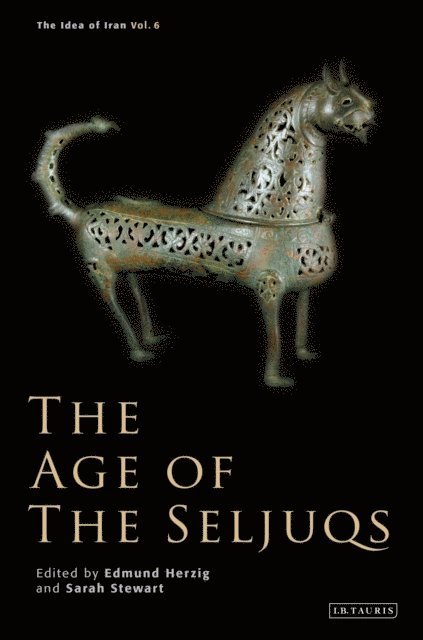
    Age of the Seljuqs

    AvEdmund Herzig,Sarah Stewart

    E-bok
    Engelska, 2014

    Del i serien Idea of Iran

    984 kr

    Läs direkt i Bokus Reader – eller ladda ned till din enhet

    Beskrivning

    From their ancestral heartland by the shores of the Aral Sea, the medieval Oghuz Turks marched westwards in search of dominion. Their conquests led to control of a Muslim empire that united the territories of the Eastern Islamic world, melded Turkic and Persian influences and transported Persian culture to Anatolia. In the eleventh and twelfth centuries the new Turkic-Persian symbiosis that had earlier emerged under the Samanids, Ghaznavids and Qarakha-nids came to fruition in a period that, under the enlightened rule of the Seljuq dynasty, combined imperial grandeur with remarkable artistic achievement. This latest volume in The Idea of Iran series focuses on a system of government based on Turkic 'men of the sword' and Persian 'men of the pen' that the Seljuqs (famous foes of the Crusader Frankish knights) consolidated in a form that endured for centuries. The book further explores key topics relating to the innovative Seljuq era, including: conflicted Sunni-Shi'a relations between the Sunni Seljuq Empire and Ismaili Fatimid caliphate; architecture, art and culture; and politics and poetry.Istvan Vasary looks back in Chapter 1 to the early history of the Turks in the wider Iranian world, discussing the debates about the dating and distribution of the early Turkish presence in Central Asia, Iran and Afghanistan.NizaAZm al-Mulk is the subject of Chapter 2, in which Carole Hillenbrand subjects this 'maverick vizier' to critical scrutiny. While paying due credit to his extraordinary achievements, she does not shy away from concluding that his career illustrates the maxim that 'power corrupts and absolute power corrupts absolutely'. A fitting antagonist for NizaAZm al-Mulk is the subject of Chapter 3, in which Farhad Daftary follows the career of the remarkable revolutionary leader Hasan-i SabbaAZh and the history of the Ismaili state-within-a-state that he founded with his capture of the fortress of Alamt in 1090. In Chapter 4 David Durand-Guedy examines the Seljuq Empire from the viewpoint of its (western) capital, Isfahan. He concentrates on the distinction between the parts of Iran to the west of the great deserts (and in close connection to Iraq and Baghdad) and the parts to the east, notably Khorasan, with its ties to Transoxiana and Tokharestan.Vanessa Van Renterghem in Chapter 5 challenges the long-held view that the Seljuq takeover of Baghdad represented a liberation of the Abbasid caliphs from their burden-some subordination to the heretical Buyids.Alexey Khismatulin in Chapter 6 presents a forensic examination of two important works of literature, casting doubt on the authorship of both the Siyar al-muluAZk attributed to NizaAZm al-Mulk and the NasAZhat al-muluAZk ascribed to al-GhazaAZlAZ. In Chapter 7 Asghar Seyed-Gohrab discusses the poetry of the Ghaznavid and Seljuq periods, demonstrating the poets' mastery of metaphor and of extended description and riddling to build suspense. The final chapter by Robert Hillenbrand shifts the focus from texts and literature to architecture and to that pre-eminent Seljuq masterpiece, the Friday Mosque of Isfaha

    Produktinformation

    • Utgivningsdatum:2014-11-20
    • Språk:Engelska
    • Antal sidor:200
    • Filformat:EPUB
    • Kopieringsskydd:LCP
    • ISBN:9780857738110
    • Förlag:Bloomsbury Publishing PLC
    • Serie:Idea of Iran

    Utforska kategorier

    • Arkitekturhistoria inom Kultur
    • Sociala grupper och identitet inom Samhälle och politik
    • Mellanösterns historia inom Historia och arkeologi

    Mer om författaren

    Edmund Herzig is Soudavar Professor of Persian Studies and a Fellow of Wadham College, University of Oxford, UK. He is the author of" Iran and the World in the Safavid Age" (I.B.Tauris). Sarah Stewart is Lecturer in Zoroastrianism at SOAS, University of London, UK. Co-editor, with Vesta Curtis and Edmund Herzig, of several volumes in The Idea of Iran series, she is also editor of" The Everlasting Flame: Zoroastrianism in History and Imagination" (all published by I.B.Tauris).

    Innehållsförteckning

    • What does the history of Isfahan tell us new about the Iranian society during the Saljuq period?Dr Durand-Guédy, Martin-Luther-Universität Halle-WittenbergBaghdad: a view from the edge on the Saljuq empireDr Vanessa Van Renterghem, Institut National des Langues et Civilisations Orientales (Inalco,Paris) & Institut Français du Proche-Orient (Ifpo, Beirut)Ismaili-Saljuq Relations: conflict and stalemateDr Farhad Daftary, The Institute of Ismaili Studies & Encyclopaedia  IslamicaImages into Words: metaphors as hallmarks of poetic individualityDr Ali-Asghar Seyed-Ghorab, Leiden Institute for Area Studies (Leiden University)The Mirrors for Princes fabricated at the Saljuqi court: the Siyasat-name (Siyar al-muluk) by Nizam al-Mulk and the two-partite Nasihat al-muluk by al-GhazaliDr Alexey A Khismatulin, The Institute of Oriental Manuscripts, St PetersburgStructures of power and influence in Seljuq Iran: the case of Nizam al-MulkProfessor Carole Hillenbrand FBA OBE, Professor Emerita of Islamic History, University of EdinburghThe Friday Mosque of Isfahan: the crowning achievement of Saljuq architecture?Professor Robert Hillenbrand, Professor Emeritus of Islamic Art , University of Edinburgh“Saljuq” Ceramics?Professor Oliver Watson, I M Pei Professor of Islamic Art and Architecture, Khalili Research Centre, University of Oxford