• Fri frakt över 249 kr
  • •
  • Snabba leveranser
  • •
  • Billiga böcker
Kundservice

Du är på sajten för privatpersoner.

Företag, bibliotek eller offentlig verksamhet?

Du handlar på classic.bokus.com, där alla dina funktioner finns intakta.
Till classic.bokus.com
Bokus logotyp. Gå till startsidan.
  • Erbjudanden
  • Nyheter
  • Student
  • Topplistor
  • Barn & ungdom
  • Bokus Play
  • E-böcker
  • Pocketböcker
  • Spel & pussel

10% rabatt på allt med kod: NYSTART10 →

Sidfot

Mina sidor

    Hjälp

    • Kundservice
    • Vanliga frågor och svar
    • Frakt och leverans
    • Retur vid ångerrätt
    • Reklamera vara
    • Betalning
    • Köpvillkor
    • Allmänna villkor
    • Information om webbplatsens tillgänglighet

    Om Bokus

    • Om oss
    • Pressrum
    • För studenter
    • För företag
    • För bibliotek och offentlig verksamhet
    • För leverantörer
    • Hållbarhet

    Populärt

    • Aktuella erbjudanden
    • Presentkort
    • Studentlitteratur
    • Nya böcker
    • Topplistor
    • Signerade böcker
    • Engelska böcker

    Inspiration

    • Boktips
    • BookTok
    • Populära bokserier
    • Barnbokskaraktärer
    • Populära författare
    Logotyp för Bokus
    Följ oss på Facebook (extern länk)Följ oss på Instagram (extern länk)Följ oss på YouTube (extern länk)Följ oss på TikTok (extern länk)
    bokus @ CookiesAnpassa cookiesIntegritetspolicyKöpvillkor
    Till Citymail hemsida (extern länk)Till Budbee hemsida (extern länk)Till Postnord hemsida (extern länk)Till Schenker hemsida (extern länk)Till Early Bird hemsida (extern länk)Till Walleys hemsida (extern länk)
    1. Psykologi och pedagogik
    2. Pedagogik
    3. Pedagogisk psykologi

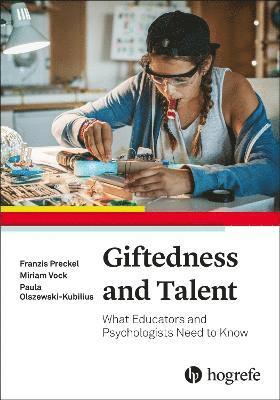
    Giftedness and Talent

    What Educators and Psychologists Need to Know

    AvFranzis Preckel,Miriam Vock

    Häftad, Engelska, 2024

    595 kr

    . Fri frakt över 249 kr.

    Beskrivning

    Understanding and supporting gifted and talented children and adolescents:What is giftedness? How do talents develop? Are gifted people "different"? How can gifted children be recognized and supported in their development? Based on the authors' many years of expertise in giftedness research and education practice, this book answers these and many other questions about giftedness and talent development in a scientifically sound and at the same time application-oriented way. This new volume offers an up-to-date overview of the theoretical foundations, pioneering studies, and research findings on gifted childrenand adolescents, and explores evidence-based options for diagnostics and support. The development of giftedness as well as the characteristics of gifted students, such as performance-related attributes and temperament traits, are also examined. This book is of interest to child psychologists and psychiatrists, educational and school psychologists, educators, and students, and is an ideal textbook for self-study or for those training to become a professional.

    Produktinformation

    • Utgivningsdatum:2024-02-08
    • Mått:178 x 254 x 19 mm
    • Vikt:546 g
    • Format:Häftad
    • Språk:Engelska
    • Antal sidor:242
    • Förlag:Hogrefe Publishing
    • ISBN:9780889376274

    Utforska kategorier

    • Pedagogisk psykologi inom Psykologi och pedagogik
    • Psykiatri inom Medicin
    • Barnpsykologi och utvecklingspsykologi inom Psykologi och pedagogik

    Mer om författaren

    Franzis Preckel, PhD, is full Professor of Giftedness Research at the University of Trier. Her research interests encompass psychological assessment, intelligence and giftedness, and factors and processes influencing talent development.Miriam Vock, PhD, is Professor for Empirical Instruction and Intervention Research at the University of Potsdam. Her research interests include intelligence and giftedness, the effectiveness of school-based support measures for gifted students, and empirical educational research.Paula Olszewski-Kubilius, PhD, is the Director of the Center for Talent Development at Northwestern University and a professor in the School of Education and Social Policy. Over the past 39 years, she has created programs for diverse groups of gifted learners and written extensively about talent development.

    Recensioner i media

    This book is a joy to read and extraordinarily well written. It is an excellent text for educators and psychologists that has the potential to change the entire field of gifted education and talent development around the world! by Leonie Kronborg, PhD, School of Educational Psychology & Counselling, Faculty of Education, Monash University, Australia.

    Innehållsförteckning

    • 1 What Is Giftedness?1.1 Introduction1.2 Theories and Models of Giftedness and ExceptionalAchievement1.2.1 Expertise1.2.2 Models of Giftedness1.2.3 Performance Definitions Versus PotentialDefinitions1.2.4 Unidimensional Definitions1.2.5 Multidimensional Definitions and Models1.2.6 Systems Theory Models1.2.7 Mega Model1.2.8 TAD Framework1.2.9 Conclusions1.3 The Role of Intelligence in Models of Giftedness1.3.1 What Is Intelligence?1.3.2 The Intelligence Quotient1.4 The Role of Creativity in Models of Giftedness1.4.1 Creativity: Definition and Models1.4.2 Creativity as a Systemic and RelationalPhenomenon1.4.3 Creativity and Intelligence1.5 Conclusion2 Pioneering Studies and MethodologicalChallenges in Giftedness Research2.1 Selected Longitudinal Studies on GiftedStudents2.1.1 Terman Study2.1.2 Study of Mathematically Precocious Youth2.1.3 The Marburg Giftedness Project2.2 Methodological Challenges in ResearchingGiftedness2.2.1 Sample Selection and Groups Not Selected2.2.2 Using an Appropriate Control orComparison Group2.2.3 Participants' Knowledge of Their OwnAptitude2.2.4 Intervention Versus Pure Observation2.2.5 Different Definitions and Operationalizationsof Giftedness2.3 Conclusion3 Characteristics and Development of GiftedPeople3.1 Achievement-Related Characteristics3.1.1 Relationship Between Intelligence andAchievement3.1.2 Studies on the Academic Development ofGifted Students3.1.3 Threshold Hypothesis on the RelationshipBetween Intelligence and Achievement3.2 Personality-Related Characteristics3.2.1 Implicit Theories: Everyday ConceptionsAbout Gifted People3.2.2 Socioemotional Adjustment of GiftedIndividuals3.2.3 Personality Traits3.2.4 Gender Differences3.3 Underachievement3.3.1 Concept3.3.2 Possible Causes3.3.3 Progression3.4 Peculiarities in the Development of GiftedChildren3.4.1 Asynchronous Development3.4.2 Special Features of Exceptional Giftedness3.4.3 Persistent Underchallenge in School3.4.4 Perfectionism3.4.5 Increased Sensitivity (Overexcitability)3.4.6 Fear of Prejudice and Stigmatization3.5 Family Background of Gifted Individuals3.5.1 Giftedness as a Stressor for the Family?3.5.2 Gifted Children From Lower IncomeFamilies and Minoritized Students3.6 Conclusion4 Giftedness Identification and Assessment4.1 Introduction and Overview4.2 Intelligence Tests in Giftedness Identificationand Assessment4.2.1 Possibilities and Limitations of IntelligenceTests in Giftedness Identification andAssessment4.2.2 Assessment Strategies for Identification ofMinoritized Students4.2.3 Description of Intelligence Tests WithRegard to Their Suitability for Use With theGifted4.3 School Achievement Assessment4.3.1 Gifted Identification4.3.2 Selection of Suitable Students for SpecialPrograms4.3.3 Recognizing Underachievement4.3.4 School Grades4.3.5 Standardized School Achievement Tests4.4 Assessing Underachievement4.4.1 Statistical Methods for IdentifyingUnderachievement4.4.2 Nomination Methods for IdentifyingUnderachievement4.5 Assessment of Creativity and DivergentThinking4.6 Nominations and Checklists4.6.1 Nominations by Teachers4.6.2 Nominations by Parents4.6.3 Peer Nomination and Self-Nomination4.7 Selection Process for a Gifted Class as anExample of Multimethod and MultimodalApproach to Identify Giftedness5 Support in School and Early ChildhoodEducation5.1 Introduction5.2 Support of Gifted Children at School 1495.2.1 The Four Pillars of School-Based Supportfor Gifted Students5.2.2 Differentiation Within the Classroom5.2.3 Acceleration5.2.4 Enrichment5.2.5 Combination of Acceleration and Enrichment:Early Entrance Programs5.2.6 Ability Grouping for Gifted Students inSpecial Classes and in School5.3 Support in Early Childhood and PreprimaryEducation5.3.1 Gifted Children in Early Childhood andPreprimary Education5.3.2 Support Opportunities in Early ChildhoodEducation5.4 Conclusion