• Fri frakt över 249 kr
  • •
  • Snabba leveranser
  • •
  • Billiga böcker
Kundservice

Du är på sajten för privatpersoner.

Företag, bibliotek eller offentlig verksamhet?

Du handlar på classic.bokus.com, där alla dina funktioner finns intakta.
Till classic.bokus.com
Bokus logotyp. Gå till startsidan.
  • Erbjudanden
  • Nyheter
  • Student
  • Topplistor
  • Barn & ungdom
  • Bokus Play
  • E-böcker
  • Pocketböcker
  • Spel & pussel

10% rabatt på allt med kod: NYSTART10 →

Sidfot

Mina sidor

    Hjälp

    • Kundservice
    • Vanliga frågor och svar
    • Frakt och leverans
    • Retur vid ångerrätt
    • Reklamera vara
    • Betalning
    • Köpvillkor
    • Allmänna villkor
    • Information om webbplatsens tillgänglighet

    Om Bokus

    • Om oss
    • Pressrum
    • För studenter
    • För företag
    • För bibliotek och offentlig verksamhet
    • För leverantörer
    • Hållbarhet

    Populärt

    • Aktuella erbjudanden
    • Presentkort
    • Studentlitteratur
    • Nya böcker
    • Topplistor
    • Signerade böcker
    • Engelska böcker

    Inspiration

    • Boktips
    • BookTok
    • Populära bokserier
    • Barnbokskaraktärer
    • Populära författare
    Logotyp för Bokus
    Följ oss på Facebook (extern länk)Följ oss på Instagram (extern länk)Följ oss på YouTube (extern länk)Följ oss på TikTok (extern länk)
    bokus @ CookiesAnpassa cookiesIntegritetspolicyKöpvillkor
    Till Citymail hemsida (extern länk)Till Budbee hemsida (extern länk)Till Postnord hemsida (extern länk)Till Schenker hemsida (extern länk)Till Early Bird hemsida (extern länk)Till Walleys hemsida (extern länk)
    1. Samhälle och politik
    2. Politik och statsskick
    3. Centralt styre och förvaltning

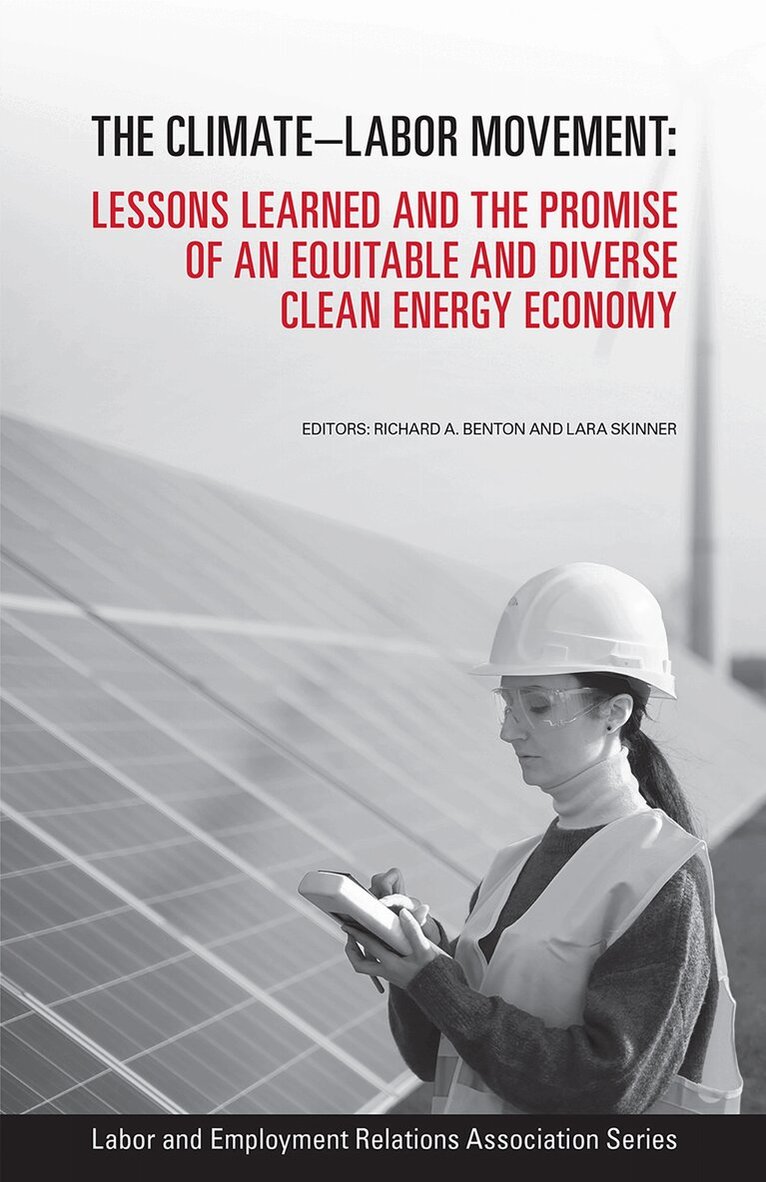
    Climate-Labor Movement

    Lessons Learned and the Promise of an Equitable and Diverse Clean Energy Economy

    AvRichard A. Benton,Lara Skinner

    Häftad, Engelska, 2025

    Del i serien LERA Research Volume

    431 kr

    Beställningsvara. Skickas inom 5-8 vardagar. Fri frakt över 249 kr.

    Beskrivning

    Climate change is the defining challenge of our time. It poses an existential threat to humanity and the planet, as well as a profound social and economic crisis for millions of workers and communities. To address this challenge, we need a radical transformation of our energy system, our infrastructure, our industries, and our consumption patterns. We need a just transition that ensures a fair and equitable future for all.This transition will require massive investments in clean and renewable energy sources, public transportation, energy efficiency, waste management, ecosystem restoration, and adaptation measures. It will also create millions of new jobs across sectors and regions – jobs that can contribute to solving the climate crisis while improving the lives and livelihoods of workers and their families. However, not all climate jobs are created equally. Some may be precarious, low-paid, unsafe, or socially undesirable. Some may displace or disrupt existing workers and communities, especially those dependent on fossil fuels and other high-emitting sectors. Some may reproduce or exacerbate existing inequalities based on class, race, gender, or geography. Therefore, it is not enough to create more climate jobs – we need to create better climate jobs. We need to ensure that climate jobs are secure, community sustaining, and democratic, and that they advance the goals of social and environmental justice.This volume brings together researchers, activists, and practitioners from different disciplines and regions to explore the concept, potential, and challenges of climate jobs. Drawing on case studies from various sectors, the contributors examine how climate jobs can be created, protected, and expanded in the context of the global climate crisis and the changing world of work. They also discuss how climate jobs can be integrated into broader strategies for climate action and social transformation. The volume aims to provide a comprehensive and critical perspective on climate jobs and to inspire further debate and action on this vital topic.

    Produktinformation

    • Utgivningsdatum:2025-12-15
    • Mått:140 x 216 x undefined mm
    • Format:Häftad
    • Språk:Engelska
    • Serie:LERA Research Volume
    • Antal sidor:204
    • Förlag:Cornell University Press
    • ISBN:9780913447314

    Utforska kategorier

    • Centralt styre och förvaltning inom Samhälle och politik
    • Arbetsmarknaden inom Ekonomi och Ledarskap

    Mer om författaren

    Richard A. Benton is the director of the Climate Jobs Institute and an associate professor in the School of Labor and Employment Relations at the University of Illinois Urbana-Champaign. His research interests include corporate governance, social networks, economic sociology, and social stratification. In general, he focuses on the role of social networks in individual and organizational outcomes as well as the dynamics of network change. Mainly, his research stream examines the consequences of network fracturing among U.S. corporate leaders. Much of his research applies advanced models for network dynamics.Lara Skinner is executive director of Climate Jobs Institute at Cornell University. Her research, writing, and labor education work focuses on the intersection of job creation, economic development, and climate protection. She began her career in labor working with Oregon's Farmworkers Union (Pineros y Campesinos Unidos del Noroeste), the University of Oregon Labor Education and Research Center, and as an active member of the Graduate Teaching Fellows Federation, Local 3544. Skinner has worked for unions doing campaign research and policy development since 1999.

    Innehållsförteckning

    • IntroductionRichard A. Benton Chapter 1: Green Jobs, Climate Jobs, and Competing Visions for a New Energy EconomyBrendan Davidson and Dimitris StevisChapter 2: Working Conditions in the U.S. Solar Industry: Findings and Learnings from Studies in New York and TexasJillian Morley and Avalon Hoek SpaansChapter 3: Organizing a Worker- and Community-Centered Transition: The Contra Costa Refinery Transition Partnership as Case StudyVirginia Parks and Jessie HF HammerlingChapter 4: Fracking or No Fracking? How a Green Transition Can Work for WorkersRobert Pollin and Jeannette Wicks-LimChapter 5: From Here to There—Advancing a Just Transition for AllTodd E. VachonChapter 6: Climate Jobs and Manufacturing: Green Industrial Policy Must Mean Good JobsMike WilliamsChapter 7: Stronger Together: The Role of Sectoral Bargaining in Advancing a Just Transition for AutoworkersHunter Moskowitz and J. Mijin ChaChapter 8: Industrial Environmental Policy: Markets, Labor, and the Rhode Island ExperimentPatrick CrowleyChapter 9: Building a Diverse, Equitable, and Unionized Clean Energy Workforce: Best Practices and Lessons LearnedZach Cunningham and Melissa Shetler