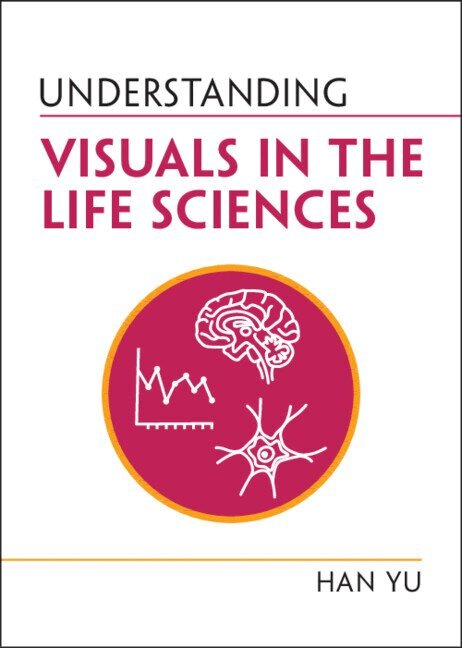
Häftad, Engelska, 2024
Understanding Visuals in the Life Sciences
Av Han Yu
Del i serien Understanding Life
258 kr
Beställningsvara. Skickas inom 3-6 vardagar. Fri frakt över 249 kr.
Beskrivning
Produktinformation
- Utgivningsdatum: 2024-11-21
- Mått: 128 x 179 x 13 mm
- Vikt: 250 g
- Format: Häftad
- Språk: Engelska
- Serie: Understanding Life
- Antal sidor: 232
- Förlag: Cambridge University Press
- ISBN: 9781009232241
Utforska kategorier
Mer om författaren
Han Yu is Professor of Science Communication at the Department of English at Kansas State University, and a Fellow of the Association of Teachers of Technical Writing. Her research focuses on popular science communication and visual rhetoric. She is the author of The Curious Human Knee (2023); Mind Thief: The Story of Alzheimer's (2021); Communicating Genetics: Visualizations and Representations (2017); and The Other Kind of Funnies: Comics in Technical Communication (2015).
Recensioner i media
'Yu's 'close reading' of life science visualizations goes beyond 'understanding' by shining a critical lens on common forms: graphs, photographs, animations, video games, etc. She goes further than applying Tufte's rules for Beautiful Evidence by dissecting authors' intentions to purposely conceal, divert, deceive, misconstrue, and misrepresent, and she embraces practices of open science, transparency, and aesthetics that will help readers experience 'the triumph of interpretation' and empower readers to construct the meaning of heterogeneous, complex data. Her vision is an important counterpoint to the mindless proliferation of chart junk produced by misuse of common software and moves us to embrace communication practices that not only make for better science, but also serve to enhance our appreciation for the importance of maintaining a healthy skepticism of potentially spurious claims.' John R. Jungck, Center for Bioinformatics and Computational Biology and DENIN Delaware Environmental Institute, USA
Betyg & recensioner
0 recensioner
Inga recensioner tillgängliga.