• Fri frakt över 249 kr
  • •
  • Snabba leveranser
  • •
  • Billiga böcker
Kundservice

Du är på sajten för privatpersoner.

Företag, bibliotek eller offentlig verksamhet?

Du handlar på classic.bokus.com, där alla dina funktioner finns intakta.
Till classic.bokus.com
Bokus logotyp. Gå till startsidan.
  • Erbjudanden
  • Nyheter
  • Student
  • Topplistor
  • Barn & ungdom
  • Bokus Play
  • E-böcker
  • Pocketböcker
  • Spel & pussel

10% rabatt på allt med kod: NYSTART10 →

Sidfot

Mina sidor

    Hjälp

    • Kundservice
    • Vanliga frågor och svar
    • Frakt och leverans
    • Retur vid ångerrätt
    • Reklamera vara
    • Betalning
    • Köpvillkor
    • Allmänna villkor
    • Information om webbplatsens tillgänglighet

    Om Bokus

    • Om oss
    • Pressrum
    • För studenter
    • För företag
    • För bibliotek och offentlig verksamhet
    • För leverantörer
    • Hållbarhet

    Populärt

    • Aktuella erbjudanden
    • Presentkort
    • Studentlitteratur
    • Nya böcker
    • Topplistor
    • Signerade böcker
    • Engelska böcker

    Inspiration

    • Boktips
    • BookTok
    • Populära bokserier
    • Barnbokskaraktärer
    • Populära författare
    Logotyp för Bokus
    Följ oss på Facebook (extern länk)Följ oss på Instagram (extern länk)Följ oss på YouTube (extern länk)Följ oss på TikTok (extern länk)
    bokus @ CookiesAnpassa cookiesIntegritetspolicyKöpvillkor
    Till Citymail hemsida (extern länk)Till Budbee hemsida (extern länk)Till Postnord hemsida (extern länk)Till Schenker hemsida (extern länk)Till Early Bird hemsida (extern länk)Till Walleys hemsida (extern länk)
    1. Ekonomi och Ledarskap
    2. Företagsekonomi
    3. Affärsstrategi

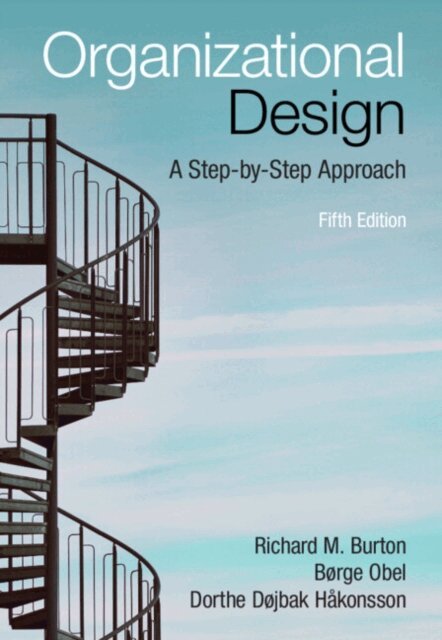
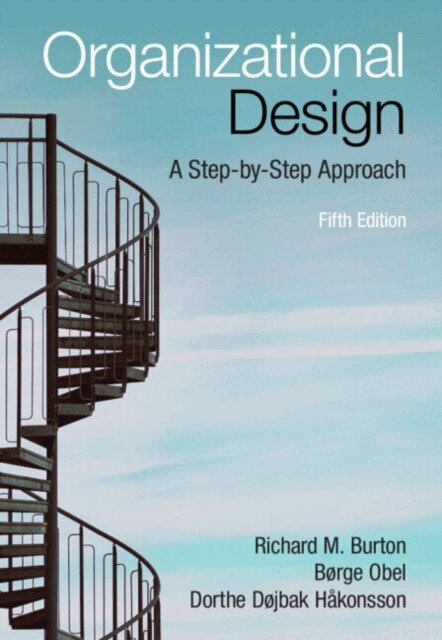
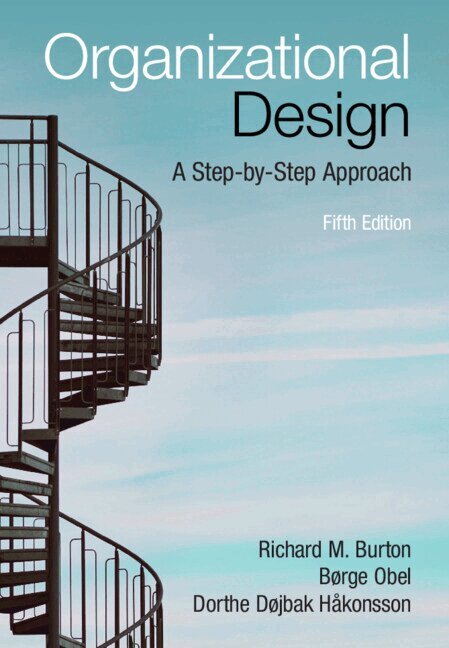
    Organizational Design

    A Step-by-Step Approach

    AvRichard M. Burton,Børge Obel

    Inbunden, Engelska, 2026

    1 232 kr

    Beställningsvara. Skickas inom 10-15 vardagar. Fri frakt över 249 kr.

    Fler format och utgåvor

    Häftad

    552 kr

    Häftad

    657 kr

    Beskrivning

    Today's organizations face rapid change, digital disruption, and rising demands for sustainability and resilience. This fifth edition text equips executives, students, and educators with a proven framework for designing effective organizations in complex environments. Built on decades of research, the multi-contingency model provides a step-by-step guide from diagnosis to design and implementation-now expanded to include knowledge interdependence, AI integration, sustainable development, and organizational resilience. Rich with real-world cases from LEGO, Microsoft, Haier, and Blackberry, the book blends theory with practice and offers clear visuals, intuitive 2x2 models, and tools to support hands-on learning and application. It helps readers understand who should do what, talk to whom, and-crucially-know what, in today's increasingly dynamic settings. Whether used in executive education or as a core text in MBA and business school courses, this updated edition is a comprehensive, accessible, and globally trusted guide to modern organizational design.

    Produktinformation

    • Utgivningsdatum:2026-05-14
    • Mått:178 x 246 x 20 mm
    • Vikt:860 g
    • Format:Inbunden
    • Språk:Engelska
    • Antal sidor:358
    • Upplaga:5
    • Förlag:Cambridge University Press
    • ISBN:9781009607032

    Utforska kategorier

    • Affärsstrategi inom Ekonomi och Ledarskap
    • Affärsetik inom Ekonomi och Ledarskap
    • Entreprenörskap inom Ekonomi och Ledarskap

    Mer om författaren

    Richard M. Burton is Professor Emeritus at Duke University. In addition, he has an Honorary Doctorate from Aarhus University. He has served as associate editor of Organization Science, Strategic Management Journal, and Journal of Organization Design. He has written numerous books and articles on organization design and strategy. He is a co-author of Organizational Design: A Step-By-Step Approach (2020). Børge Obel is professor emeritus at Aarhus University and professor at EIASM, Brussels. He has held visiting positions at Duke, Stanford, the University of Ljubljana, and LUISS Business School. He is former rector of Aarhus School of Business and former dean at Aarhus University and Odense University. Obel chairs Zeal Aps, which he founded in 1980. He holds a Ph.D. and Dr. Oecon. from Aarhus University. He has published extensively in leading academic journals and co-authored Organizational Design: A Step-by-Step Approach (Cambridge University Press, 4th ed., 2020), translated into Italian, Chinese, and Vietnamese. He is a founding board member of the Organizational Design Community and was the founding editor of the Journal of Organization Design. Dorthe Døjbak Håkonsson is a Professor of Management within the Department of Management, Aarhus University, where she also serves as Center Leader for the ICOA (Interdisciplinary Center for Organizational Architecture). She is a founding member and current board member of the Organization Design Community (ODC) and serves as Associate Editor of the Journal of Organization Design. She teaches Organizational Design and Organizational Behavior across undergraduate, postgraduate, Ph.D., MBA, and executive levels, and delivers executive education both in Denmark and internationally. Her research has been published in leading international journals, including Organization Science, Strategic Management Journal, and California Management Review.

    Recensioner i media

    'Whenever I tackle organization design, I consult this book. Its diagnostic framework pinpoints the elements that must change to align capabilities with enterprise strategy. It belongs on every organization design practitioner's curriculum.' Jesper Sylvest Sørensen, Region Copenhagen

    Innehållsförteckning

    • Part I. Getting Started: 1. The Multi-Contingency Model; 2. Scope and Goals of the Organization; Part II. Strategic Positioning: 3. Strategy; 4. Environment; Part III. The Structure: 5. Traditional Configurations of the Firm; 6. New Ways of Organizing; Part IV. Agents, Workflow and Leadership Dynamics: 7. Work, Task Design and Agents; 8. Leadership and Organizational Climate; Part V. Coordination, Control, and Incentives: 9. Coordination and Control; 10. Incentives; Part VI. Getting the Architecture Right: 11. Designing the Structure and Coordination; 12. Designing the Change Process; Part VII. Implementing the Architecture: 13. Implementing the Change: Who Should Do What When?; 14. Designing for the Future.