• Fri frakt över 249 kr
  • •
  • Snabba leveranser
  • •
  • Billiga böcker
Kundservice

Du är på sajten för privatpersoner.

Företag, bibliotek eller offentlig verksamhet?

Du handlar på classic.bokus.com, där alla dina funktioner finns intakta.
Till classic.bokus.com
Bokus logotyp. Gå till startsidan.
  • Erbjudanden
  • Nyheter
  • Student
  • Topplistor
  • Barn & ungdom
  • Bokus Play
  • E-böcker
  • Pocketböcker
  • Spel & pussel

10% studentrabatt med kod TERM26

Sidfot

Mina sidor

    Hjälp

    • Kundservice
    • Vanliga frågor och svar
    • Frakt och leverans
    • Retur vid ångerrätt
    • Reklamera vara
    • Betalning
    • Köpvillkor
    • Allmänna villkor
    • Information om webbplatsens tillgänglighet

    Om Bokus

    • Om oss
    • Pressrum
    • För studenter
    • För företag
    • För bibliotek och offentlig verksamhet
    • För leverantörer
    • Hållbarhet

    Populärt

    • Aktuella erbjudanden
    • Presentkort
    • Studentlitteratur
    • Nya böcker
    • Topplistor
    • Signerade böcker
    • Engelska böcker

    Inspiration

    • Boktips
    • BookTok
    • Populära bokserier
    • Barnbokskaraktärer
    • Populära författare
    Logotyp för Bokus
    Följ oss på Facebook (extern länk)Följ oss på Instagram (extern länk)Följ oss på YouTube (extern länk)Följ oss på TikTok (extern länk)
    bokus @ CookiesAnpassa cookiesIntegritetspolicyKöpvillkor
    Till Citymail hemsida (extern länk)Till Budbee hemsida (extern länk)Till Postnord hemsida (extern länk)Till Schenker hemsida (extern länk)Till Early Bird hemsida (extern länk)Till Walleys hemsida (extern länk)
    1. Samhälle och politik
    2. Sociologi och antropologi
    3. Antropologi

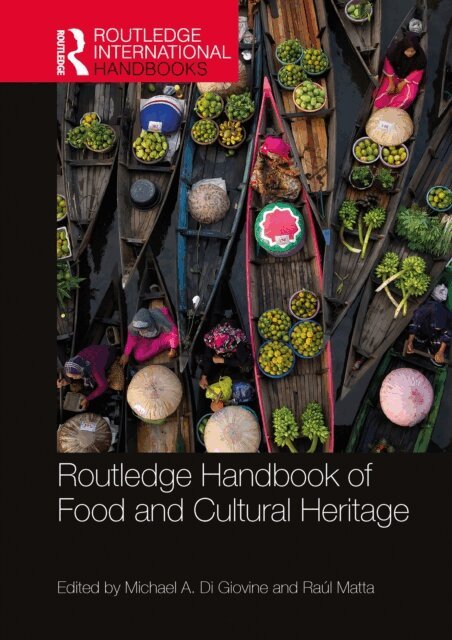
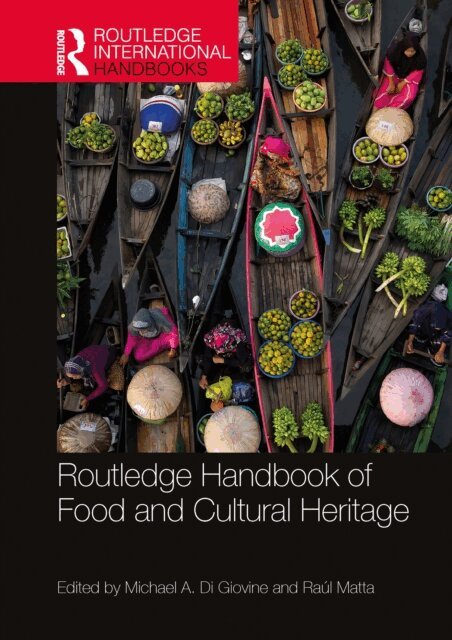
    Routledge Handbook of Food and Cultural Heritage

    AvMichael A. Di Giovine,Raúl Matta

    Inbunden, Engelska, 2025

    Del i serien Routledge International Handbooks

    3 676 kr

    Beställningsvara. Skickas inom 10-15 vardagar. Fri frakt över 249 kr.

    Beskrivning

    The Routledge Handbook of Food and Cultural Heritage explores the many varied intersections of food and cultural heritage from a robust, transdisciplinary perspective.Innovative in its approach, this cutting-edge Handbook thinks beyond traditional boundaries to present unique perspectives on the myriad ways in which food and cultural heritage are entangled in theory and practice. Both are growing industries; both are deeply rooted in families, cultures, and societies; both generate controversy and are deployed for political and economic activism. They also both have intellectual lives of their own, and are centers of interdisciplinary fields themselves—yet they also intersect in interesting and, until this book, under-theorized ways. After a comprehensive introduction that presents and challenges the state-of-the-art in the disciplines of critical food and critical heritage studies, the Handbook’s chapters are divided into six themes common to both fields: Ontologies and epistemologies of food and cultural heritage; material culture; identity, placemaking and belonging; politics and regulation; tourism development and heritage management; and contemporary issues and emerging approaches. To give representation of voices not usually heard in the scholarly tradition, special interviews with food-and-heritage practitioners complement the comprehensive chapters, adding further depth to the volume through their own lived experiences.With contributions from nearly 50 internationally recognized scholars, social scientists, dieticians, practitioners, and activists, this book is essential reading to scholars, students, researchers, industry professionals, and practitioners looking to understand the complex and compelling ways in which food, foodways, and cultural heritage overlap and impact each other, providing venues for collaborations.

    Produktinformation

    • Utgivningsdatum:2025-09-29
    • Mått:174 x 246 x 30 mm
    • Vikt:1 030 g
    • Format:Inbunden
    • Språk:Engelska
    • Serie:Routledge International Handbooks
    • Antal sidor:448
    • Förlag:Taylor & Francis Ltd
    • ISBN:9781032026558

    Utforska kategorier

    • Antropologi inom Samhälle och politik
    • Kulturvetenskap inom Samhälle och politik

    Mer om författaren

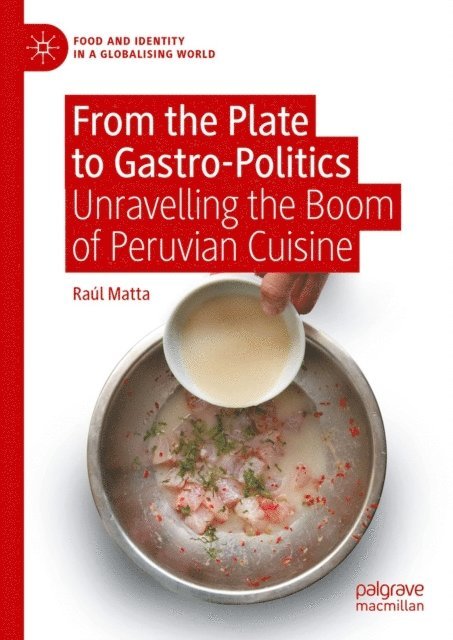
    Michael A. Di Giovine is Professor of Anthropology at West Chester University; Director of its Museum of Anthropology and Archaeology, and Museum Studies Program; and Director of the Ethnographic Field School on Sustainable Food and Cultural Heritage in Perugia, Italy. An Honorary Fellow at the University of Wisconsin-Madison, Michael is also a former tour operator whose research in Europe and Southeast Asia focuses on the intersection of food, heritage, and tourism/pilgrimage. He is the founding President of the Council on Heritage and the Anthropology of Tourism (CHAT) at the American Anthropological Association, where he also served on its Task Force on Cultural Heritage. He has authored or edited nearly a dozen books, including The Heritage-scape: UNESCO, World Heritage and Tourism (2009) and Edible Identities: Food as Cultural Heritage (2016), and is the series editor of Bloomsbury’s The Anthropology of Tourism: Heritage, Mobility and Society. www.wcupa.edu/michaeldigiovine.Raúl Matta is a Full Researcher at the Institute Lyfe Research and Innovation Center in Lyon, France. He works at the intersection of anthropology, food and heritage studies. Raúl has conducted fieldwork in Peru, Mexico, Germany, and France, and occupied leading roles in projects funded by the German Research Foundation, the French National Research Agency, and the European Commission. From 2024 to 2027 he is serving as the scientific coordinator (WP2 Leader) for the Horizon Europe project CONVIVIUM: New European Bauhaus Solutions in Food, Living Heritage and Conviviality. His articles have appeared in Social Anthropology, International Journal of Cultural Property, Food, Culture & Society, Food and Foodways, among others. He is the author of From the Plate to Gastro-Politics. Unravelling the Boom of Peruvian Cuisine (2023).

    Recensioner i media

    'In joining their expertise and their networks, Di Giovine and Matta have succeeded in assembling an impressive, global set of contributors. The deep past of food production and consumption, material and immaterial alike, reconfirms that food is good to think with, particularly for understanding the mushrooming of heritage practices in realms ranging from identity and belonging to regulation and policy. ‘Regina F. Bendix, Georg-August-University, Göttingen, Germany'This fascinating and comprehensive volume explores myriad ways that food and cultural heritage intertwine in constructing meaning, place, and power. Contributors from across the social sciences show the explanatory potential of culinary heritage by examining its role in empirical case studies of migration, nation-building, terroir, tourism, restaurant and domestic cooking, museums, and activism.’Carole Counihan, co-editor of Chefs, Restaurants and Culinary Sustainability'This groundbreaking handbook offers a rich, multi-dimensional exploration of how food, in both its everyday and institutionalized forms, profoundly influences our identities, rooting us in particular places and histories.'Ronda L. Brulotte, University of New Mexico'Tackling the social, economic, legal, and cultural Implications of food-as heritage, this volume offers a nuanced, multidisciplinary perspective on how caring about and transmitting foodways along with agropastoral and agricultural traditions is a crucial concern in today’s social movements and policy debates globally.’Chiara Bortolotto, Centre National de Recherche Scientifique (CNRS)'Organized around productive themes in critical heritage studies and food studies, this collection authored by more than 50 scholars worldwide, will become a text to structure our thinking and argue with. It is a robust collection of empirically rich and theoretically generative essays that are good to think with.'Krishnendu Ray, Director of the Doctoral Program in Food Studies at NYU

    Innehållsförteckning

    • List of figures, List on contributors, Acknowledgments, 1. The rich entanglements of food and cultural heritage, PART I: Ontologies and Epistemologies of Food and Cultural Heritage, 2. Food, indigeneity, and heritage,3. Religion and cosmovision, 4. Rootless seeds, and why stories matter5. Innovation is multiple, in food and beyond, 6. Biodynamics as cultural heritage: between Steiner’s legacy and contemporary issues, 7. Kitchens: the changing stage of cooking, 8. Edible , monuments: restaurants and heritage cuisines, 9. Food remittances and parcels as migrant food heritage? Limits, ambiguities and lacunae, 10. Foodways on display: the matter of sensoriality within museums and food heritage conservation, 11. Foraging and cultural heritage, PART III: Identity, Place-Making and Belonging, 12. When Dinah and her kitchen are left off the list: intersectionality and the practices of heritage food studies, 13. Pasta grannies and gourmet chefs: critical perspectives on gender and food heritage, 14. Migrants and refugee foods, 15. Taste, senses and memory: outlining methods, themes, and prospects, 16. Terroir, 17. “They thought we were crazy”: a conversation with Flavio Orsini, didactic farmer and Slow Food purveyor, PART IV: Politics and Regulation, 18. When food defines the nation: nationalism and culinary heritage, 19. Food and the Intangible Cultural Heritage Convention, 20. Slow Food, food heritage and social movements, 21. Biocultural food heritage and geographical indications: emerging intersections between intellectual property and biodiversity protection, 22. Food heritage and food citizenship, 23. Culinary tourism as an economic driver, 24. UNESCO Cities of Gastronomy, 25. Agritourism: sustaining foodways and agricultural heritage, 26. Food festivals and heritage, 27. Food as souvenirs, 28. Food heritage and sustainability: an ethnographic analysis, PART VI: Contemporary Issues and Emerging Approaches, 29. Gut microbiota, migration, and heritage, 30. Breastfeeding and heritage, 31. Food shaming and cultural heritage, 32. “The only thing that Lebanese agree on is food”: a conversation with chef and restauranteur Kamal Mouzawak, Index