• Fri frakt över 249 kr
  • •
  • Snabba leveranser
  • •
  • Billiga böcker
Kundservice

Du är på sajten för privatpersoner.

Företag, bibliotek eller offentlig verksamhet?

Du handlar på classic.bokus.com, där alla dina funktioner finns intakta.
Till classic.bokus.com
Bokus logotyp. Gå till startsidan.
  • Erbjudanden
  • Nyheter
  • Student
  • Topplistor
  • Barn & ungdom
  • Bokus Play
  • E-böcker
  • Pocketböcker
  • Spel & pussel

10% rabatt på allt med kod: NYSTART10 →

Sidfot

Mina sidor

    Hjälp

    • Kundservice
    • Vanliga frågor och svar
    • Frakt och leverans
    • Retur vid ångerrätt
    • Reklamera vara
    • Betalning
    • Köpvillkor
    • Allmänna villkor
    • Information om webbplatsens tillgänglighet

    Om Bokus

    • Om oss
    • Pressrum
    • För studenter
    • För företag
    • För bibliotek och offentlig verksamhet
    • För leverantörer
    • Hållbarhet

    Populärt

    • Aktuella erbjudanden
    • Presentkort
    • Studentlitteratur
    • Nya böcker
    • Topplistor
    • Signerade böcker
    • Engelska böcker

    Inspiration

    • Boktips
    • BookTok
    • Populära bokserier
    • Barnbokskaraktärer
    • Populära författare
    Logotyp för Bokus
    Följ oss på Facebook (extern länk)Följ oss på Instagram (extern länk)Följ oss på YouTube (extern länk)Följ oss på TikTok (extern länk)
    bokus @ CookiesAnpassa cookiesIntegritetspolicyKöpvillkor
    Till Citymail hemsida (extern länk)Till Budbee hemsida (extern länk)Till Postnord hemsida (extern länk)Till Schenker hemsida (extern länk)Till Early Bird hemsida (extern länk)Till Walleys hemsida (extern länk)
    1. Juridik
    2. Rättsvetenskap
    3. Kriminologi: juridiska aspekter

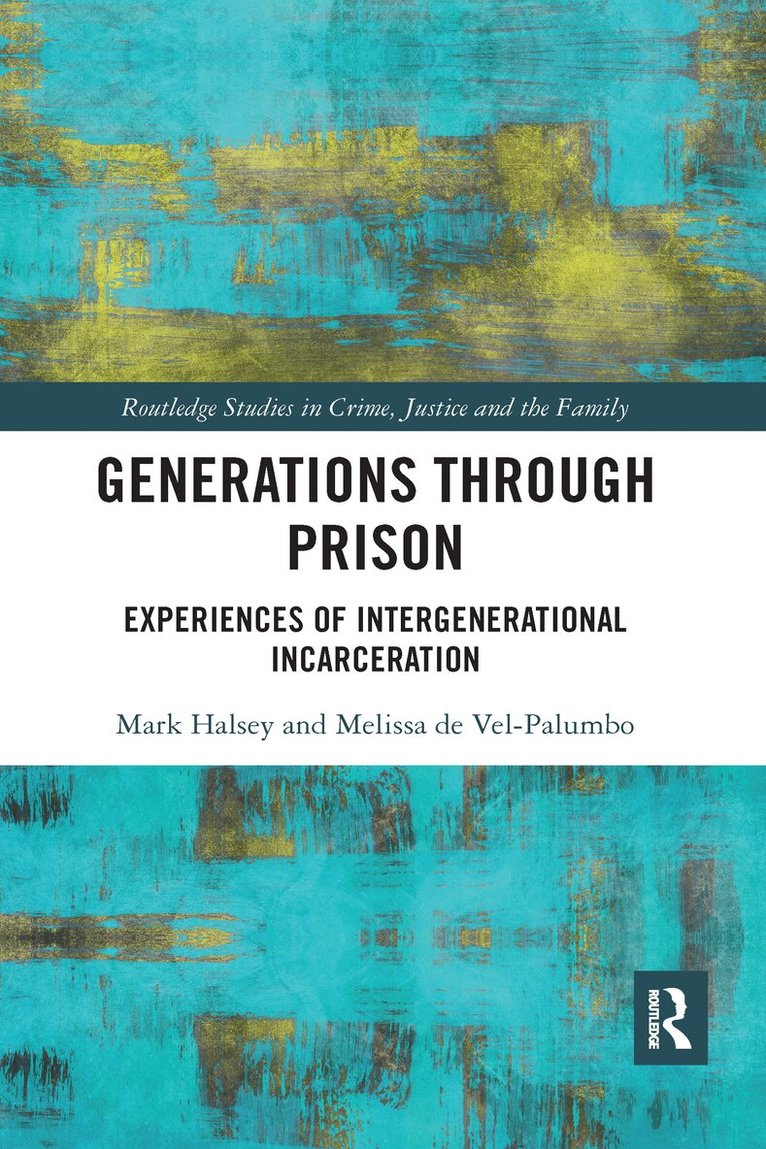
    Generations Through Prison

    Experiences of Intergenerational Incarceration

    AvMark Halsey,Melissa de Vel-Palumbo

    Häftad, Engelska, 2021

    Del i serien Routledge Studies in Crime, Justice and the Family

    613 kr

    Beställningsvara. Skickas inom 10-15 vardagar. Fri frakt över 249 kr.

    Fler format och utgåvor

    Inbunden

    2 421 kr

    Beskrivning

    Around one in five prisoners report the previous or current incarceration of a parent. Many such prisoners attest to the long-term negative effects of parental incarceration on one’s own sense of self and on the range and quality of opportunities for building a conventional life. And yet, the problem of intergenerational incarceration has received only passing attention from academics, and virtually little if any consideration from policy makers and correctional officials. This book – the first of its kind – offers an in-depth examination of the causes, experiences and consequences of intergenerational incarceration. It draws extensively from surveys and interviews with second-, third-, fourth- and fifth-generation prisoners to explicate the personal, familial and socio-economic contexts typically associated with incarceration across generations. The book examines 1) the emergence of the prison as a dominant if not life-defining institution for some families, 2) the link between intergenerational trauma, crime and intergenerational incarceration, 3) the role of police, courts, and corrections in amplifying or ameliorating such problems, and 4) the possible means for preventing intergenerational incarceration. This is undeniably a book that bears witness to many tragic and traumatic stories. But it is also a work premised on the idea that knowing these stories – knowing that they often resist alignment with pre-conceived ideas about who prisoners are or who they might become – is part and parcel of advancing critical debate and, more importantly, of creating real change. Written in a clear and direct style, this book will appeal to students and scholars in criminology, sociology, cultural studies, social theory and those interested in learning about more about families in prison.

    Produktinformation

    • Utgivningsdatum:2021-08-02
    • Mått:156 x 234 x 10 mm
    • Vikt:330 g
    • Format:Häftad
    • Språk:Engelska
    • Serie:Routledge Studies in Crime, Justice and the Family
    • Antal sidor:176
    • Förlag:Taylor & Francis Ltd
    • ISBN:9781032081748

    Utforska kategorier

    • Kriminologi: juridiska aspekter inom Juridik
    • Kriminalvård och straff inom Samhälle och politik
    • Straffprocessrätt inom Juridik

    Mer om författaren

    Mark Halsey is a Professor of Criminology, Centre for Crime Policy and Research, Flinders University, Australia. His recent books include Tackling Correctional Corruption: An Integrity Promoting Approach (co-authors Andrew Goldsmith and Andrew Groves) and Young Offenders: Crime, Prison and Struggles for Desistance (co-author Simone Deegan). Melissa de Vel-Palumbo is a Lecturer in Criminology at the Centre for Crime Policy and Research, Flinders University. Her work focuses on offender needs, rehabilitation, and community responses to crime. She has also trained as a forensic psychologist.

    Recensioner i media

    "Generations through Prison is an important book that challenges common-sense understandings of the relationship between crime, imprisonment and the family… (it) is empirically rich and written accessibly enough for both academics and professionals. Criminologists working in the fields of prisons and crime and the family will find in Generations through Prison a much-needed complex interpretation of intergenerational incarceration beyond the view that criminality and imprisonment are passed down from one generation to the next… This book will undoubtedly inspire further study and hopefully encourage future scholars to gather dense empirical data and use it for both a rigorous theoretical examination of the deleterious effects of imprisonment, as well as a rethink about the justifiability of prison itself."Jasmina Arnez, University of Oxford, UK, Criminology and Criminal Justice

    Innehållsförteckning

    • 1. Intergenerational Incarceration in Context, 2. Getting and Analysing the Data, 3. The Ubiquity of Trauma and Loss, 4. Three Generations Through Prison, 5. Prison as Homecoming, 6. Prison as Criminogenic Event, 7. The Fortunate Few: Evading Intergenerational Incarceration 8. Concluding Remarks