• Fri frakt över 249 kr
  • •
  • Snabba leveranser
  • •
  • Billiga böcker
Kundservice

Du är på sajten för privatpersoner.

Företag, bibliotek eller offentlig verksamhet?

Du handlar på classic.bokus.com, där alla dina funktioner finns intakta.
Till classic.bokus.com
Bokus logotyp. Gå till startsidan.
  • Erbjudanden
  • Nyheter
  • Student
  • Topplistor
  • Barn & ungdom
  • Bokus Play
  • E-böcker
  • Pocketböcker
  • Spel & pussel

10% studentrabatt med kod TERM26

Sidfot

Mina sidor

    Hjälp

    • Kundservice
    • Vanliga frågor och svar
    • Frakt och leverans
    • Retur vid ångerrätt
    • Reklamera vara
    • Betalning
    • Köpvillkor
    • Allmänna villkor
    • Information om webbplatsens tillgänglighet

    Om Bokus

    • Om oss
    • Pressrum
    • För studenter
    • För företag
    • För bibliotek och offentlig verksamhet
    • För leverantörer
    • Hållbarhet

    Populärt

    • Aktuella erbjudanden
    • Presentkort
    • Studentlitteratur
    • Nya böcker
    • Topplistor
    • Signerade böcker
    • Engelska böcker

    Inspiration

    • Boktips
    • BookTok
    • Populära bokserier
    • Barnbokskaraktärer
    • Populära författare
    Logotyp för Bokus
    Följ oss på Facebook (extern länk)Följ oss på Instagram (extern länk)Följ oss på YouTube (extern länk)Följ oss på TikTok (extern länk)
    bokus @ CookiesAnpassa cookiesIntegritetspolicyKöpvillkor
    Till Citymail hemsida (extern länk)Till Budbee hemsida (extern länk)Till Postnord hemsida (extern länk)Till Schenker hemsida (extern länk)Till Early Bird hemsida (extern länk)Till Walleys hemsida (extern länk)
    1. Naturvetenskap och teknik
    2. Geovetenskap
    3. Regional planering

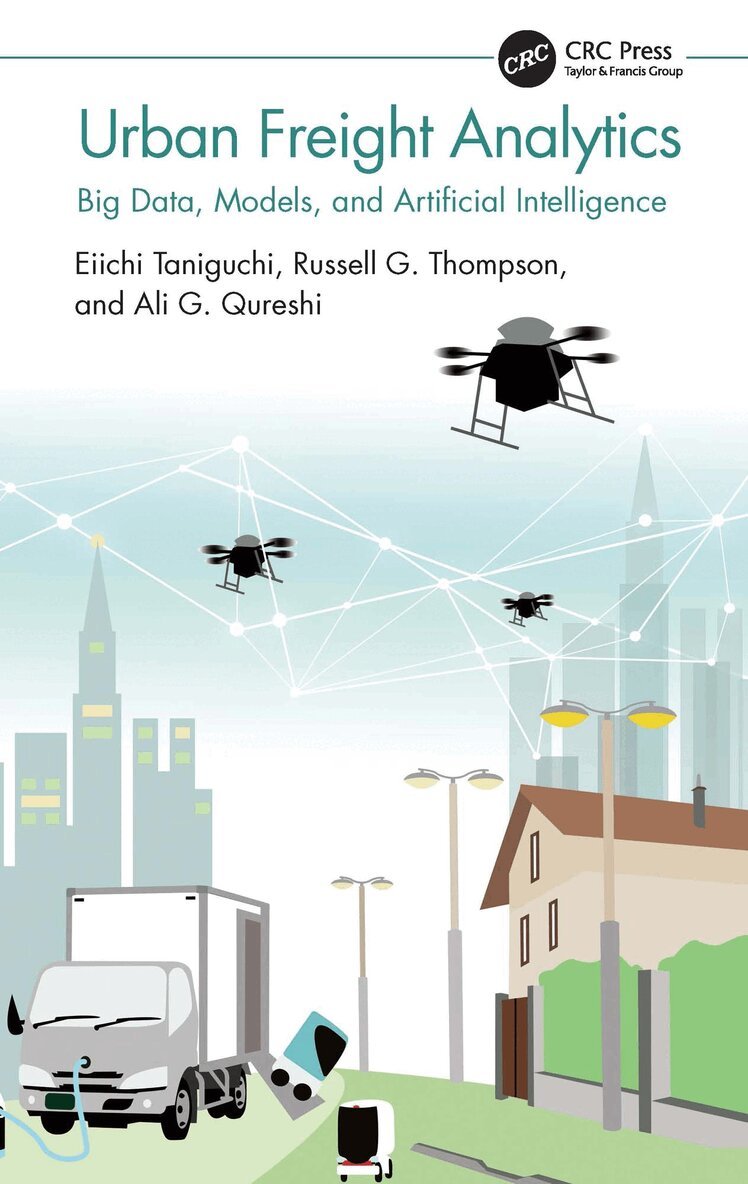
    Urban Freight Analytics

    Big Data, Models, and Artificial Intelligence

    AvEiichi Taniguchi,Russell G. Thompson

    Häftad, Engelska, 2025

    797 kr

    Beställningsvara. Skickas inom 10-15 vardagar. Fri frakt över 249 kr.

    Fler format och utgåvor

    Inbunden

    1 167 kr

    Beskrivning

    Urban Freight Analytics examines the key concepts associated with the development and application of decision support tools for evaluating and implementing city logistics solutions. New analytical methods are required for effectively planning and operating emerging technologies including the Internet of Things (IoT), Information and Communication Technologies (ICT), and Intelligent Transport Systems (ITS).The book provides a comprehensive study of modelling and evaluation approaches to urban freight transport. It includes case studies from Japan, the US, Europe, and Australia that illustrate the experiences of cities that have already implemented city logistics, including analytical methods that address the complex issues associated with adopting advanced technologies such as autonomous vehicles and drones in urban freight transport.Also considered are future directions in urban freight analytics, including hyperconnected city logistics based on the Physical Internet (PI), digital twins, gamification, and emerging technologies such as connected and autonomous vehicles in urban areas. An integrated modelling platform is described that considers multiple stakeholders or agents, including emerging organisations such as PI companies and entities such as crowd-shippers as well as traditional stakeholders such as shippers, receivers, carriers, administrators, and residents.This bookPresents procedures for evaluating city logistics technologies and policy measuresProvides an overview of advanced modelling approaches, including agent-based model and machine learningHighlights the essential features of optimisation and simulation models applied to city logisticsDiscusses how models incorporating more uncertainty and dynamic data can be used to improve the sustainability and resilience of urban freight systemsThe book is ideal for graduate students in civil and environmental engineering and logistics management, urban planners, transport engineers, and logistics specialists.

    Produktinformation

    • Utgivningsdatum:2025-06-26
    • Mått:156 x 234 x 11 mm
    • Vikt:300 g
    • Format:Häftad
    • Språk:Engelska
    • Antal sidor:170
    • Förlag:Taylor & Francis Ltd
    • ISBN:9781032199375

    Utforska kategorier

    • Regional planering inom Naturvetenskap och teknik
    • Flyg- och rymdteknik inom Naturvetenskap och teknik
    • Artificiell intelligens inom Data och IT

    Mer om författaren

    Eiichi Taniguchi is a Professor Emeritus of Kyoto University, Japan. He has performed research on transport and logistics systems focusing on city logistics for sustainable, liveable and resilient cities. He is a founder and President of Institute for City Logistics. He published 23 books and over 240 academic papers on urban freight transport and Intelligent Transport Systems. His recent research covers city logistics based on big data, artificial intelligence, autonomous vehicles, robots and the collaboration of stakeholders.Russell G. Thompson is a Professor in Transport Engineering at the University of Melbourne where he leads the Physical Internet Lab. Russell was a founding Director and has been the Vice President of the Institute for City Logistics based in Kyoto since 1999. His research areas are City Logistics, Physical Internet (PI), resilient transport systems and intelligent transport systems. Russell has published over 15 books and 150 refereed publications in the field of urban freight.Ali G. Qureshi is an associate professor in Department of Urban Management at Kyoto University, Japan. His research interests are related with exact and heuristics optimization of different variants of vehicle routing and facility location problems, and their integration in different frameworks such as multi-agent systems, and their application in evaluation of city logistics measures. He regularly contributes high quality research papers in leading international and regional (Asia-Pacific) journals and in peer reviewed conferences related with his areas of research.

    Innehållsförteckning

    • Part I. Methods. 1. Introduction. 2. Data collection and analyses. 3. Geographic information systems and spatial analysis. 4. Optimisation. 5. Multi-agent simulation with machine learning. 6. Reliability and resilience. 7. Evaluation. Part II. Applications. 8. Autonomous Vehicles and Robots. 9. Access management and pricing. 10. Environmental sustainability. 11. Disruption of Networks. 12. Future directions.