• Fri frakt över 249 kr
  • •
  • Snabba leveranser
  • •
  • Billiga böcker
Kundservice

Du är på sajten för privatpersoner.

Företag, bibliotek eller offentlig verksamhet?

Du handlar på classic.bokus.com, där alla dina funktioner finns intakta.
Till classic.bokus.com
Bokus logotyp. Gå till startsidan.
  • Erbjudanden
  • Nyheter
  • Student
  • Topplistor
  • Barn & ungdom
  • Bokus Play
  • E-böcker
  • Pocketböcker
  • Spel & pussel

10% rabatt på allt med kod: NYSTART10 →

Sidfot

Mina sidor

    Hjälp

    • Kundservice
    • Vanliga frågor och svar
    • Frakt och leverans
    • Retur vid ångerrätt
    • Reklamera vara
    • Betalning
    • Köpvillkor
    • Allmänna villkor
    • Information om webbplatsens tillgänglighet

    Om Bokus

    • Om oss
    • Pressrum
    • För studenter
    • För företag
    • För bibliotek och offentlig verksamhet
    • För leverantörer
    • Hållbarhet

    Populärt

    • Aktuella erbjudanden
    • Presentkort
    • Studentlitteratur
    • Nya böcker
    • Topplistor
    • Signerade böcker
    • Engelska böcker

    Inspiration

    • Boktips
    • BookTok
    • Populära bokserier
    • Barnbokskaraktärer
    • Populära författare
    Logotyp för Bokus
    Följ oss på Facebook (extern länk)Följ oss på Instagram (extern länk)Följ oss på YouTube (extern länk)Följ oss på TikTok (extern länk)
    bokus @ CookiesAnpassa cookiesIntegritetspolicyKöpvillkor
    Till Citymail hemsida (extern länk)Till Budbee hemsida (extern länk)Till Postnord hemsida (extern länk)Till Schenker hemsida (extern länk)Till Early Bird hemsida (extern länk)Till Walleys hemsida (extern länk)
    1. Samhälle och politik
    2. Samhälle och kultur
    3. Kultur och medier
    4. Kulturvetenskap

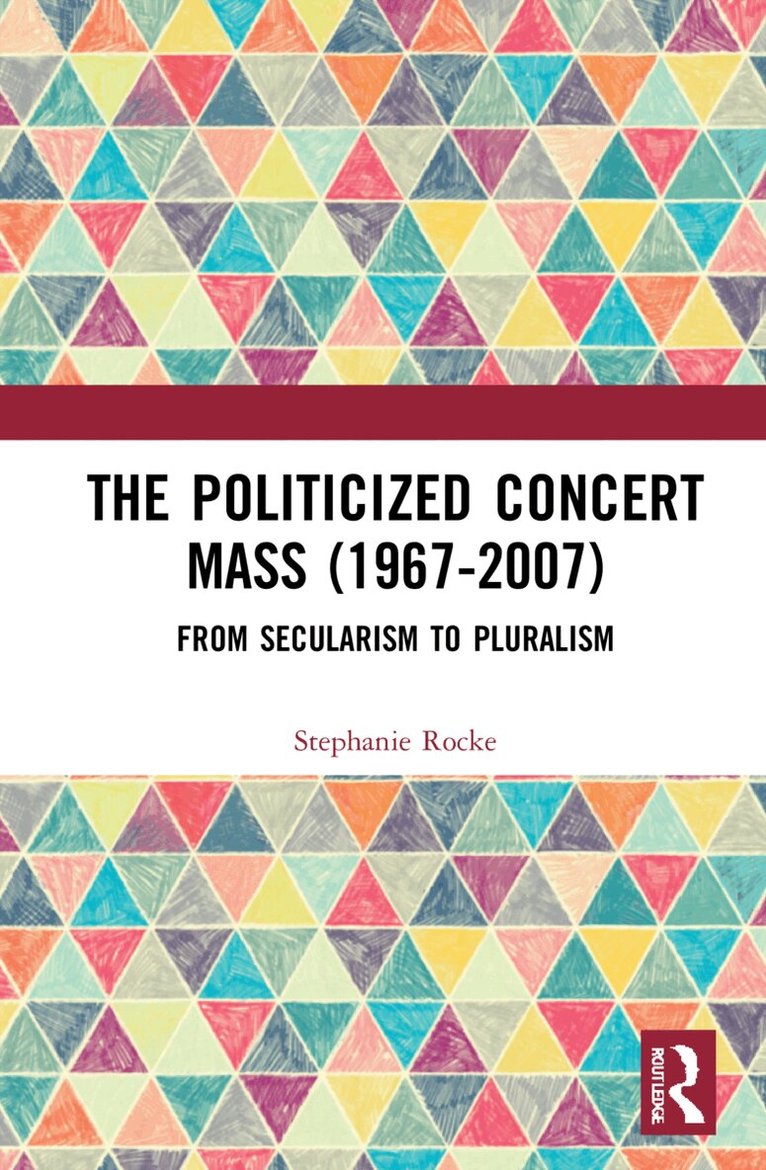
    Politicized Concert Mass (1967-2007)

    From Secularism to Pluralism

    AvStephanie Rocke

    Inbunden, Engelska, 2022

    2 421 kr

    Beställningsvara. Skickas inom 10-15 vardagar. Fri frakt över 249 kr.

    Fler format och utgåvor

    E-bok

    738 kr

    E-bok

    738 kr

    Häftad

    624 kr

    Beskrivning

    Since the transformative 1960s, concert masses have incorporated a range of political and religious views that mirror their socio-cultural context. Those of the long 1960s (c1958-1975) reflect non-conformism and social activism; those of the 1980s, environmentalism; those of the 1990s, universalism; and those of the 2000s, cultural pluralism. Despite utilizing a format with its roots in the Roman Catholic liturgy, many of these politicized concert masses also reflect the increasing religious diversification of Western societies. By introducing non-Catholic and often non-Christian beliefs into masses that also remain respectful of Christian tradition, composers in the later twentieth century have employed the genre to promote a conciliatory way of being that promotes the value of heterogeneity and reinforces the need to protect the diversity of musics, species and spiritualities that enrich life. In combining the political with the religious, the case studies presented pose challenges for both supporters and detractors of the secularization paradigm. Overarchingly, they demonstrate that any binary division that separates life into either the religious or the secular and promotes one over the other denies the complexity of lived experience and constitutes a diminution of what it is to be human.

    Produktinformation

    • Utgivningsdatum:2022-07-29
    • Mått:156 x 234 x 18 mm
    • Vikt:630 g
    • Format:Inbunden
    • Språk:Engelska
    • Antal sidor:242
    • Förlag:Taylor & Francis Ltd
    • ISBN:9781032271507

    Utforska kategorier

    • Kulturvetenskap inom Samhälle och politik
    • Musik: stilar och genrer inom Kultur
    • Religion: allmänt inom Filosofi och religion

    Mer om författaren

    Stephanie Rocke is a Research Fellow at the University of Melbourne with an ongoing interest in religious and cultural diversity as it is manifested in musical forms and musical activities across time. Recent publications reflect an expansion into the fields of music and emotion, the history of emotion, Australian music and creativity for wellbeing. The Origins and Ascendancy of the Concert Mass was published by Routledge in 2020.

    Innehållsförteckning

    • IntroductionThe concert massConcert mass backgroundConceptual framework and theoretical approachesSecularizationIssues of transcendenceReligious universalism and pluralismRelativismCosmopolitan pluralistsBook structure and chapter outlinesPart I: Challenging boundaries in the long 1960sIntroduction Civil protestRoman Catholic ActivismPart I Case Studies – Introducing the masses of Axelrod, Davies and BernsteinChapter 1: David Axelrod and the Electric Prunes’ psychedelic Mass in F Minor (1967)Cultural context – the popular music industryMass in F Minor (1967) – The Electric Prunes & David Axelrod (1931–2017)David Axelrod – a creative autodidactPlacing Mass in F Minor within the continuum of other massesAn absence of religion (secularization)Psychedelic Elements of Mass in F MinorTextReceptionPsychedelia and the counter cultureCommodification – Mass in F minor as a productMass in F minor legacyChapter 2: Challenging Christianity: Provocative models in Peter Maxwell Davies’s and Leonard Bernstein’s theatrical concert masses Missa super l’homme armé (1971) and Mass (1971)Cultural context – a thirst for changeSecularization in different spheresMissa super l’homme armé (1969 rev. 1971) – Peter Maxwell DaviesAbsurditySacrifice, betrayal and ChristianityMass (1971) – Leonard BernsteinFaithSocial consciousnessDetractorsPart II: Expanding the concert mass into new territoriesIntroductionSubversive protestsPart II case studies – Chihara and Fanshawe: similarities and differencesChapter 3: Christianity as everyday practice: Paul Chihara’s Missa Carminum: Folk Song Mass (1975)Background and genesisMissa Carminum: Folk Song Mass (1975)Text juxtapositionsMelodic juxtapositionsGloriaEros in the music of Missa CarminumChapter 4: David Fanshawe’s African Sanctus: A Mass for Love and Peace (1973) Cultural and religious mergingNeo-colonial cosmopolitan patriotCultural and religious hybridityChristian and Muslim perspectivesTranscultural flowsConclusion to Part IIPart III: God meets Gaia: Concert masses for the environmentIntroductionEnvironmental MovementNew Spiritual PathwaysChristianity and EnvironmentalismLindisfarne AssociationPart III case studies – towards natural religion: environmental concert masses of Winter, Patterson, Lentz and LarsenChapter 5: Paul Winter’s Missa Gaia / Earth Mass (1981) and Paul Patterson’s Mass of the Sea (1983)IntroductionPaul Winter’s Missa Gaia / Earth Mass (1981)"Earth Fair"A concert massGaia & God?Paul Patterson’s Mass of the SeaChapter 6: David Lentz and Jessica Karraker’s wolfMASS (1987) and Libby Larsen’s Missa Gaia: Mass for the Earth (1992)IntroductionwolfMASS (1987) – Daniel Lentz and Jessica KarrakerMusicLibrettoMissa Gaia: Mass for the Earth (1992) – Libby LarsenMusic for mother EarthLibretto – replacement texts and musical choicesCredo: Speak to the Earth and It Shall Teach TheeGod?Conclusion to Part III – Christianity as religious symbolPart IV: Reflecting Religious DiversityIntroductionHistorical antecedentsConcert MassesReligious pluralityTheoretical conceptsToleranceMoral educationDavid Fanshawe – African Sanctus: A Mass For Love And Peace (1973) (Reprise)Exclusivism, inclusivismRelativismConcert Mass responses to plurality – universalism and pluralismChapter 7: Universalistic approaches: Roger Davidson’s Missa Universalis I, II and III (1987–1992) and Luis Bacalov’s Misa Tango (1997)IntroductionUniversalismRoger Davidson: Missa Universalis I, II and III (1987–1992)Nuancing UniversalismLuis Bacalov’s Misa Tango (1997)Tango and ReligionLamb of GodChapter 8: Towards Pluralism: Carman Moore’s Mass for the 21st Century (1994–1995)IntroductionAbandoning universalismInclusive pluralismCarman Moore’s Mass for the 21st Century (1994–1995)Universalism and pluralismChapter 9: Pluralism in two twenty-first-century concert masses: Karl Jenkins’s The Armed Man: A Mass for Peace (2000) and And on Earth Peace: A Chanticleer Mass (2007)IntroductionThe Armed Man: A Mass for Peace (2000)Moving emotions through musicChoral and commercial successPluralistic aspectsAnd on Earth, Peace: A Chanticleer Mass (2007)Pluralism and universlismSpiritualityConclusion to Part IVConclusion: From secularism to pluralism in forty years of politicized concert massesIndexConcert Mass Index