• Fri frakt över 249 kr
  • •
  • Snabba leveranser
  • •
  • Billiga böcker
Kundservice

Du är på sajten för privatpersoner.

Företag, bibliotek eller offentlig verksamhet?

Du handlar på classic.bokus.com, där alla dina funktioner finns intakta.
Till classic.bokus.com
Bokus logotyp. Gå till startsidan.
  • Erbjudanden
  • Nyheter
  • Student
  • Topplistor
  • Barn & ungdom
  • Bokus Play
  • E-böcker
  • Pocketböcker
  • Spel & pussel

10% rabatt på allt med kod: NYSTART10 →

Sidfot

Mina sidor

    Hjälp

    • Kundservice
    • Vanliga frågor och svar
    • Frakt och leverans
    • Retur vid ångerrätt
    • Reklamera vara
    • Betalning
    • Köpvillkor
    • Allmänna villkor
    • Information om webbplatsens tillgänglighet

    Om Bokus

    • Om oss
    • Pressrum
    • För studenter
    • För företag
    • För bibliotek och offentlig verksamhet
    • För leverantörer
    • Hållbarhet

    Populärt

    • Aktuella erbjudanden
    • Presentkort
    • Studentlitteratur
    • Nya böcker
    • Topplistor
    • Signerade böcker
    • Engelska böcker

    Inspiration

    • Boktips
    • BookTok
    • Populära bokserier
    • Barnbokskaraktärer
    • Populära författare
    Logotyp för Bokus
    Följ oss på Facebook (extern länk)Följ oss på Instagram (extern länk)Följ oss på YouTube (extern länk)Följ oss på TikTok (extern länk)
    bokus @ CookiesAnpassa cookiesIntegritetspolicyKöpvillkor
    Till Citymail hemsida (extern länk)Till Budbee hemsida (extern länk)Till Postnord hemsida (extern länk)Till Schenker hemsida (extern länk)Till Early Bird hemsida (extern länk)Till Walleys hemsida (extern länk)
    1. Psykologi och pedagogik
    2. Pedagogik
    3. Skolväsen och utbildningssystem
    4. Examination och betygsättning

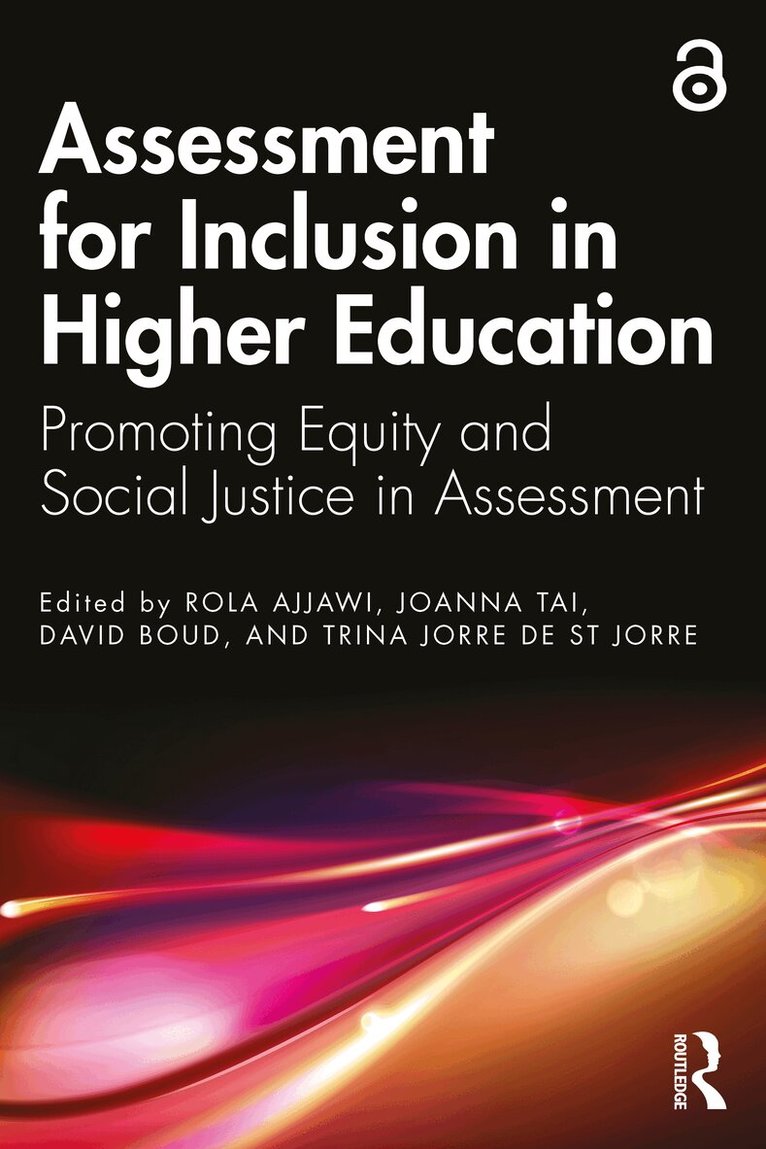
    Assessment for Inclusion in Higher Education

    Promoting Equity and Social Justice in Assessment

    AvRola Ajjawi,Joanna Tai

    Häftad, Engelska, 2022

    553 kr

    Beställningsvara. Skickas inom 10-15 vardagar. Fri frakt över 249 kr.

    Beskrivning

    Bringing together international authors to examine how diversity and inclusion impact assessment in higher education, this book provides educators with the knowledge and understanding required to transform practices so that they are more equitable and inclusive of diverse learners. Assessment drives learning and determines who succeeds. Assessment for Inclusion in Higher Education is written to ensure that no student is unfairly or unnecessarily disadvantaged by the design or delivery of assessment. The chapters are structured according to three themes: 1) macro contexts of assessment for inclusion: societal and cultural perspectives; 2) meso contexts of assessment for inclusion: institutional and community perspectives; and 3) micro contexts of assessment for inclusion: educators, students and interpersonal perspectives. These three levels are used to identify new ways of mobilising the sector towards assessment for inclusion in a systematic and scholarly way.This book is essential reading for those in higher education who design and deliver assessment, as well as researchers and postgraduate students exploring assessment, equity and inclusive pedagogy.Creative Commons Attribution-Non Commercial-No Derivatives 4.0 license

    Produktinformation

    • Utgivningsdatum:2022-12-19
    • Mått:156 x 234 x 18 mm
    • Vikt:500 g
    • Format:Häftad
    • Språk:Engelska
    • Antal sidor:246
    • Förlag:Taylor & Francis Ltd
    • ISBN:9781032274942

    Utforska kategorier

    • Examination och betygsättning inom Psykologi och pedagogik
    • Specialundervisning inom Psykologi och pedagogik
    • Utbildningsstrategier och utbildningspolitik inom Psykologi och pedagogik

    Mer om författaren

    Rola Ajjawi is Professor Education Research at the Centre for Research in Assessment and Digital Learning, Deakin University, Australia where she has led an extensive program of research into student failure and success, with particular interest in equity, feedback and learning cultures.Joanna Tai is Senior Research Fellow at the Centre for Research in Assessment and Digital Learning, Deakin University Australia. She researches student experiences of learning and assessment from university to the workplace, including feedback and assessment literacy, evaluative judgement and peer learning.David Boud is Alfred Deakin Professor and Foundation Director of the Centre for Research in Assessment and Digital Learning at Deakin University, Australia. He is also Emeritus Professor at the University of Technology Sydney and Professor of Work and Learning at Middlesex University. His current work is in the areas of assessment for learning in higher education, academic formation and workplace learning.Trina Jorre de St Jorre is Honorary Fellow at the Centre for Research in Assessment and Digital Learning, Deakin University, and Student Experience Portfolio Manager at University of New England. Her research and practice is focused on continual improvement of the student experience, with particular interest in graduate employability and student achievement.

    Innehållsförteckning

    • Introduction. Section 1: Macro contexts of assessment for inclusion: societal and cultural perspectives 1. Promoting equity and social justice through assessment for inclusion 2. Reflections on assessment for social justice and assessment for inclusion 3. Why crip assessment? Critical disability studies theories to advance assessment for inclusion 4. Indigenous perspectives on inclusive assessment: Knowledge, knowing and the relational 5. What can decolonisation of curriculum tell us about inclusive assessment? 6. Inclusive assessment, exclusive academy 7. Ontological assessment decisions in teaching and learning Section 2: Meso contexts of assessment for inclusion: institutional and community perspectives 8. Inclusive assessment: Recognising difference through communities of praxis 9. Inclusive assessment and Australian higher education policy 10. Inclusion, cheating and academic integrity: validity as a goal and a mediating concept 11. Student equity in the age of AI-enabled assessment: Towards a politics of inclusion 12. Opportunities and limitations of accommodations and accessibility in higher education assessment 13. More than assessment task design: promoting equity for students from low socio-economic status backgrounds 14. Assessing employability skills: How are current assessment practices ‘fair’ for international students? Section 3: Micro contexts of assessment for inclusion: educators, students and interpersonal perspectives 15. How do we assess for ‘success’? Challenging assumptions of success in the pursuit of inclusive assessment 16. Inclusive and exclusive assessment: Exploring the experiences of mature-aged students in regional and remote Australia 17. Normalising alternative assessment approaches for inclusion 18. Student choice of assessment methods: How can this approach become more mainstream and equitable? 19. "How to look at it differently": negotiating more inclusive assessment design with student partners 20. Addressing inequity: Students’ recommendations on how to make assessment more inclusive End Section Moving forward: mainstreaming assessment for inclusion in curricula