• Fri frakt över 249 kr
  • •
  • Snabba leveranser
  • •
  • Billiga böcker
Kundservice

Du är på sajten för privatpersoner.

Företag, bibliotek eller offentlig verksamhet?

Du handlar på classic.bokus.com, där alla dina funktioner finns intakta.
Till classic.bokus.com
Bokus logotyp. Gå till startsidan.
  • Erbjudanden
  • Nyheter
  • Student
  • Topplistor
  • Barn & ungdom
  • Bokus Play
  • E-böcker
  • Pocketböcker
  • Spel & pussel

10% rabatt på allt med kod: NYSTART10 →

Sidfot

Mina sidor

    Hjälp

    • Kundservice
    • Vanliga frågor och svar
    • Frakt och leverans
    • Retur vid ångerrätt
    • Reklamera vara
    • Betalning
    • Köpvillkor
    • Allmänna villkor
    • Information om webbplatsens tillgänglighet

    Om Bokus

    • Om oss
    • Pressrum
    • För studenter
    • För företag
    • För bibliotek och offentlig verksamhet
    • För leverantörer
    • Hållbarhet

    Populärt

    • Aktuella erbjudanden
    • Presentkort
    • Studentlitteratur
    • Nya böcker
    • Topplistor
    • Signerade böcker
    • Engelska böcker

    Inspiration

    • Boktips
    • BookTok
    • Populära bokserier
    • Barnbokskaraktärer
    • Populära författare
    Logotyp för Bokus
    Följ oss på Facebook (extern länk)Följ oss på Instagram (extern länk)Följ oss på YouTube (extern länk)Följ oss på TikTok (extern länk)
    bokus @ CookiesAnpassa cookiesIntegritetspolicyKöpvillkor
    Till Citymail hemsida (extern länk)Till Budbee hemsida (extern länk)Till Postnord hemsida (extern länk)Till Schenker hemsida (extern länk)Till Early Bird hemsida (extern länk)Till Walleys hemsida (extern länk)
    1. Psykologi och pedagogik
    2. Psykologi
    3. Psykologiska teorier och skolor
    4. Freudiansk psykologi

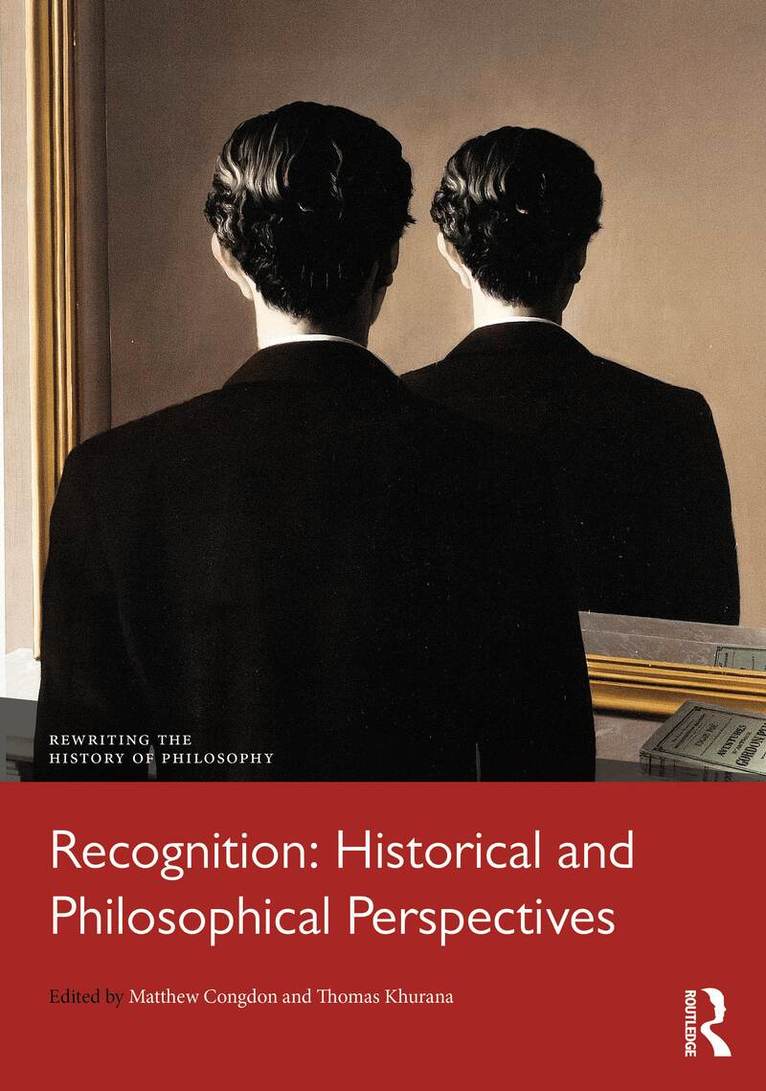
    Recognition: Historical and Philosophical Perspectives

    AvMatthew Congdon,Thomas Khurana

    Inbunden, Engelska, 2025

    Del i serien Rewriting the History of Philosophy

    3 656 kr

    Beställningsvara. Skickas inom 10-15 vardagar. Fri frakt över 249 kr.

    Beskrivning

    The concept of recognition has moved to the forefront of philosophical research in recent decades, particularly in political and social philosophy but also related areas, including philosophy of race and gender, philosophy of mind and language, ethics and aesthetics. It is a concept with deep roots from at least Rousseau and Hegel to contemporary social theory.In this outstanding volume, an international roster of contributors expands our perspective on recognition beyond the standard story, providing a thought-provoking reassessment of the concept and its history. Covering the fundamental figures and themes, while also going beyond them, the twenty-nine chapters explore the full scope of recognition in four sections:Aesthetic recognition, including chapters on Kant, Simmel, Murdoch, and the relationship between recognition, art, and film, including Boorman’s Deliverance and the Dardenne brothers’ Rosetta Recognition in philosophy of mind and language, including chapters on mind-reading, psychoanalysis, the logic and language of recognition, and its relation to epistemic agencyThe ethics of recognition, including chapters on Homer, Plato, classical yoga, F. Schlegel, Beauvoir, the Anthropocene, and recognition in the ethics of cognitive disabilityThe social and political philosophy of recognition, including chapters on property and gift-giving, Hegel’s aftermath, slavery and liberation, colonialism, Arendt, and alterityWith a lucid introduction by the editors detailing the standard story of recognition and what lies beyond, Recognition: Historical and Philosophical Perspectives provides an authoritative and multifaceted exploration of this fascinating concept, expanding its relevance considerably. It will be important reading for those in philosophy as well as related disciplines such as political theory, sociology, social psychology, and psychoanalysis.

    Produktinformation

    • Utgivningsdatum:2025-12-12
    • Mått:174 x 246 x 29 mm
    • Vikt:1 000 g
    • Format:Inbunden
    • Språk:Engelska
    • Serie:Rewriting the History of Philosophy
    • Antal sidor:442
    • Förlag:Taylor & Francis Ltd
    • ISBN:9781032304915

    Utforska kategorier

    • Freudiansk psykologi inom Psykologi och pedagogik
    • Filosofiska discipliner inom Filosofi och religion

    Mer om författaren

    Matthew Congdon is an Assistant Professor of Philosophy at Vanderbilt University, USA, specializing in ethics, social philosophy, and aesthetics. His book, Moral Articulation: On the Development of New Moral Concepts, was published in 2024.Thomas Khurana is Professor of Philosophy at the University of Potsdam, Germany, and Director of the Center for Post-Kantian Philosophy. He is the editor of a special issue of the European Journal of Philosophy (2021) on Recognition and the Second Person and the author of The Life of Freedom in Kant and Hegel (2026).

    Recensioner i media

    'Since path-breaking work on the theme in the 1990’s and early 2000’s, recognition theory has developed into a major research approach, perhaps even paradigm, in philosophy and related disciplines. Certain limiting assumptions about recognition are widely associated with this approach—assumptions concerning the history of the idea, the legitimate areas of application of the approach, the paradigmatic structure of recognition-relations, and their possible relata. This superb collection of new essays shakes these associations and paves way for understanding recognition as having a much wider significance than often thought—universally human and perhaps even crossing the boundary between the human and the non-human. It is essential reading for anyone interested in the theme of recognition.' - Heikki Ikäheimo, University of New South Wales, Australia

    Innehållsförteckning

    • Acknowledgements Notes on Contributors Philosophies of Recognition: An Introduction Matthew Congdon and Thomas Khurana Part 1: Aesthetics 1. Aesthetic Recognition: A Kantian Model Samantha Matherne 2. Three Models of Aesthetic Recognition Jörg Schaub 3. Playing Society: Simmel’s “Sociability” and the Idea for an Aesthetic Species of Recognition Barbara Carnevali 4. A Recognitive Bond without Terms: The Concept of Aesthetic Action Florian Klinger 5. Recognizing Others Through Art Scott Shushan 6. Recognition and Deliverance Andrew Norris 7. Failed Recognition in the Dardennes’ Rosetta: Hegelian Implications Robert B. Pippin Part 2: Mind, Language, and Knowledge 8. Recognition versus Mind-Reading in Philosophy of Mind and Language Richard Moran 9. Recognition in Theory: Psychoanalytic Theory and the Epistemology of Recognition Francey Russell 10. Acknowledgment Is Not Recognition: On the Perlocutionary Dimension of Our Normative Practices Daniele Lorenzini 11. From Interacting Substances to Recognizing People: On the Logical Foundations of Hegel’s Theory of Recognition Andrew Werner 12. Recognition and Intellectual Self-Trust Nadja El Kassar 13. Homeplace: Recognition-giving Practices and Epistemic Agency in Communal Spaces Hilkje C. Hänel Part 3: Ethics 14. Ancient Greek Recognition? Homer, Plato, and the Struggle for Honor Jonathan Fine 15. Recognition of the Will Wayne Martin 16. Persons, Animals, and Recognition: A Classical Yoga Perspective Owen Ware 17. A Romance of Recognition: Nature, Gender and Sex(ism) in Friedrich Schlegel Federica Gregoratto 18. Unveiling Existential Ambiguity: The Role of Recognition in Simone de Beauvoir's Philosophy Manon Garcia 19. From Ecocide to Nature’s Right: Recognition in the Anthropocene Jay Bernstein 20. Moral Invisibility and Institutional Care Vanessa Carbonell Part 4: Social and Political Philosophy 21. Kant’s Theory of Property as a Theory of Mutual Recognition Rafeeq Hasan 22. Recognition in a Form of Life Terry Pinkard 23. G.W.F. Hegel, Frantz Fanon, and Angela Davis on Recognition, Slavery, and Liberation Daniel James and Franz Knappik 24. Five Notes on Counter-Recognition Daniel Loick 25. Metamorphosis of Value: Epistemic Protocols in the Racial Longue Durée Rocío Zambrana 26. Arendt’s Philosophy of Appearance and the Ambivalences of Recognition Sophie Loidolt 27. The Power of the Third: Recognition and Gift-Giving Dirk Quadflieg 28. Equality, Interpellation, Liberation: Three Vectors of Recognition Christoph Menke (translated by Jacob Blumenfeld). Index