• Fri frakt över 249 kr
  • •
  • Snabba leveranser
  • •
  • Billiga böcker
Kundservice

Du är på sajten för privatpersoner.

Företag, bibliotek eller offentlig verksamhet?

Du handlar på classic.bokus.com, där alla dina funktioner finns intakta.
Till classic.bokus.com
Bokus logotyp. Gå till startsidan.
  • Erbjudanden
  • Nyheter
  • Student
  • Topplistor
  • Barn & ungdom
  • Bokus Play
  • E-böcker
  • Pocketböcker
  • Spel & pussel

10% rabatt på allt med kod NYSTART10 →

Sidfot

Mina sidor

    Hjälp

    • Kundservice
    • Vanliga frågor och svar
    • Frakt och leverans
    • Retur vid ångerrätt
    • Reklamera vara
    • Betalning
    • Köpvillkor
    • Allmänna villkor
    • Information om webbplatsens tillgänglighet

    Om Bokus

    • Om oss
    • Pressrum
    • För studenter
    • För företag
    • För bibliotek och offentlig verksamhet
    • För leverantörer
    • Hållbarhet

    Populärt

    • Aktuella erbjudanden
    • Presentkort
    • Studentlitteratur
    • Nya böcker
    • Topplistor
    • Signerade böcker
    • Engelska böcker

    Inspiration

    • Boktips
    • BookTok
    • Populära bokserier
    • Barnbokskaraktärer
    • Populära författare
    Logotyp för Bokus
    Följ oss på Facebook (extern länk)Följ oss på Instagram (extern länk)Följ oss på YouTube (extern länk)Följ oss på TikTok (extern länk)
    bokus @ CookiesAnpassa cookiesIntegritetspolicyKöpvillkor
    Till Citymail hemsida (extern länk)Till Budbee hemsida (extern länk)Till Postnord hemsida (extern länk)Till Schenker hemsida (extern länk)Till Early Bird hemsida (extern länk)Till Walleys hemsida (extern länk)
    1. Samhälle och politik
    2. Sociologi och antropologi
    3. Sociologi

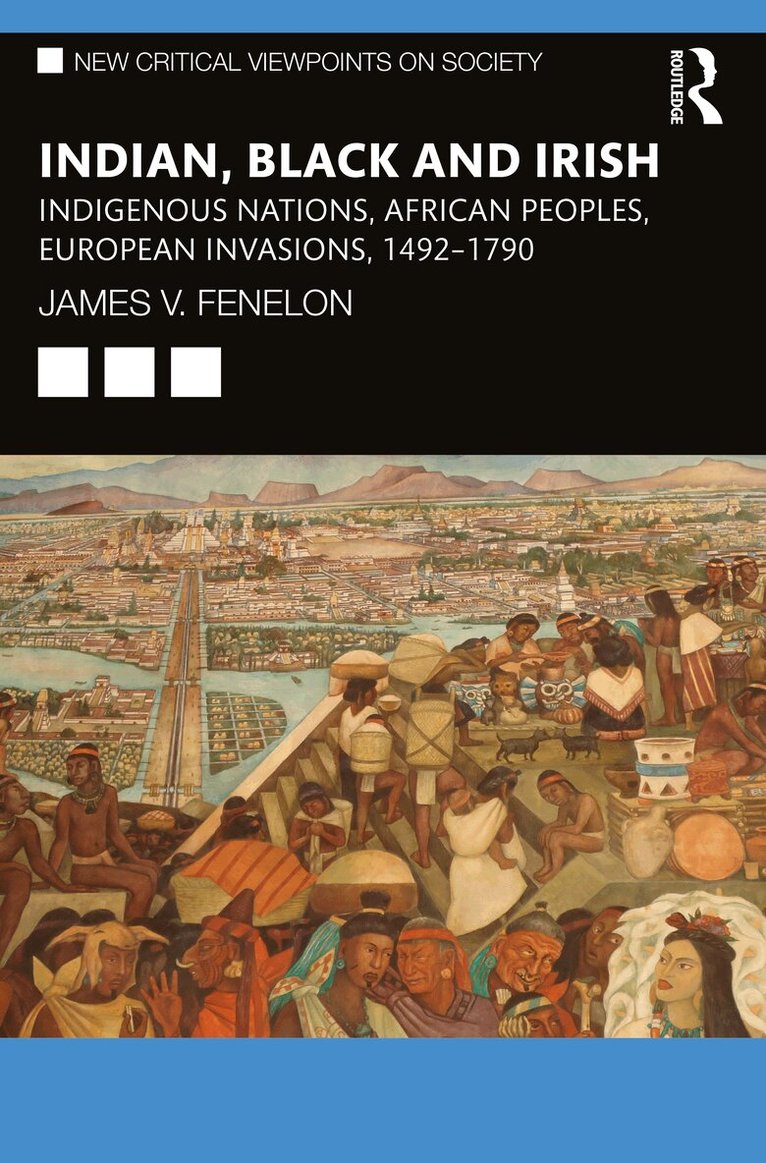
    Indian, Black and Irish

    Indigenous Nations, African Peoples, European Invasions, 1492-1790

    AvJames V. Fenelon

    Häftad, Engelska, 2023

    Del i serien New Critical Viewpoints on Society

    600 kr

    Beställningsvara. Skickas inom 10-15 vardagar. Fri frakt över 249 kr.

    Fler format och utgåvor

    E-bok

    708 kr

    E-bok

    708 kr

    Inbunden

    2 495 kr

    Beskrivning

    This book traces 500 years of European-American colonization and racialized dominance, expanding our common assumptions about the ways racialization was used to build capitalism and the modern world-system.Professor Fenelon draws on personal experience and the agency of understudied Native (and African) resistance leaders, to weave a story too often hidden or distorted in the annals of the academy, that remains invisible at many universities and historical societies. The book identifies three epochs of racial constructions, colonialism, and capitalism that created the USA. Indigenous nations, the first to be racialized on a global scale, African peoples, enslaved and brought to the Americas, and European immigrants. It offers a sweeping analysis of the forces driving the invasion, occupation, and exploitation of Native America and the significance of labor in American history provided by Indigenous people, Africans, and immigrants, specifically the Irish.Indian, Black and Irish makes major contributions toward a deeper understanding of where Supremacy and Sovereignty originated from, and how our modern world has used these socio-political constructions, to build global hegemony that now threatens our very existence, through wars and climate change. It will be a vital resource to those studying history, colonialism, race and racism, labor history, and indigenous peoples.

    Produktinformation

    • Utgivningsdatum:2023-04-28
    • Mått:152 x 229 x 23 mm
    • Vikt:458 g
    • Format:Häftad
    • Språk:Engelska
    • Serie:New Critical Viewpoints on Society
    • Antal sidor:288
    • Förlag:Taylor & Francis Ltd
    • ISBN:9781032324487

    Utforska kategorier

    • Sociologi inom Samhälle och politik
    • Amerikas historia inom Historia och arkeologi
    • Etnicitet inom Samhälle och politik

    Recensioner i media

    "The prosperity of the West was built on the blood and land of Indigenous peoples and the sweat of other people of color. In this magisterial book, Professor Fenelon skillfully weaves the long and thick story of how all Europeans and a myriad of their institutions participated in this process and benefitted from it. After this book, no European or their descendants can claim racial innocence. Bravo Professor Fenelon for this major contribution."Eduardo Bonilla-Silva, Duke University, author of Racism Without Racists"The history of capital, as Professor James Fenelon shows in this urgent and timely new study, is the history and racism and genocide. The story is told with great clarity, passion, and abundance of historical evidence. At a time when global capitalism is throwing communities around the world into desperate struggles for survival and threatening our very existence, this masterful study is as much a powerful indictment of the past and the present of this out of control system. as it is a dire warning of the future to come if we do not come to terms with the legacy of racism, colonialism, and genocide in the Americas and beyond."William I. Robinson, Distinguished Professor of Sociology, University of California at Santa Barbara, Author of The Global Police State"Once again, Dakota Professor James Fenelon offers a thoughtful, provocative, and engaging history examining race and racism globally. He focuses on Indigenous, Black, and Irish people, offering a global story of people and systems. The book analyzes the impact of colonialism, racism, and Native responses--past and present—of systems designed to denigrate, distort, and exploit. Fenelon focuses on agency and sovereign responses of people faced with rapid change and foreign disruptions. Superbly researched, elegantly written, and wonderfully argued, Fenelon draws on original sources, multiple illustrations, and his own experiences to offer this fascinating, groundbreaking study."Clifford E. Trafzer, Rupert Costo Chair in American Indian Affairs , Distinguished Professor of History, University of California, Riverside

    Innehållsförteckning

    • 1. Introduction: 1490 – 2020 Racial construction of Indians, Blacks, Whites 2. The Indian: 1492 –1620 Racial construction of Indians and Blacks 3. The Black: 1620 – 1790 Institutionalizing Racial Codification 4. Three Revolutions: 1776 – 1790 three Races in a New State Bibliography