• Fri frakt över 249 kr
  • •
  • Snabba leveranser
  • •
  • Billiga böcker
Kundservice

Du är på sajten för privatpersoner.

Företag, bibliotek eller offentlig verksamhet?

Du handlar på classic.bokus.com, där alla dina funktioner finns intakta.
Till classic.bokus.com
Bokus logotyp. Gå till startsidan.
  • Erbjudanden
  • Nyheter
  • Student
  • Topplistor
  • Barn & ungdom
  • Bokus Play
  • E-böcker
  • Pocketböcker
  • Spel & pussel

10% rabatt på allt med kod: NYSTART10 →

Sidfot

Mina sidor

    Hjälp

    • Kundservice
    • Vanliga frågor och svar
    • Frakt och leverans
    • Retur vid ångerrätt
    • Reklamera vara
    • Betalning
    • Köpvillkor
    • Allmänna villkor
    • Information om webbplatsens tillgänglighet

    Om Bokus

    • Om oss
    • Pressrum
    • För studenter
    • För företag
    • För bibliotek och offentlig verksamhet
    • För leverantörer
    • Hållbarhet

    Populärt

    • Aktuella erbjudanden
    • Presentkort
    • Studentlitteratur
    • Nya böcker
    • Topplistor
    • Signerade böcker
    • Engelska böcker

    Inspiration

    • Boktips
    • BookTok
    • Populära bokserier
    • Barnbokskaraktärer
    • Populära författare
    Logotyp för Bokus
    Följ oss på Facebook (extern länk)Följ oss på Instagram (extern länk)Följ oss på YouTube (extern länk)Följ oss på TikTok (extern länk)
    bokus @ CookiesAnpassa cookiesIntegritetspolicyKöpvillkor
    Till Citymail hemsida (extern länk)Till Budbee hemsida (extern länk)Till Postnord hemsida (extern länk)Till Schenker hemsida (extern länk)Till Early Bird hemsida (extern länk)Till Walleys hemsida (extern länk)
    1. Samhälle och politik
    2. Politik och statsskick
    3. Internationella relationer

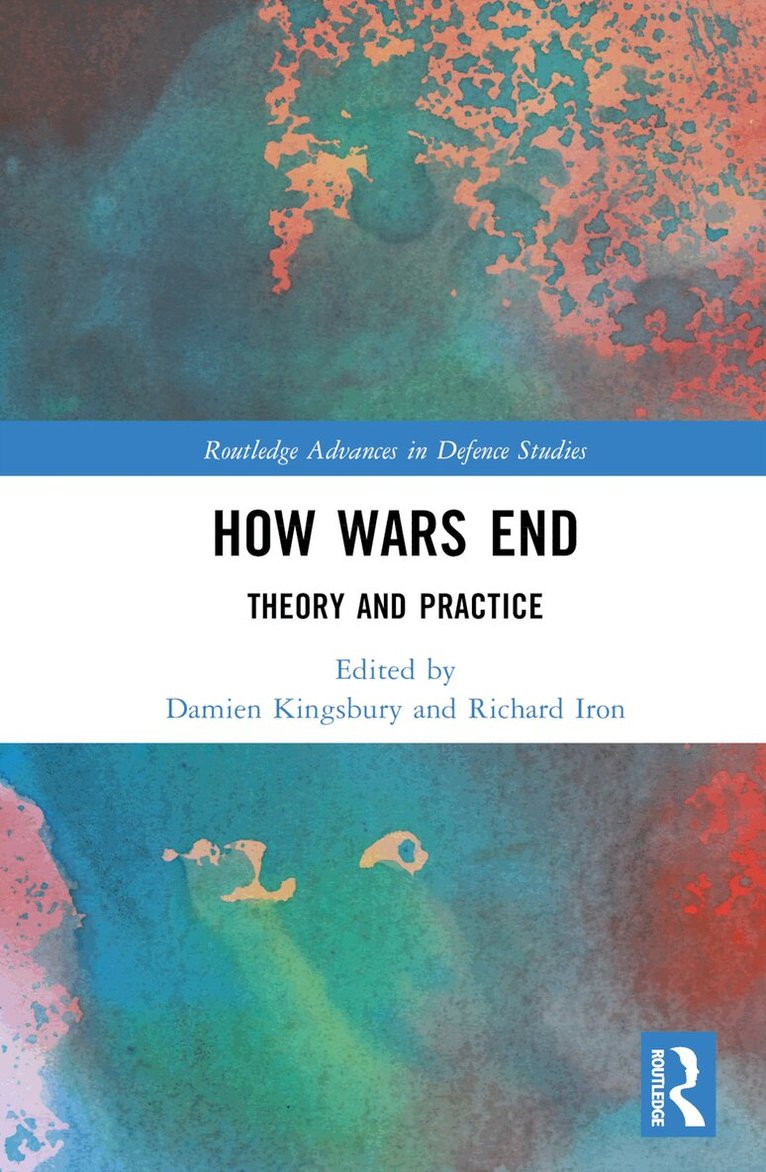
    How Wars End

    Theory and Practice

    AvDamien Kingsbury,Richard Iron

    Inbunden, Engelska, 2022

    Del i serien Routledge Advances in Defence Studies

    2 058 kr

    Beställningsvara. Skickas inom 10-15 vardagar. Fri frakt över 249 kr.

    Beskrivning

    This book addresses one of the most important issues in international relations – how wars are ended. The volume draws on the direct experience of both soldiers and academics, who in each case have also been advisers on fighting and ending wars. Unlike more theoretical works, the book draws on first-hand experiences in the case studies, which include the wars in Iraq, Afghanistan, Sierra Leone and Indonesia, among others. The volume is constructed around a series of themes. The first theme is why wars start and how they can be understood, based on the assumption that knowing how, and why, wars start is fundamental to understanding how they might end. The second is what sustains wars and what makes them difficult to end. Again, once wars start, understanding what keeps them going is critical to how to end them. The third focuses on the role of external intervention in ending wars, including as a belligerent partner in war, as a peacemaking or peacekeeping force, and as a mediator between warring parties. The fourth addresses the issue of ‘ripeness’ and the right conditions for ending wars. The fifth addresses the modalities for ending wars and creating peace, with the sixth theme being focused on transitions to peace and what is required to help make those transitions successful. The book will be of interest to students of military, strategic and security studies, peace studies and International Relations.

    Produktinformation

    • Utgivningsdatum:2022-12-27
    • Mått:156 x 234 x 21 mm
    • Vikt:460 g
    • Format:Inbunden
    • Språk:Engelska
    • Serie:Routledge Advances in Defence Studies
    • Antal sidor:296
    • Förlag:Taylor & Francis Ltd
    • ISBN:9781032329512

    Utforska kategorier

    • Internationella relationer inom Samhälle och politik
    • Militär strategi inom Samhälle och politik

    Mer om författaren

    Richard Iron CMG OBE is the president of the Victorian Branch of the Australian Institute of International Affairs. He has served in the British Army, was Defence Fellow at the University of Oxford and has worked for the UK’s Chief of Defence Staff on strategic planning. Damien Kingsbury is an emeritus professor with the School of Humanities and Social Sciences at Deakin University, Melbourne. He was the principle adviser to the Free Aceh Movement in the 2005 Helsinki Peace Talks and has advised a number of other armed non-state groups in conflict resolution. His is author or editor of more than two dozen books, most recently including Separatism and the State.

    Recensioner i media

    'This is an extremely timely and important book. The complexity of how wars end is not often studied; or if is studied, we tend towards the large and multifaceted industrial world wars of the 20th century. While this book covers lesser-known wars, it nevertheless highlights themes and questions that have been debated for millennia when considering human conflict. This book should be a must read for policy decision makers and military officers, as it offers important insights relevant to making the decision to go to war, the implementation of war, and how to attempt to end a war. Above all, it illuminates the need to recognize that war is not a simple and linear process, but a bloody and reciprocal one.'Daniel Marston, Director of SECDEF Strategic Thinkers Programme, SAIS, Johns Hopkins University, USA'This thoughtful collection of essays on war and peace is right to ponder how wars end. We seem to have forgotten how to end wars, on our terms, as demonstrated by our almost 2-decade long sojourn in the Middle East. When these long wars did finally end they only ended for us not the beleaguered people of Iraq and Afghanistan. We left and have chosen not to look back. To our shame there hasn’t been any real effort at the political or strategic level to learn any lessons from these most recent expenditures of blood and treasure. These essays and case studies invite us to think about which wars we choose in the future, why we choose them and our commitment to achieve victory. After our recent experience it is clear that someone forgot to ask some simple questions. Why go to war, what does victory look like and how do we know when we have won. Another important question is how we know when we have lost. As well as these questions we should examine the decisions to go to war, how they are made, who makes them and why. Another essential question is to examine is why we stay at war. Put simply, every day we remain at war is another decision to go to war. These essays from some of our most thoughtful writers on war and conflict are an essential read for politicians, policy makers, those engaged in strategic studies and anyone interested in the future security of Australia. While we ponder the important questions from our previous wars lets also think that we seem to be lining up candidates for future war and conflict. Hurry up and read this book before we make some more mistakes and blunders.'Lieutenant General Peter Francis Leahy, AC, retired chief of the Australian Army (2002-08), Professor and foundation director of the National Security Institute, University of Canberra, Australia

    Innehållsförteckning

    • Introduction Section I: Why War? 1. The Causes of War—and their Consequences 2. A Typology of Wars and How They End 3. How You Fight a War Matters to How It Ends: A Real-World Contemporary Case Study—Iraq 2016 Section II: Case Studies 4. Libya’s Mercenaries Crisis: ‘I am here to protect the King of Kings’ 5. Indonesia’s war against East Timor: How it Ended 6. Ending the Sierra Leone War 7. Peace Processes in Aceh and Sri Lanka: A Comparative Assessment 8. How Wars End: The Case of Afghanistan 9. Some Reflections on the Pursuit of ‘Peace’ in Afghanistan: ‘Never Send to Know for Whom the Wars End’ Section III: Alternatives 10. Reflections on the Australian Experience: How Wars End 11. How Major-Power Wars End Section IX: Ways Forward 12. Negotiations to End all Wars 13. Negotiating Peace 14. Endless Wars, Perpetual Peacekeeping? 15. Conclusion