• Fri frakt över 249 kr
  • •
  • Snabba leveranser
  • •
  • Billiga böcker
Kundservice

Du är på sajten för privatpersoner.

Företag, bibliotek eller offentlig verksamhet?

Du handlar på classic.bokus.com, där alla dina funktioner finns intakta.
Till classic.bokus.com
Bokus logotyp. Gå till startsidan.
  • Erbjudanden
  • Nyheter
  • Student
  • Topplistor
  • Barn & ungdom
  • Bokus Play
  • E-böcker
  • Pocketböcker
  • Spel & pussel

10% rabatt på allt med kod: NYSTART10 →

Sidfot

Mina sidor

    Hjälp

    • Kundservice
    • Vanliga frågor och svar
    • Frakt och leverans
    • Retur vid ångerrätt
    • Reklamera vara
    • Betalning
    • Köpvillkor
    • Allmänna villkor
    • Information om webbplatsens tillgänglighet

    Om Bokus

    • Om oss
    • Pressrum
    • För studenter
    • För företag
    • För bibliotek och offentlig verksamhet
    • För leverantörer
    • Hållbarhet

    Populärt

    • Aktuella erbjudanden
    • Presentkort
    • Studentlitteratur
    • Nya böcker
    • Topplistor
    • Signerade böcker
    • Engelska böcker

    Inspiration

    • Boktips
    • BookTok
    • Populära bokserier
    • Barnbokskaraktärer
    • Populära författare
    Logotyp för Bokus
    Följ oss på Facebook (extern länk)Följ oss på Instagram (extern länk)Följ oss på YouTube (extern länk)Följ oss på TikTok (extern länk)
    bokus @ CookiesAnpassa cookiesIntegritetspolicyKöpvillkor
    Till Citymail hemsida (extern länk)Till Budbee hemsida (extern länk)Till Postnord hemsida (extern länk)Till Schenker hemsida (extern länk)Till Early Bird hemsida (extern länk)Till Walleys hemsida (extern länk)
    1. Samhälle och politik
    2. Samhälle och kultur
    3. Kultur och medier
    4. Referensverk och tvärvetenskap

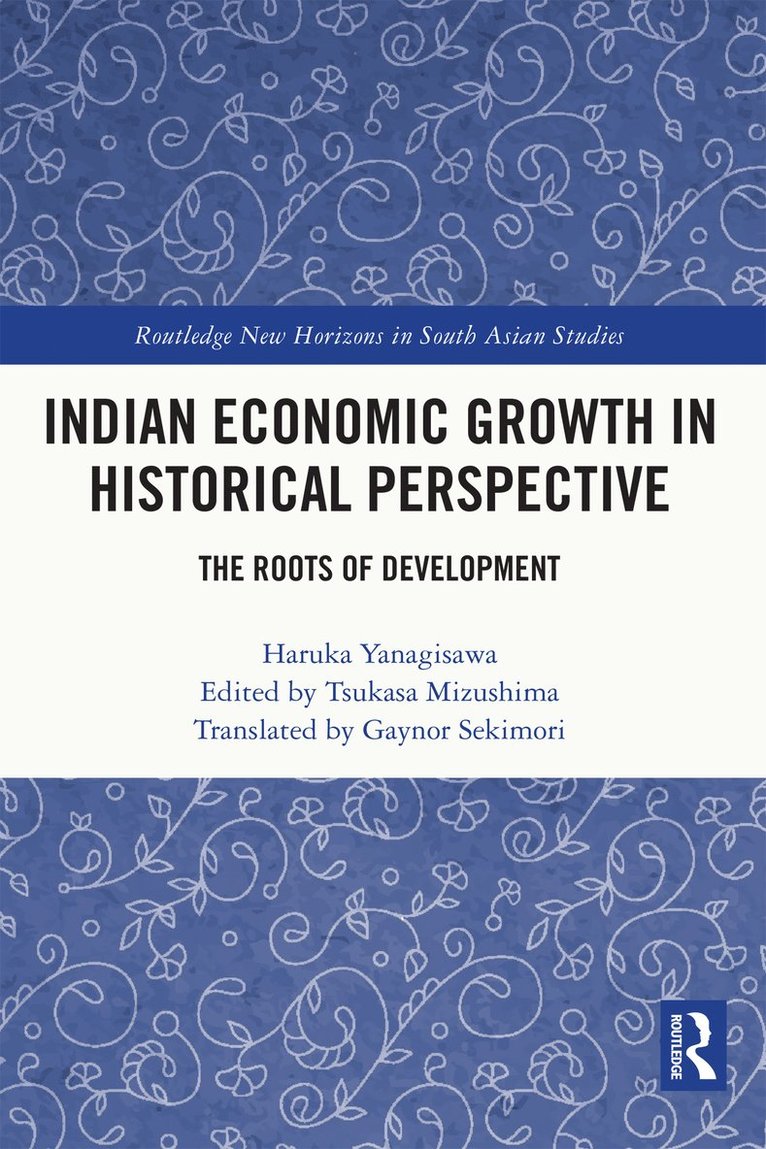
    Indian Economic Growth in Historical Perspective

    The Roots of Development

    AvHaruka Yanagisawa,Tsukasa Mizushima

    Häftad, Engelska, 2024

    Del i serien Routledge New Horizons in South Asian Studies

    624 kr

    Beställningsvara. Skickas inom 10-15 vardagar. Fri frakt över 249 kr.

    Fler format och utgåvor

    E-bok

    760 kr

    E-bok

    760 kr

    Inbunden

    2 117 kr

    Beskrivning

    This book investigates the roots of rapid economic growth of India in recent decades, by exploring historical processes from the late colonial period. Based upon decades-long archival and field research, this book deals with the period from the late nineteenth century to 2013 and offers an integral viewpoint of the economic history of India. While critiquing the conventional understanding that links recent economic growth only with the development of high-tech, export-oriented service sectors under the liberalised economy, the book suggests deeper and wider roots of development that had a cumulative effect in three stages. First, the agrarian development and rural socio-economic changes from the end of the nineteenth century. Second, the state-led import-substitution industrialisation since 1950 that established the industrial foundations for future economic growth. Third, the economic reforms since 1991 that helped technology-intensive industries find new markets with improved quality of production.For the first time available in English, this book by the late Professor Haruka Yanagisawa, who was a leading figure in the South Asia studies collective in Japan, is an important contribution to the academic tradition of economic history of India. It will be of interest to researchers in the field of social and economic history, sociology, anthropology and economies of South Asia.

    Produktinformation

    • Utgivningsdatum:2024-08-26
    • Mått:156 x 234 x 25 mm
    • Vikt:600 g
    • Format:Häftad
    • Språk:Engelska
    • Serie:Routledge New Horizons in South Asian Studies
    • Antal sidor:314
    • Förlag:Taylor & Francis Ltd
    • ISBN:9781032377209

    Utforska kategorier

    • Referensverk och tvärvetenskap inom Samhälle och politik
    • Ekonomiska system inom Ekonomi och Ledarskap
    • Geografi inom Naturvetenskap och teknik

    Mer om författaren

    The late Haruka Yanagisawa, who passed away in 2015, was a Professor Emeritus of the University of Tokyo, Japan. He was much loved and respected for his kindness and academic commitment. His publications include A Century of Change: Caste and Irrigated Lands in Tamilnadu 1860s–1970s (1996), Towards a History of Consumption in South Asia (co-editor, 2010), Local Agrarian Societies in Colonial India: Japanese Perspectives (co-editor, 1996, reprint: 2016), Community, Commons and Natural Resource Management in Asia (editor, 2015). His articles have been published in Indian Economic and Social History Review, Conservation and Society and Review of Agrarian Studies. He has also published many books and articles in Japanese.

    Innehållsförteckning

    • Introduction: In Search of the Roots of Contemporary Economic Growth in India PART I: Stirrings of Economic Development: Moves after World War I 1. Agriculture in the Great Depression: Agricultural Production and Changes in Rural Society; 2. Growth in the Manufacturing Sector: Nationalist Movements, Import Substitution Industrialisation and a Multi-Tiered Labour Market; 3. The Growth of Small-Scale Enterprises and Changes in Consumption Patterns: A Prototype of Post-Independence Informal Sectors Part II: The Economic Development In Independent India: The Formation of a Foundation 4. State-Led Import-Substitution Industrialisation: Forming the Foundation for Further Economic Development; 5. Agrarian Development after Independence; 6. Changes in Rural Society, the Development of the Rural Economy and the Growth of Rural Markets Part III: Accelerated Growth and the Structure of the Indian Economy and Society 7. The Growth of Small-Scale and Informal-Sector Industries and the Production of Low-Cost Goods; 8. The Growth of the Service Sector and Socio-Economic Changes in Rural Society; 9. A Growing Connection between Rural Society and the Urban Informal Economy; 10. Economic Reforms and the Development of the Large-Scale Formal Sector; 11. The Structure of Indian Society and Economic Growth; Conclusion: Towards Further Development