• Fri frakt över 249 kr
  • •
  • Snabba leveranser
  • •
  • Billiga böcker
Kundservice

Du är på sajten för privatpersoner.

Företag, bibliotek eller offentlig verksamhet?

Du handlar på classic.bokus.com, där alla dina funktioner finns intakta.
Till classic.bokus.com
Bokus logotyp. Gå till startsidan.
  • Erbjudanden
  • Nyheter
  • Student
  • Topplistor
  • Barn & ungdom
  • Bokus Play
  • E-böcker
  • Pocketböcker
  • Spel & pussel

10% rabatt på allt med kod: NYSTART10 →

Sidfot

Mina sidor

    Hjälp

    • Kundservice
    • Vanliga frågor och svar
    • Frakt och leverans
    • Retur vid ångerrätt
    • Reklamera vara
    • Betalning
    • Köpvillkor
    • Allmänna villkor
    • Information om webbplatsens tillgänglighet

    Om Bokus

    • Om oss
    • Pressrum
    • För studenter
    • För företag
    • För bibliotek och offentlig verksamhet
    • För leverantörer
    • Hållbarhet

    Populärt

    • Aktuella erbjudanden
    • Presentkort
    • Studentlitteratur
    • Nya böcker
    • Topplistor
    • Signerade böcker
    • Engelska böcker

    Inspiration

    • Boktips
    • BookTok
    • Populära bokserier
    • Barnbokskaraktärer
    • Populära författare
    Logotyp för Bokus
    Följ oss på Facebook (extern länk)Följ oss på Instagram (extern länk)Följ oss på YouTube (extern länk)Följ oss på TikTok (extern länk)
    bokus @ CookiesAnpassa cookiesIntegritetspolicyKöpvillkor
    Till Citymail hemsida (extern länk)Till Budbee hemsida (extern länk)Till Postnord hemsida (extern länk)Till Schenker hemsida (extern länk)Till Early Bird hemsida (extern länk)Till Walleys hemsida (extern länk)
    1. Samhälle och politik
    2. Samhälle och kultur
    3. Kultur och medier
    4. Referensverk och tvärvetenskap

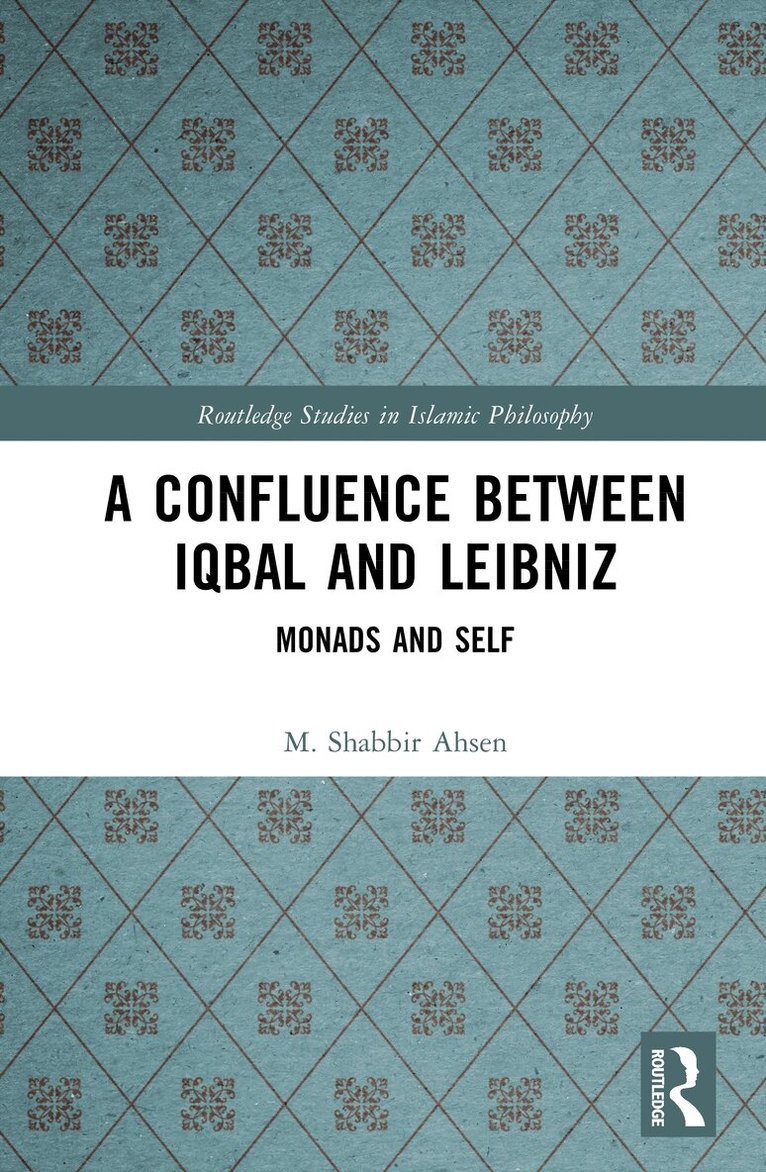
    Confluence Between Iqbal and Leibniz

    Self and Monad

    AvM. Shabbir Ahsen

    Inbunden, Engelska, 2026

    Del i serien Routledge Studies in Islamic Philosophy

    2 421 kr

    Beställningsvara. Skickas inom 10-15 vardagar. Fri frakt över 249 kr.

    Fler format och utgåvor

    E-bok

    805 kr

    E-bok

    805 kr

    Beskrivning

    A Confluence Between Iqbal and Leibniz: Self and Monad explores the striking metaphysical parallels between two towering thinkers separated by centuries – Gottfried Wilhelm Leibniz and Muhammad Iqbal.Bringing these philosophical traditions into dialogue, the book makes a compelling case that both Leibniz and Iqbal articulate a theistic worldview rooted in the metaphysics of plural, self-contained entities: monads for Leibniz and egos or selves for Iqbal. Each thinker posits a universe governed by an omniscient, omnipotent, and benevolent God who grounds all existence and meaning. Through close comparative analysis, the book reveals how both philosophers address the problem of evil, reject Newtonian mechanics, and offer a vision of the cosmos that centres on dynamic individuality and divine purpose. It also revisits and reinterprets key debates in Iqbal scholarship – challenging views that portray him as anti-reason thinkers like Bergson or Nietzsche. In doing so, it opens the possibility that Iqbal’s conception of freedom may even offer a valuable corrective to persistent critiques of Leibniz’s account of agency and determinism.This work will appeal to students and scholars of comparative philosophy, Islamic thought, metaphysics, and religious studies, and to anyone interested in how modern and classical traditions can converge to illuminate enduring questions of self, freedom, and divine order.

    Produktinformation

    • Utgivningsdatum:2026-01-26
    • Mått:156 x 234 x 12 mm
    • Vikt:410 g
    • Format:Inbunden
    • Språk:Engelska
    • Serie:Routledge Studies in Islamic Philosophy
    • Antal sidor:126
    • Förlag:Taylor & Francis Ltd
    • ISBN:9781032427386

    Utforska kategorier

    • Referensverk och tvärvetenskap inom Samhälle och politik
    • Filosofiska discipliner inom Filosofi och religion
    • Religion: allmänt inom Filosofi och religion

    Mer om författaren

    M. Shabbir Ahsen has been a member of the core faculty at the Lahore University of Management Sciences (LUMS) since 2004, where he teaches philosophy. His previous experience includes over ten years at the Department of Philosophy, University of Karachi (KU). He has been a Fulbright Scholar at the University of Kentucky and a Visiting Scholar at Harvard. The Pakistan Philosophical Congress (PPC) appointed him as president of its logic and metaphysics section in 2000, and he served on the executive council from 2002 to 2005. In addition to his research on Wittgenstein, he has contributed to the literature on Muhammad Iqbal.

    Innehållsförteckning

    • Table of ContentsAcknowledgementsIntroductionChapter 1: Self and Monad1.1 Leibniz’s Theory of Monads 1.1.1 The Logic of Simple Substance 1.1.2 The Privileged Status of Monads 1.1.3 Monadic activity 1.1.4 Mirrors of God 1.2 Iqbal and His Conception of Self 1.2.1 The Fundamental Question for Iqbal 1.2.2 The Conception of Reality 1.3 A Comparative Analysis 1.4 ConclusionChapter 2: God 2.1 Leibniz’s Conception of God 2.1.1 Monads and the Necessary Being 2.1.2 Leibniz on the idea of a Perfect Being 2.1.3 Arguments for the Existence of God 2.2 Iqbal’s Conception of God 2.2.1 Iqbal and the Scholastic Arguments for the Existence of God 2.2.2 Making a Case for the Existence of God through Experience 2.3 Parallels between Leibniz and IqbalChapter 3: The Problem of Evil 3.1 Leibniz on the Problem of Evil 3.1.1 The Best of All Possible Worlds 3.1.2 Leibniz on Physical Evil 3.1.3 Leibniz on Moral Evil 3.2 Iqbal on the Problem of Evil 3.2.1 Metaphysical Evil as a Consequence of Creation 3.2.2 Iqbal on Moral Evil 3.2.3 Iqbal on Physical Evil 3.3 Comparisons between Leibniz and Iqbal 3.3.1 Similarities 3.3.2 DifferencesChapter 4: Philosophy of Physics of Leibniz and Iqbal 4.1 Leibniz 4.1.1 Leibniz on Bodies 4.1.2 Leibniz on Cartesian Extension and Newtonian Atomism 4.1.3 Metaphysics of Immaterial Substances and Physical Bodies 4.1.4 Phenomenalism 4.1.5 Bodies as Aggregate of Monads 4.1.6 Leibniz’s Preferred Position: Bodies as Well Founded Phenomena 4.1.7 Space and Time: Newton vs Leibniz 4.1.8 A Summary of Leibniz’s Conception of Space and Time 4.2 Iqbal on Time, Space and Matter 4.2.1 Critical Assessment of Absolute Space, Absolute Time and Matter 4.2.2 Space, Time, Matter and the Metaphysics of Self 4.2.3 God’s Creativity: Self and the World of Extended Bodies 4.2.4 Serial Time and Duration 4.2.5 The Upshot of the Discussion on Iqbal 4.3 Comparison between Leibniz and Iqbal 4.3.1 Matter/Bodies 4.3.2 Space 4.3.3 Time 4.4 Appendix: Is the Universe a Self? Some ClarificationsChapter 5: Iqbal on Leibniz 5.1 The Nature of Monads: Are They Force-Atoms?5.2 Pre-Established Harmony5.2.1 God's Foreknowledge and Human Freedom in Iqbal and Leibniz 5.3 Iqbal on the Windowlessness of Monads5.4 Appendix: The Relationship between Man and God in Leibniz and IqbalChapter 6: ConclusionBibliography Supplementary ReferenceINDEX