• Fri frakt över 249 kr
  • •
  • Snabba leveranser
  • •
  • Billiga böcker
Kundservice

Du är på sajten för privatpersoner.

Företag, bibliotek eller offentlig verksamhet?

Du handlar på classic.bokus.com, där alla dina funktioner finns intakta.
Till classic.bokus.com
Bokus logotyp. Gå till startsidan.
  • Erbjudanden
  • Nyheter
  • Student
  • Topplistor
  • Barn & ungdom
  • Bokus Play
  • E-böcker
  • Pocketböcker
  • Spel & pussel

10% rabatt på allt med kod: NYSTART10 →

Sidfot

Mina sidor

    Hjälp

    • Kundservice
    • Vanliga frågor och svar
    • Frakt och leverans
    • Retur vid ångerrätt
    • Reklamera vara
    • Betalning
    • Köpvillkor
    • Allmänna villkor
    • Information om webbplatsens tillgänglighet

    Om Bokus

    • Om oss
    • Pressrum
    • För studenter
    • För företag
    • För bibliotek och offentlig verksamhet
    • För leverantörer
    • Hållbarhet

    Populärt

    • Aktuella erbjudanden
    • Presentkort
    • Studentlitteratur
    • Nya böcker
    • Topplistor
    • Signerade böcker
    • Engelska böcker

    Inspiration

    • Boktips
    • BookTok
    • Populära bokserier
    • Barnbokskaraktärer
    • Populära författare
    Logotyp för Bokus
    Följ oss på Facebook (extern länk)Följ oss på Instagram (extern länk)Följ oss på YouTube (extern länk)Följ oss på TikTok (extern länk)
    bokus @ CookiesAnpassa cookiesIntegritetspolicyKöpvillkor
    Till Citymail hemsida (extern länk)Till Budbee hemsida (extern länk)Till Postnord hemsida (extern länk)Till Schenker hemsida (extern länk)Till Early Bird hemsida (extern länk)Till Walleys hemsida (extern länk)
    1. Samhälle och politik
    2. Samhälle och kultur
    3. Kultur och medier
    4. Medievetenskap

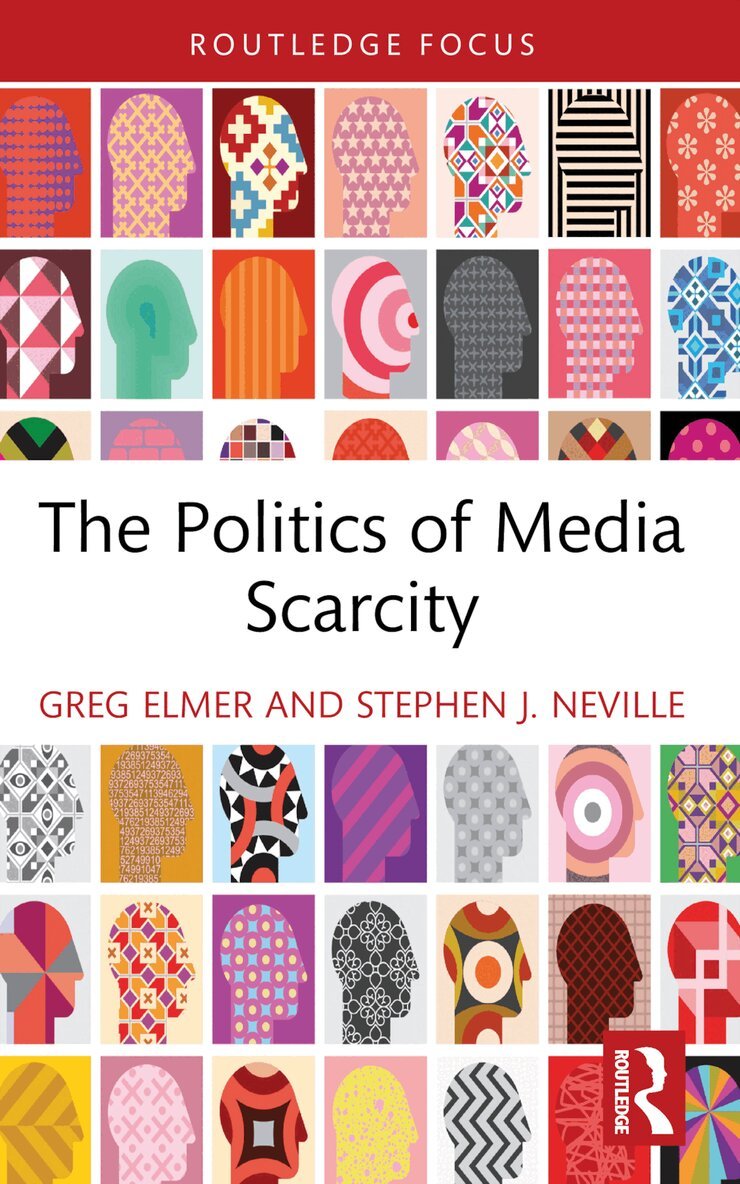
    Politics of Media Scarcity

    AvGreg Elmer,Stephen J. Neville

    Häftad, Engelska, 2025

    Del i serien Routledge Focus on Media and Cultural Studies

    288 kr

    Beställningsvara. Skickas inom 10-15 vardagar. Fri frakt över 249 kr.

    Fler format och utgåvor

    Inbunden

    961 kr

    Beskrivning

    This book questions the predominance of “media abundance” as a guiding concept for contemporary mediated politics. The authors argue that media abundance is not a universal condition, and that certain individuals, communities, and even nations can more accurately be referred to as media scarce – where access to media technologies and content is limited, highly controlled, or surveilled.Through case studies that focus on guerilla militants, incarcerated Indigenous people, and cold war‑era infrastructure, including Soviet “closed” or “secret” cities and Canadian nuclear bunkers, the book’s chapters interrogate how the once media scarce later “speak” to – and can be heard by – the predominant, abundant media culture. Drawing from several art projects and diverse cultural sites, the book highlights how media scarce communities negotiate and otherwise narrate their place in the world, their past experiences and lives, and escape from subjugation. To better understand media scarce politics, the book asks how and when communities become – by accident or force, by choice or necessity – media scarce.This innovative and insightful text will appeal to students and scholars around the world working in the areas of media and politics, art and politics, visual studies, surveillance studies, and communication studies.

    Produktinformation

    • Utgivningsdatum:2025-05-27
    • Mått:138 x 216 x 8 mm
    • Vikt:140 g
    • Format:Häftad
    • Språk:Engelska
    • Serie:Routledge Focus on Media and Cultural Studies
    • Antal sidor:94
    • Förlag:Taylor & Francis Ltd
    • ISBN:9781032504698

    Utforska kategorier

    • Medievetenskap inom Samhälle och politik
    • Referensverk och tvärvetenskap inom Samhälle och politik
    • Politisk aktivism inom Samhälle och politik

    Mer om författaren

    Greg Elmer is Professor and Bell Media Research Chair in the School of Professional Communication at Toronto Metropolitan University, Canada.Stephen J. Neville is a PhD candidate in the Communication and Culture program at York University and Toronto Metropolitan University, Canada.

    Recensioner i media

    The Politics of Media Scarcity provides an engaging account of the complex double nature of media scarcity as both a form of marginalization and political practice for emancipation. In a world often connected with media abundance, this is a much-needed analysis of the absences, refusals, and push backs against oppressive forms of mediation towards a more hopeful future.Anne Kaun, Södertörn University, SwedenAs media scholars we tend to focus on the nature and consequences of a media-saturated world and too often ignore the social and political ramifications of media paucity. This book subverts that tendency and challenges us to recognise and critique media scarcity and its impact on our social identities, our political participation and our economic security. Through a series of richly diverse case studies on South African militants, incarcerated Indigenous women, residents of ‘secret’/nuclear cities, and the cold war bunker, it offers unique insights on the marginalising effects of media and how the politics of media scarcity can be reclaimed to disrupt abundant media power for social justice ends. Original and fascinating in equal measure. Natalie Fenton, Goldsmiths College, UKThe Politics of Media Scarcity successfully weaves together case studies from different nations, institutional logics, and timeframes to persuade readers to consider the complexities behind communities and spaces that may appear, at face value, to be media-scarce and lacking.By highlighting timely case studies from communities at the forefront of subverting violent power structures, this short book aims to inspire lasting shifts in perspectives within a culture of abundance.Beatrys Rodrigues, Cultural Studies, July 2024

    Innehållsförteckning

    • 1. Introduction: The Limits of Abundant Media2. Media Scarcity in Apartheid South Africa3. Retracking Incarceration: Cheryl L’Hirondelle’s Ceremonial Infrastructure4. Restaging the Soviet Secret City: The Good Life, the Toxic Life5. Bunker media: Messages from the abundant and redundant underground6. Conclusion: Future Politics of Media Scarcity