• Fri frakt över 249 kr
  • •
  • Snabba leveranser
  • •
  • Billiga böcker
Kundservice

Du är på sajten för privatpersoner.

Företag, bibliotek eller offentlig verksamhet?

Du handlar på classic.bokus.com, där alla dina funktioner finns intakta.
Till classic.bokus.com
Bokus logotyp. Gå till startsidan.
  • Erbjudanden
  • Nyheter
  • Student
  • Topplistor
  • Barn & ungdom
  • Bokus Play
  • E-böcker
  • Pocketböcker
  • Spel & pussel

10% rabatt på allt med kod NYSTART10 →

Sidfot

Mina sidor

    Hjälp

    • Kundservice
    • Vanliga frågor och svar
    • Frakt och leverans
    • Retur vid ångerrätt
    • Reklamera vara
    • Betalning
    • Köpvillkor
    • Allmänna villkor
    • Information om webbplatsens tillgänglighet

    Om Bokus

    • Om oss
    • Pressrum
    • För studenter
    • För företag
    • För bibliotek och offentlig verksamhet
    • För leverantörer
    • Hållbarhet

    Populärt

    • Aktuella erbjudanden
    • Presentkort
    • Studentlitteratur
    • Nya böcker
    • Topplistor
    • Signerade böcker
    • Engelska böcker

    Inspiration

    • Boktips
    • BookTok
    • Populära bokserier
    • Barnbokskaraktärer
    • Populära författare
    Logotyp för Bokus
    Följ oss på Facebook (extern länk)Följ oss på Instagram (extern länk)Följ oss på YouTube (extern länk)Följ oss på TikTok (extern länk)
    bokus @ CookiesAnpassa cookiesIntegritetspolicyKöpvillkor
    Till Citymail hemsida (extern länk)Till Budbee hemsida (extern länk)Till Postnord hemsida (extern länk)Till Schenker hemsida (extern länk)Till Early Bird hemsida (extern länk)Till Walleys hemsida (extern länk)
    1. Psykologi och pedagogik
    2. Pedagogik
    3. Pedagogisk teori och filosofi

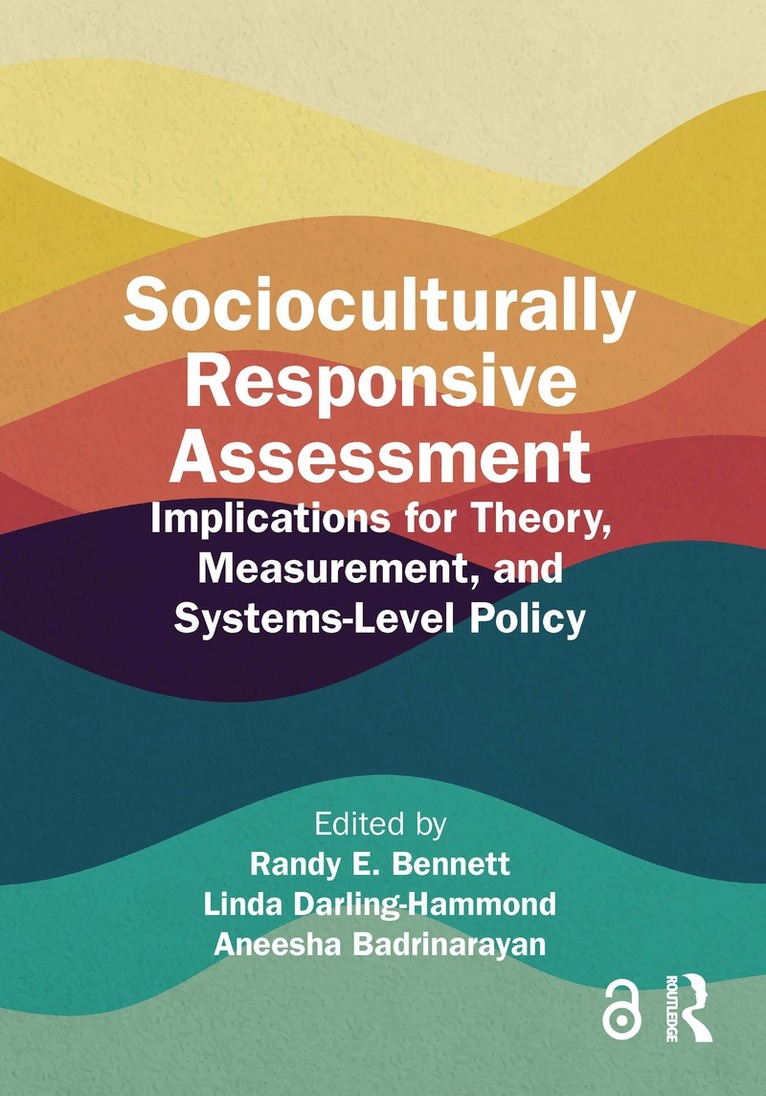
    Socioculturally Responsive Assessment

    Implications for Theory, Measurement, and Systems-Level Policy

    AvRandy E. Bennett,Linda Darling-Hammond

    Häftad, Engelska, 2025

    812 kr

    Beställningsvara. Skickas inom 10-15 vardagar. Fri frakt över 249 kr.

    Beskrivning

    Socioculturally Responsive Assessment assembles the best-available thinking from within and outside the educational measurement community about the theoretical foundations and systems-level policy implications of formal assessment programs designed to be socioculturally responsive. Synthesized from culturally responsive assessment design and practices, culturally relevant pedagogy and funds of knowledge, universal design for learning, the learning sciences, and other literatures, this emerging concept affirms that students’ learning and performance is inextricably tied to the social, cultural, and linguistic contexts in which they live and develop knowledge. Across four sections, this book provides an argument and initial evidence for impact on students, users, and assessment quality; offers guidance for implementation; and examines the potential limitations, pitfalls, barriers, and measurement issues that such programs will inevitably raise. Scholars, teaching faculty, test developers, and policymakers will come away with integral foundations, new assessment approaches, and a greater sense of the potential for positive impact that these assessments may afford.

    Produktinformation

    • Utgivningsdatum:2025-04-30
    • Mått:178 x 254 x 27 mm
    • Vikt:940 g
    • Format:Häftad
    • Språk:Engelska
    • Antal sidor:456
    • Förlag:Taylor & Francis Ltd
    • ISBN:9781032563589

    Utforska kategorier

    • Pedagogisk teori och filosofi inom Psykologi och pedagogik
    • Pedagogisk psykologi inom Psykologi och pedagogik
    • Examination och betygsättning inom Psykologi och pedagogik

    Mer om författaren

    Randy E. Bennett is Chair in Assessment Innovation at Educational Testing Service and Past-President of the National Council on Measurement in Education.Linda Darling-Hammond is Charles E. Ducommun Professor of Education Emeritus at the Stanford Graduate School of Education of Stanford University, USA; President and CEO of the Learning Policy Institute; and Past-President of the American Educational Research Association.Aneesha Badrinarayan is Principal Consultant at Education First Consulting.

    Innehållsförteckning

    • Socioculturally Responsive Assessment: An Introduction Section I: Conceptualization 1. A Descriptive Review of Culturally Responsive, Socioculturally Responsive, and Related Assessment Conceptions 2. Implications of the Science of Learning and Development (SoLD) for Assessments in Education 3. Cultural Validity: Conceptual and Methodological Considerations for Socioculturally Responsive Assessment 4. Assessment for Social Justice With a Focus on American Indigenous Students 5. Transforming Educational Assessment: Implementing Equitable and Inclusive Strategies Section II. Measurement Considerations and Approaches 6. Born Socioculturally Responsive Assessment: An Approach to Design and Development 7. Designing Socioculturally Responsive Assessments Within the Mandated Bookends of K-12 Assessment Systems 8. Examining the Relationship Between the Cultural Relevance of Text and Reading Proficiency: Using a Cultural Relevance Rubric in Reading Assessment 9. Linking Responsive Assessments: Challenges and Possibilities 10. An Evidentiary-Reasoning Lens for Socioculturally Responsive Assessment Section III: Working Examples and Systems-Level Policy Implications 11. Accessibility as a Core Value for Locally Responsive Assessments 12. “A Search for My Voice”: Socioculturally Responsive Assessment in AP Art and Design 13. Socioculturally Responsive Large-Scale Assessment: The Case of the 2026 NAEP Reading Framework 14. A Path to Transforming the Assessment Landscape 15. Enacting Socioculturally Responsive Assessment Design at Scale: Approaches and Policies for Large-Scale Systems Section IV: Research Directions 16. Group Differences Across Scenario-Based Reading Assessments: Examining the Effects of Culturally Relevant Test Content 17. Socioculturally Responsive Post-Secondary Entrance Examination: Implications for Equitable Assessment Design in Sub-Saharan Africa 18. Understanding UNDERSTANDardization Research Conclusion: Socioculturally Responsive Assessment: Present and Future