• Fri frakt över 249 kr
  • •
  • Snabba leveranser
  • •
  • Billiga böcker
Kundservice

Du är på sajten för privatpersoner.

Företag, bibliotek eller offentlig verksamhet?

Du handlar på classic.bokus.com, där alla dina funktioner finns intakta.
Till classic.bokus.com
Bokus logotyp. Gå till startsidan.
  • Erbjudanden
  • Nyheter
  • Student
  • Topplistor
  • Barn & ungdom
  • Bokus Play
  • E-böcker
  • Pocketböcker
  • Spel & pussel

Må bättre, för mindre! Upp till 50% rabatt på hälsoböcker

Sidfot

Mina sidor

    Hjälp

    • Kundservice
    • Vanliga frågor och svar
    • Frakt och leverans
    • Retur vid ångerrätt
    • Reklamera vara
    • Betalning
    • Köpvillkor
    • Allmänna villkor
    • Information om webbplatsens tillgänglighet

    Om Bokus

    • Om oss
    • Pressrum
    • För studenter
    • För företag
    • För bibliotek och offentlig verksamhet
    • För leverantörer
    • Hållbarhet

    Populärt

    • Aktuella erbjudanden
    • Presentkort
    • Studentlitteratur
    • Nya böcker
    • Topplistor
    • Signerade böcker
    • Engelska böcker

    Inspiration

    • Boktips
    • BookTok
    • Populära bokserier
    • Barnbokskaraktärer
    • Populära författare
    Logotyp för Bokus
    Följ oss på Facebook (extern länk)Följ oss på Instagram (extern länk)Följ oss på YouTube (extern länk)Följ oss på TikTok (extern länk)
    bokus @ CookiesAnpassa cookiesIntegritetspolicyKöpvillkor
    Till Citymail hemsida (extern länk)Till Budbee hemsida (extern länk)Till Postnord hemsida (extern länk)Till Schenker hemsida (extern länk)Till Early Bird hemsida (extern länk)Till Walleys hemsida (extern länk)
    1. Språk och ordböcker
    2. Språkvetenskap och lingvistik

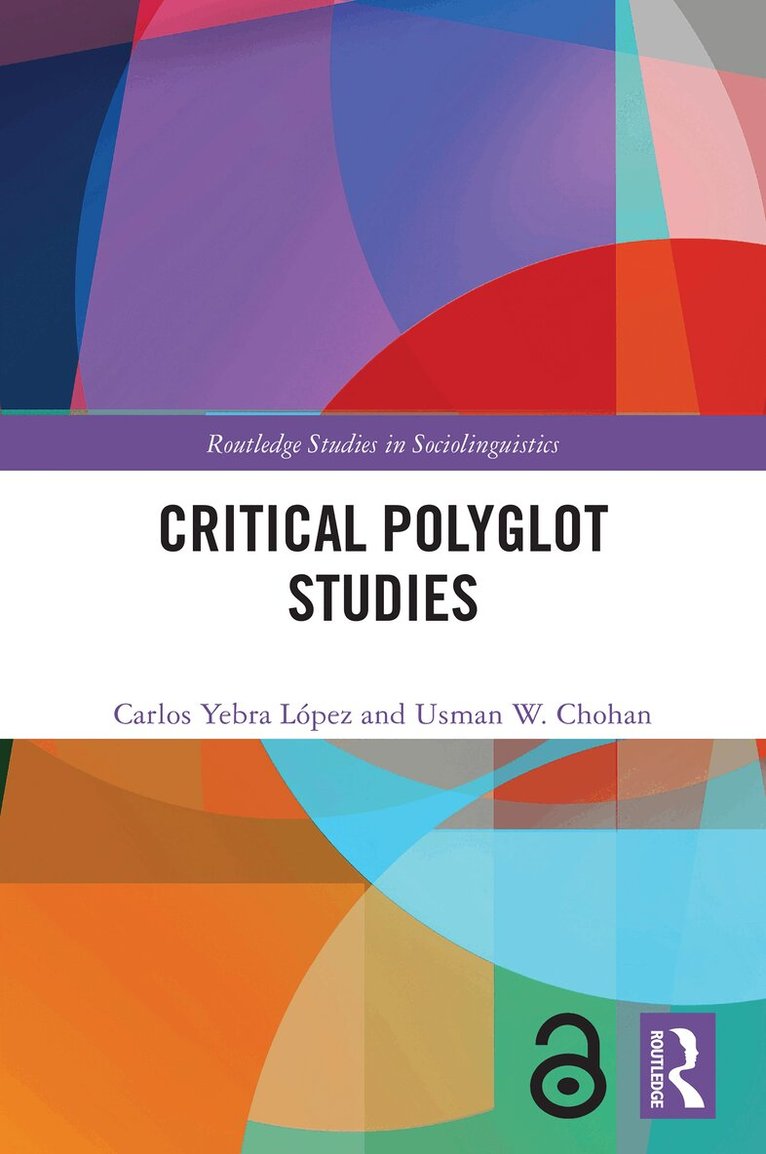
    Critical Polyglot Studies

    AvCarlos Yebra López,Usman W. Chohan

    Häftad, Engelska, 2026

    Del i serien Routledge Studies in Sociolinguistics

    681 kr

    Beställningsvara. Skickas inom 10-15 vardagar. Fri frakt över 249 kr.

    Fler format och utgåvor

    Inbunden

    2 421 kr

    Beskrivning

    This book offers a self-reflective, critical approach to the study of what is popularly known as polyglossia, charting the gradual but marked process of its commoditization over the last 20 years and offering a counterpoint to mainstream positivist treatment of serial language learning.First, from a diagnostic standpoint, the book examines the rise and consolidation of the Polyglot Community in the sociopolitical and economic context of its gradual transformation into and partial overlap with the Polyglot Industry and its ideological tenets (the Polyglot Matrix). Second, from a prognostic standpoint, the book posits Critical Polyglot Studies (CPS) as a much-needed counter to the many theoretical and practical shortcomings of the Polyglot Industry-cum-Matrix, presenting the main programmatic points and illustrative best practices and institutional case studies of this alternative paradigm. CPS is conceived as both a research orientation and as a strategic attempt to elicit debate and draw in a wider range of polyglossia scholars, offering readers with actionable tools to contribute to this emerging academic and activist endeavor.Constituting the first critical and systematic analysis of polyglossia as a globalized phenomenon, this book will be of interest to scholars of linguistics, cultural studies, critical theory, and sociology.Chapter 3 of this book is freely available as a downloadable Open Access PDF at http://www.taylorfrancis.com under a Creative Commons Attribution-NonCommercial-NoDerivatives (CC-BY-NC-ND) 4.0 International license.

    Produktinformation

    • Utgivningsdatum:2026-05-21
    • Mått:152 x 229 x 13 mm
    • Vikt:430 g
    • Format:Häftad
    • Språk:Engelska
    • Serie:Routledge Studies in Sociolinguistics
    • Antal sidor:214
    • Upplaga:26001
    • Förlag:Taylor & Francis Ltd
    • ISBN:9781032697758

    Utforska kategorier

    • Språkvetenskap och lingvistik inom Språk och ordböcker
    • Kulturvetenskap inom Samhälle och politik
    • Antropologi inom Samhälle och politik

    Mer om författaren

    Carlos Yebra López is Assistant Professor of Spanish Linguistics at California State University, Fullerton. He is also founder of The Hyperpolyglot Activist and Ladino 21 Community Interest Company, and the Director of Research at The International Association of Hyperpolyglots (HYPIA).Usman W. Chohan is an international academic who serves as Advisor on Economic Affairs and National Development at the Centre for Aerospace & Security Studies (CASS), one of Pakistan’s premier research-based think tanks, where he was a founding director. He is also the founder and serves as President of the International Association of Hyperpolyglots (HYPIA), the largest association of hyperpolyglot language speakers in the world.

    Innehållsförteckning

    • Contents List of Tables List of Figures List of Acronyms Preface Chapter 1: IntroductionIntroduction Exposing the Colonial Origins and Mediation of Mainstream Polyglossia Rethinking Polyglossia as aNorth Atlantic Universal Enter the Polyglot Community The (D)evolution of the Polyglot Community into the Polyglot Industry-cum-Matrix The Case for Critical PolyglotStudies CPS’ Theoretical, Methodological and Normative Commitments * Theory Ontology Epistemology Methodology Normativity Outline of this Book Chapter Division Part 1: The Polyglot Industry: A CartographyChapter 2: The Polyglot Community: Genealogy and NatureIntroduction Enter Polyglossia: Commoditizing an Ethnonational Identity Marker (Neo)colonial/Ethnonational Rationality The (Neo)colonial/Ethnonational Partial Shift towards and Overlap with Neoliberalism Enter The Polyglot Community: General Normative Idea and Material Conditions The Mid-to-Late 1990s: From Internet Relay Chat to the World The 2000s: The Early YouTube ‘Polyglots’ and the Tension between Showmanship andCommunity Building The 2010s: The Road to ‘Global’Hybridity Conclusion Chapter 3: The Polyglot Industry: Experts and InstitutionsUnderstanding the Polyglot Industry: When, Why, and How it Works Commercializing the Polyglot Community’s Attention The rise of the attention economy The Fourth Screen: Web 2.0 and the Smartphones (2010s to Present) Social networks YouTube Facebook Italki X (Twitter) Language Learning Platforms Duolingo Glossika uTalk How Language Learning Platforms and Social Networks Converge 'Polyglot' Gatherings Polyglot Events (annual) Polyglot Meetings (weekly) How Polyglot Gatherings Converge with Social Networks, Language Learning Apps and Print Media Print Media 1950 to 1995: Polyglossia avant la lettre Mid 1990s-2005: Early Recognition and Exploration 2005-2015: The Rise and Consolidation of Print Media as a Polyglot Industry Sector 2015 to present: Diversity, Inclusion,Hyperpolyglossia and AI Conclusion: Saving the Polyglot Community from theLanguage-Industrial Complex Chapter 4: The Polyglot Matrix: The Ideology of the Polyglot IndustryIntroduction Polyglot Matrix Myths Myth #1: (Non)nativespeakerism (Neo)colonialism/Ethnonationalism Performativity Beyond (Non)native-speakerism L1 Speakers as Role Models,L1+n Speakers as Deficient Myth #2: Accentism Myth #3: Foreignness Myth # 4: Thinking in Languages Myth # 5: Languages as Countable Myth # 6: Code-switching Myth # 7: Neo-Whorfianism Myth # 8: Flaggism Myth # 9: Multilingual exceptionalism Myth # 10: Causation Between Polyglossia and Tolerance Conclusion Part 2: Critical Polyglot Studies: A RoadmapChapter 5: Programmatic Points and Best PracticesProgrammatic Points Theory Ontology Epistemology Methodology Political Economy Normativity Best Practices Social Networks Language Learning Applications Polyglot Meetings Print Media Conclusion Chapter 6: Institutional Case StudiesThe Hyperpolyglot Activist Introduction Positioning vis-à-vis the Hegemonic Rationalities Polyglot Industry Intervention Polyglot Matrix Intervention HYPIA: The International Associationof Hyperpolyglots Introduction Positioning vis-à-vis the Hegemonic Rationalities Polyglot Industry Intervention Polyglot Matrix Intervention Final Words Index