• Fri frakt över 249 kr
  • •
  • Snabba leveranser
  • •
  • Billiga böcker
Kundservice

Du är på sajten för privatpersoner.

Företag, bibliotek eller offentlig verksamhet?

Du handlar på classic.bokus.com, där alla dina funktioner finns intakta.
Till classic.bokus.com
Bokus logotyp. Gå till startsidan.
  • Erbjudanden
  • Nyheter
  • Student
  • Topplistor
  • Barn & ungdom
  • Bokus Play
  • E-böcker
  • Pocketböcker
  • Spel & pussel

10% studentrabatt med kod TERM26

Sidfot

Mina sidor

    Hjälp

    • Kundservice
    • Vanliga frågor och svar
    • Frakt och leverans
    • Retur vid ångerrätt
    • Reklamera vara
    • Betalning
    • Köpvillkor
    • Allmänna villkor
    • Information om webbplatsens tillgänglighet

    Om Bokus

    • Om oss
    • Pressrum
    • För studenter
    • För företag
    • För bibliotek och offentlig verksamhet
    • För leverantörer
    • Hållbarhet

    Populärt

    • Aktuella erbjudanden
    • Presentkort
    • Studentlitteratur
    • Nya böcker
    • Topplistor
    • Signerade böcker
    • Engelska böcker

    Inspiration

    • Boktips
    • BookTok
    • Populära bokserier
    • Barnbokskaraktärer
    • Populära författare
    Logotyp för Bokus
    Följ oss på Facebook (extern länk)Följ oss på Instagram (extern länk)Följ oss på YouTube (extern länk)Följ oss på TikTok (extern länk)
    bokus @ CookiesAnpassa cookiesIntegritetspolicyKöpvillkor
    Till Citymail hemsida (extern länk)Till Budbee hemsida (extern länk)Till Postnord hemsida (extern länk)Till Schenker hemsida (extern länk)Till Early Bird hemsida (extern länk)Till Walleys hemsida (extern länk)
    1. Historia och arkeologi
    2. Historia
    3. Militärhistoria
    4. Första världskriget

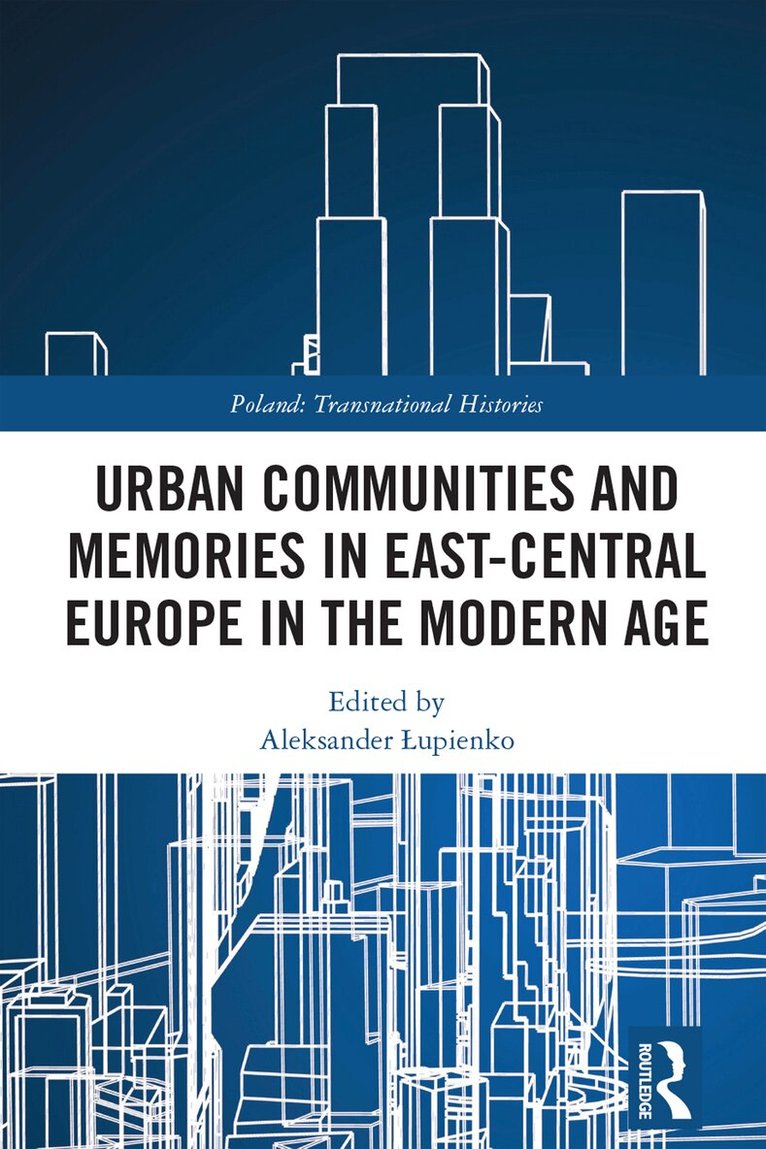
    Urban Communities and Memories in East-Central Europe in the Modern Age

    AvAleksander Łupienko

    Inbunden, Engelska, 2024

    Del i serien Poland: Transnational Histories

    2 434 kr

    Beställningsvara. Skickas inom 10-15 vardagar. Fri frakt över 249 kr.

    Beskrivning

    This edited volume studies the logic of community formation and the common view of the past to show how various social bonds of communities functioned during the modern national era of East-Central Europe from the late eighteenth century until today and how multifaceted this group-building really was.Through an overview of selected examples of communities in East-Central European urban centres, mainly the territories of the Polish-Lithuanian Commonwealth and its successor empires, the volume shows the potential of re-interpretation or adaptation of the past as a crucial tool for assuring social cohesion and for strengthening the image of group boundaries. It studies not only textual sources but also the cultural construction of local historical writings such as oral tradition and municipal publications, as well as symbolic objects such as epitaphs, plaques, monuments and public edifices. The contributors explore the actual creativity employed by these communities to envision their past and their future in homage to the ideals of centralised nationalism or regionalism and how these strongly ethnically marked historic spaces can be interpreted, celebrated or neglected.This book will be of interest to scholars and students of regional urban history and cultural diversities, memory cultures and community formation.

    Produktinformation

    • Utgivningsdatum:2024-08-07
    • Mått:156 x 234 x 22 mm
    • Vikt:453 g
    • Format:Inbunden
    • Språk:Engelska
    • Serie:Poland: Transnational Histories
    • Antal sidor:302
    • Förlag:Taylor & Francis Ltd
    • ISBN:9781032703176

    Utforska kategorier

    • Första världskriget inom Historia och arkeologi
    • Europas historia inom Historia och arkeologi
    • Religion: allmänt inom Filosofi och religion

    Mer om författaren

    Aleksander Łupienko is Associate Professor in the T. Manteuffel Institute of History, the Polish Academy of Sciences in Warsaw.

    Innehållsförteckning

    • Introduction Part 1: Urban Communities and Memories in the Eighteenth to Nineteenth Centuries 1. Epitaphs and Memory in Royal Prussia Between the Premodern Era and Modernity: The Case of Nicolaus Copernicus and Memorials Dedicated to Him 2. Faith, Self and Boundary: Christian Communities in Nineteenth-Century East-Central Europe 3. The Memory of the Pre-Partition Polish State in the Jewish Culture Around 1900 Part 2: Urban Communities and Memories at the Turn of the Twentieth Century 4. Forging Visions of a Polish Past in a Nationalising City: Memory Politics in Autonomous Lviv 5. Commemorating Polish History in the Public Spaces of County Towns in Autonomous Galicia (1861–1918) 6. Between Local and National Memory: The Activity of Selected Polish Socio-Cultural Associations in Galicia at the Turn of the Twentieth Century 7. Three Monuments in Russian Vilnius at the Turn of the Twentieth Century: Repetition, Function, Meaning Part 3: Urban Communities and Memories in the Interwar Period 8. Zamość (1918–1939): Myth, Legend and the Creation of Memory 9. Legions of the Phoenix: State-Controlled memory and the Rebuilding of Kalisz After 1918 10. Regionalism and the (Re-)Construction of Subnational Communities: Chodsko and Kdyně in South-Western Czechoslovakia, 1918–1948 Part 4: Urban Communities and Memories After 1945 11. Forge, Cage, Spectre: The Bases of (Non-)Remembrance of the Town of Turčiansky Svätý Martin 12. Mediating with Memory: The Case of the Imperial/Castle/University Quarter in Poznań (1910–2021) 13. Remembering as Unknowing: Limitations of the Category of Collective Memory in Studies of Jewish Spaces in Contemporary Poland 14. Unwanted Heritage or the Continuation of a City’s Modernisation?: The Problem of the Liquidation of Cemeteries in Gdansk After 1945