• Fri frakt över 249 kr
  • •
  • Snabba leveranser
  • •
  • Billiga böcker
Kundservice

Du är på sajten för privatpersoner.

Företag, bibliotek eller offentlig verksamhet?

Du handlar på classic.bokus.com, där alla dina funktioner finns intakta.
Till classic.bokus.com
Bokus logotyp. Gå till startsidan.
  • Erbjudanden
  • Nyheter
  • Student
  • Topplistor
  • Barn & ungdom
  • Bokus Play
  • E-böcker
  • Pocketböcker
  • Spel & pussel

10% rabatt på allt med kod: NYSTART10 →

Sidfot

Mina sidor

    Hjälp

    • Kundservice
    • Vanliga frågor och svar
    • Frakt och leverans
    • Retur vid ångerrätt
    • Reklamera vara
    • Betalning
    • Köpvillkor
    • Allmänna villkor
    • Information om webbplatsens tillgänglighet

    Om Bokus

    • Om oss
    • Pressrum
    • För studenter
    • För företag
    • För bibliotek och offentlig verksamhet
    • För leverantörer
    • Hållbarhet

    Populärt

    • Aktuella erbjudanden
    • Presentkort
    • Studentlitteratur
    • Nya böcker
    • Topplistor
    • Signerade böcker
    • Engelska böcker

    Inspiration

    • Boktips
    • BookTok
    • Populära bokserier
    • Barnbokskaraktärer
    • Populära författare
    Logotyp för Bokus
    Följ oss på Facebook (extern länk)Följ oss på Instagram (extern länk)Följ oss på YouTube (extern länk)Följ oss på TikTok (extern länk)
    bokus @ CookiesAnpassa cookiesIntegritetspolicyKöpvillkor
    Till Citymail hemsida (extern länk)Till Budbee hemsida (extern länk)Till Postnord hemsida (extern länk)Till Schenker hemsida (extern länk)Till Early Bird hemsida (extern länk)Till Walleys hemsida (extern länk)
    1. Filosofi och religion
    2. Filosofi
    3. Filosofiska discipliner

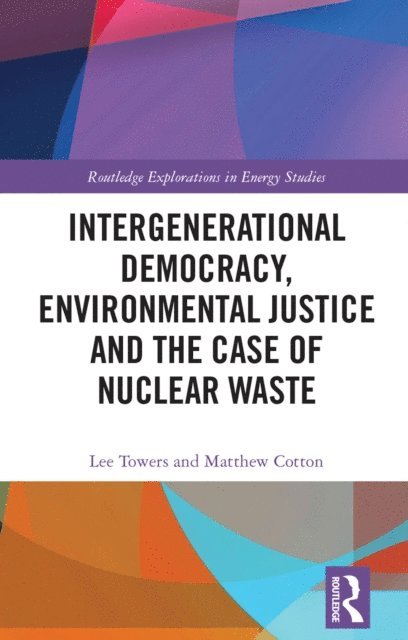
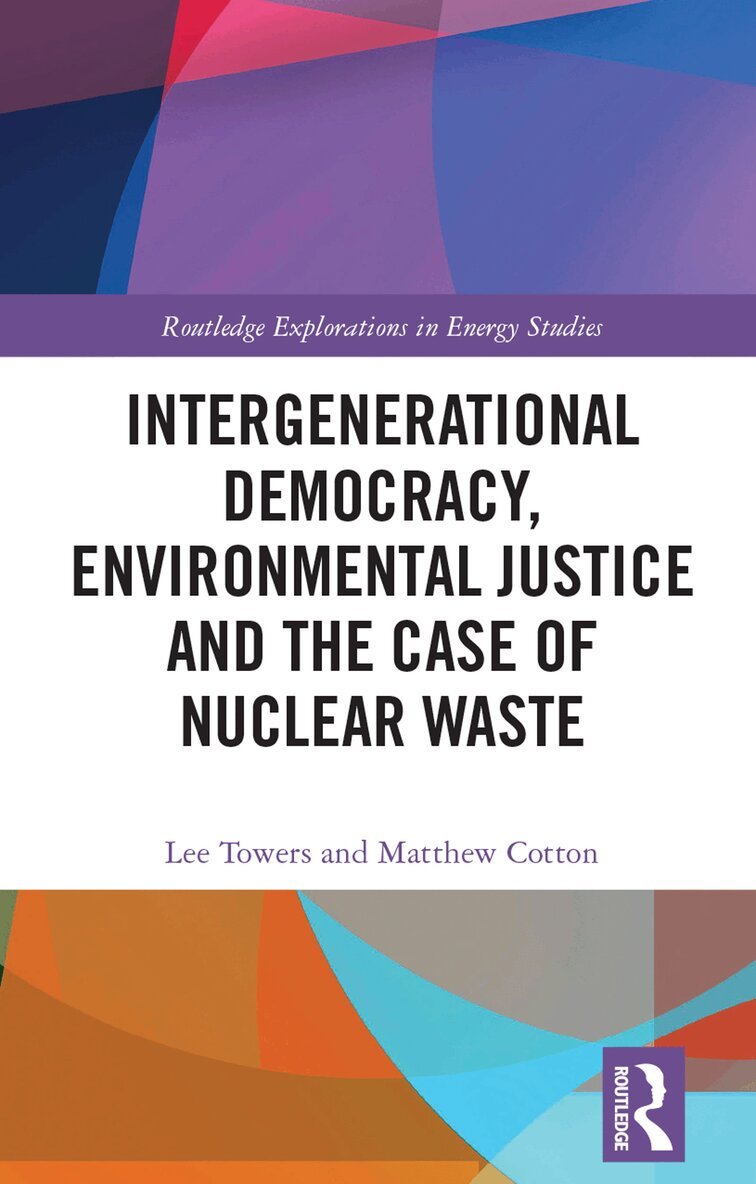
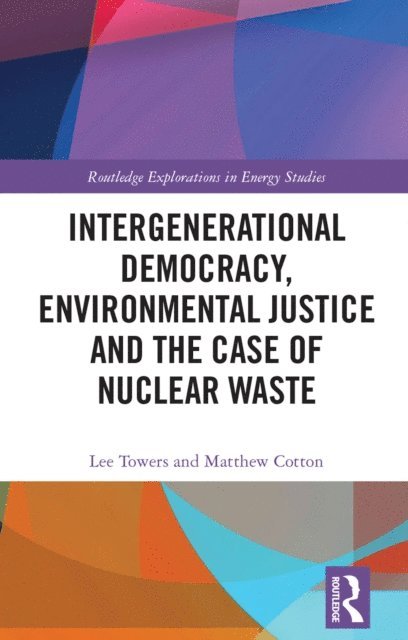
    Intergenerational Democracy, Environmental Justice and the Case of Nuclear Waste

    AvLee Towers,Matthew Cotton

    Häftad, Engelska, 2026

    Del i serien Routledge Explorations in Energy Studies

    681 kr

    Beställningsvara. Skickas inom 10-15 vardagar. Fri frakt över 249 kr.

    Fler format och utgåvor

    Inbunden

    2 421 kr

    Beskrivning

    This book explores the interplay between intergenerational justice and intragenerational justice using nuclear waste management as a consistent case to explore these themes.Lee Towers and Matthew Cotton examine the issue of intergenerational justice from a social scientific perspective, drawing on central case studies of nuclear waste management in Canada, Finland, and the United Kingdom. They connect indigenous philosophies and notions of justice with the concept of intergenerational democracy, advocating for better inclusion of youth and elders in decision-making that affects their well-being. As such, the book’s primary objectives are fourfold:To assess whether trade-offs between intergenerational and intragenerational justice are necessary, and if so, what these trade-offs are and how they might be resolved.To critically assess dominant western liberal philosophical approaches that shape contemporary intergenerational justice thinking in policy and practice, and consider alternatives drawn from anthropology and indigenous philosophies.To assess how far our current capitalist system can achieve substantive forms of justice.To critically examine three nuclear waste management case studies and assess how far these achieve environmental and energy justice and how they exemplify tensions between inter- and intragenerational justice.This short, accessible volume will be of great interest to students and scholars of energy, environmental justice, and ethics.

    Produktinformation

    • Utgivningsdatum:2026-05-21
    • Mått:138 x 216 x 11 mm
    • Vikt:370 g
    • Format:Häftad
    • Språk:Engelska
    • Serie:Routledge Explorations in Energy Studies
    • Antal sidor:190
    • Förlag:Taylor & Francis Ltd
    • ISBN:9781032728001

    Utforska kategorier

    • Filosofiska discipliner inom Filosofi och religion
    • Offentlig förvaltning inom Samhälle och politik
    • Miljövetenskap och miljöpolitik inom Naturvetenskap och teknik

    Mer om författaren

    Lee Towers is a postdoctoral researcher working at Teesside University looking into aspects of intra- and intergenerational justice and nuclear waste solutions. He holds a PhD in applied social sciences from Brighton University. This PhD explored energy justice with a focus on community energy organisations and their work on energy poverty and climate mitigation in the United Kingdom. Previous published work includes an examination of community energy work on reducing energy poverty in the UK privatised energy system and an exploration of the intergenerational aspects of the pandemic published by Brighton University. His current postdoctoral position is funded by the Nuclear Waste Services.Matthew Cotton is professor of environmental justice and public policy in the School of Social Sciences, Humanities, and Law at Teesside University. He holds a PhD in environmental science from the University of East Anglia. His research explores the social and ethical dimensions of technology development and environmental planning, and the effective involvement of stakeholders in questions of socio-economic and ecological justice. His previous published works on these topics include the monographs: Virtual Reality, Empathy and Ethics; Nuclear Waste Politics (Routledge); and Ethics and Technology Assessment; and co-edited volumes: Governing Shale Gas (Routledge) and Engaging Environmental Justice. His research in the field of environmental justice is funded by Nuclear Waste Services; Research England; The Economic and Social Research Council; Euratom; The Foreign, Commonwealth and Development Office; and the National Institute for Public Health Research.

    Innehållsförteckning

    • IntroductionDefining Intergenerational JusticeThree Features of Intergenerational JusticeChildren as Proxies of Future GenerationsIndigenous Societies and the World System Humanity, Ethnoclass, Ability, Gender, and SexualityBook OutlinePart One – Intergenerational justice dilemmasChapter 1: The philosophical challenge of intergenerational justicePhilosophical challenges and concepts in intergenerational justiceCan future people have rights? The non-identity problemWhat obligations do we hold to future generations? The problem of reciprocityThe weighting of future obligations – the issue of social discountingSufficientarianism, or is enough, enough? Environmental RightsOntological challengesConclusionsChapter 2: Alternative philosophical traditionsSocial Relations of the GiftIndigenous Perspectives on Justice and TimeDefining the Human Across Deep TimeThe Over-determination of ManConclusions – a new/old subjectivity for intergenerational justiceChapter 3: Mainstream Economics and Scarce JusticeGenerational Wealth TransfersTrading JusticeThe Economics of the AnthropoceneConclusionsChapter 4: Abundant Justice and DemocracyIntergenerational DilemmasChildren and Young People as Future Generational ProxiesIntergenerational DemocracyMedia Framings of Youth ProtestorsYouth as ProxiesThe UN Convention on the Rights of ChildrenThe Intergenerational Capability ApproachFuture Studies, Decoloniality, and BackcastingMainstream Future StudiesBackcasting Decolonised?ConclusionsPart Two – Nuclear Waste and Intergenerational DemocracyChapter 5: Critical Nuclear ConceptsNuclear Landscapes & CommunitiesPeripheralisationEnergopowerNuclear Colonialism ConclusionsChapter 6: Canada and the Nuclear Waste Management OrganisationContext and HistoriesNWMO – Aims, Scope and AssumptionsThe Search for a GDF Site and ImplementationConclusionsChapter 7: The World’s First GDF – FinlandContext and HistoryAims, Scope and Assumptions of NWMOs in FinlandSTUKTVO & Fortum PosivaShared Assumptions Implementation of the Most Advanced GDF in the WorldFinland’s Search for a GDFMedia Representations and ConsumptionIntragenerational and Intergeneration Justice and Finland’s GDFConclusionsChapter 8: The United Kingdom and Nuclear Power and WasteContext and history of nuclear technologies in the United KingdomPeriod one – Economic and Military SecuritisationPeriod 2. Nuclear energy expansion and the recognition of waste as an environmental concernPeriod 3. The Deliberative TurnPeriod 4. Climate change securitisation Current UK Nuclear Waste PolicyImplementation of the GDF Expanding Costs and Expanding InventoriesDemocratic Deficits and the NuclearConclusionConclusion: Justice for AllNuclear Waste Management and JusticeDistributional JusticeProcedural JusticeThe Justice of RecognitionThe Justice of Redress and ReparationGhosts of Seppo and Western ScienceThe Darkness of the Grave or the Womb?ReferencesIndex