• Fri frakt över 249 kr
  • •
  • Snabba leveranser
  • •
  • Billiga böcker
Kundservice

Du är på sajten för privatpersoner.

Företag, bibliotek eller offentlig verksamhet?

Du handlar på classic.bokus.com, där alla dina funktioner finns intakta.
Till classic.bokus.com
Bokus logotyp. Gå till startsidan.
  • Erbjudanden
  • Nyheter
  • Student
  • Topplistor
  • Barn & ungdom
  • Bokus Play
  • E-böcker
  • Pocketböcker
  • Spel & pussel

10% rabatt på allt med kod: NYSTART10 →

Sidfot

Mina sidor

    Hjälp

    • Kundservice
    • Vanliga frågor och svar
    • Frakt och leverans
    • Retur vid ångerrätt
    • Reklamera vara
    • Betalning
    • Köpvillkor
    • Allmänna villkor
    • Information om webbplatsens tillgänglighet

    Om Bokus

    • Om oss
    • Pressrum
    • För studenter
    • För företag
    • För bibliotek och offentlig verksamhet
    • För leverantörer
    • Hållbarhet

    Populärt

    • Aktuella erbjudanden
    • Presentkort
    • Studentlitteratur
    • Nya böcker
    • Topplistor
    • Signerade böcker
    • Engelska böcker

    Inspiration

    • Boktips
    • BookTok
    • Populära bokserier
    • Barnbokskaraktärer
    • Populära författare
    Logotyp för Bokus
    Följ oss på Facebook (extern länk)Följ oss på Instagram (extern länk)Följ oss på YouTube (extern länk)Följ oss på TikTok (extern länk)
    bokus @ CookiesAnpassa cookiesIntegritetspolicyKöpvillkor
    Till Citymail hemsida (extern länk)Till Budbee hemsida (extern länk)Till Postnord hemsida (extern länk)Till Schenker hemsida (extern länk)Till Early Bird hemsida (extern länk)Till Walleys hemsida (extern länk)
    1. Samhälle och politik
    2. Sociologi och antropologi
    3. Sociologi

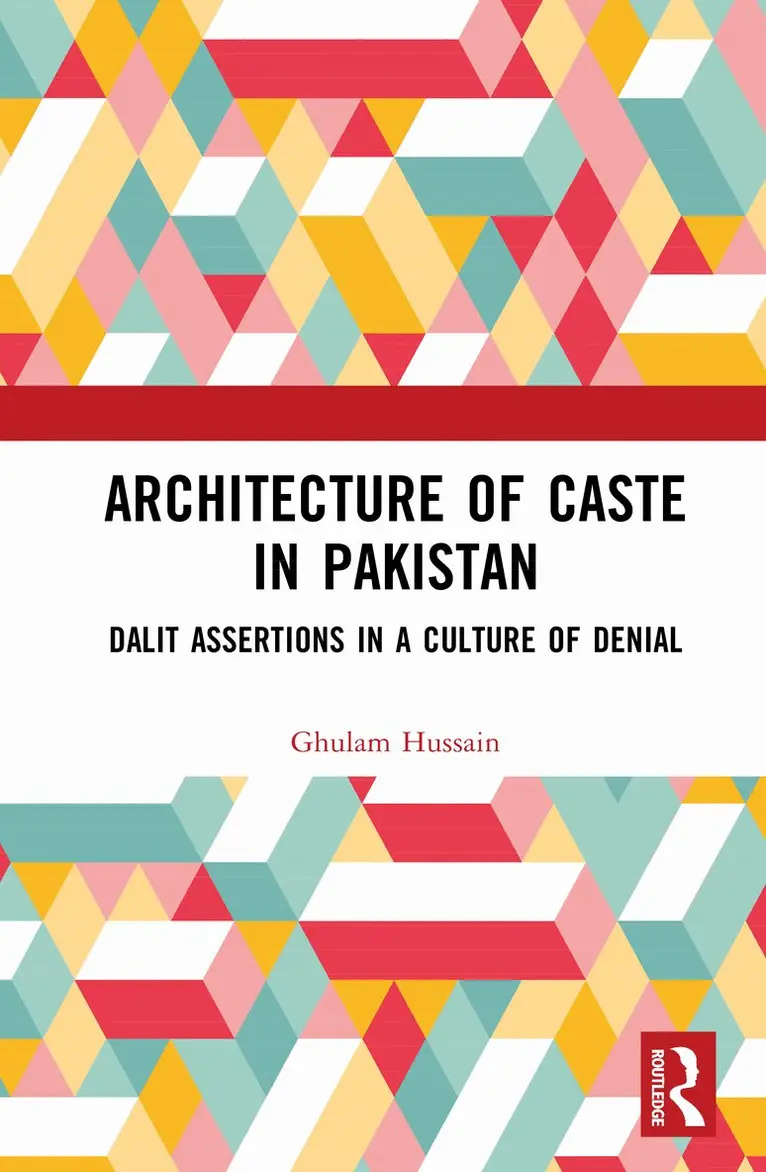
    Architecture of Caste in Pakistan

    Dalit Assertions in a Culture of Denial

    AvGhulam Hussain

    Inbunden, Engelska, 2026

    2 421 kr

    Beställningsvara. Skickas inom 10-15 vardagar. Fri frakt över 249 kr.

    Fler format och utgåvor

    E-bok

    805 kr

    E-bok

    805 kr

    Beskrivning

    This book is a groundbreaking and original contribution to understanding the intersectionality of caste, race, and class in South Asia. Grounded in rich ethnographic fieldwork, it situates its analyses in Pakistan to reveal how caste—often denied or obscured by nationalist, religious, and liberal-progressive discourses—continues to shape everyday hierarchies, moral imaginaries, and political structures. It unravels how both privileged and oppressed caste groups invoke the past to construct identities and contest histories in the present, showing how systemic discrimination has pushed Scheduled Castes and Pasmanda communities to the lowest rungs of the social, economic, and political hierarchy. Moving beyond the familiar frames of Indian caste practices, the book demonstrates that caste in Pakistan is not a relic of the past or a “Hindu problem,” but a transreligious and deeply entrenched social structure sustained across Hindu, Muslim, and Christian communities alike. Foregrounding caste as an analytic category and a fundamental marker of identity, the book interrogates the role of hegemonic actors—religious, nationalist, and secular—in strategically denying or reasserting caste to preserve structures of privilege. Combining theoretical sophistication with moral and ethnographic engagement, Architecture of Caste in Pakistan compels a rethinking of caste, religion, and equality in Muslim societies.This volume will be of great interest to scholars and researchers of caste and discrimination studies, critical Dalit and Pasmanda studies, sociology, social anthropology, and South Asian studies.

    Produktinformation

    • Utgivningsdatum:2026-03-17
    • Mått:156 x 234 x 22 mm
    • Vikt:760 g
    • Format:Inbunden
    • Språk:Engelska
    • Antal sidor:302
    • Förlag:Taylor & Francis Ltd
    • ISBN:9781032767192

    Utforska kategorier

    • Sociologi inom Samhälle och politik
    • Religion och tro inom Filosofi och religion
    • Diskriminering och rättvisa inom Samhälle och politik

    Mer om författaren

    Ghulam Hussain (Sufi) is an Assistant Professor at Bahria University, Islamabad, and a Georg Forster (Humboldt) Postdoctoral Researcher at Ludwig-Maximilians-Universität (LMU), Munich. His research focuses on caste, social exclusion, and transreligious identity in Pakistan. His work has been published in Postcolonial Studies, Critical Sociology, Journal of Asian and African Studies, and Interventions.

    Recensioner i media

    “Ghulam Hussain’s book is a pioneering contribution to sociology, offering a rare and insightful analysis of caste, class, religion, and untouchability in Pakistani society. Both empirically rich and theoretically sharp, it is indispensable reading for anyone seeking to understand the persistence of caste structures in South Asia.”Prof. Vivek Kumar, Professor of Sociology, JNU, New Delhi 2. This book breaks new ground in caste studies and South Asia scholarship at large. Through meticulous research and ethnography, Hussain uncovers for us the underside of tapestry: showing us how the idea of Pakistan, not unlike other countries, is based on fictive modernity. The claim of an egalitarian socio-political view that transcends caste has never been pushed back as stridently before. Hussain demythologizes not only the state but also romantically held histories of the civil groups and shows the landscape of Sindh is rife with caste discrimination, untouchability, unfair wages, bonded labour and an intensely inequitable economy. It would be difficult to ignore this book, and go back to some of the pristine ideas of state and citizenship in Pakistan now. This is a must-read for any serious scholar of South Asia. Rita Kothari, Professor of English, and the Head of the department of English at Ashoka University.3. “Does caste exist in Pakistan?” “Is there caste among Muslims?” These are the questions which those of us who identify as Pakistani Muslims often face when we try to make a case for why the work of caste in Pakistan and the diaspora needs to be tracked, funded, and treated as a legitimate and crucial line of academic and activist inquiry. Ghulam Hussain’s book, Architecture of Caste in Pakistan, not only answers those questions but lends legibility to the need for anti-caste scholarship coming from Pakistan in ways that is truly a ground-making intellectual and political achievement. The evidence which he shows for the working of caste in Sindh through his ethnographic inquiry makes a contribution to not only Pakistani anti-caste scholarship but to the field of critical caste studies (among others) as a whole. Hussain’s brilliance comes in how he shows the banality of caste–as something not only confined simply to the spectacular but a commonplace structure of life-making in Pakistan. The empirical evidence and the theorizing grounded in the ethnographic work that takes the work of caste beyond the majority-minority and Muslim-Hindu binaries is the quintessential anti-caste theorizing needed for developing Dalit and anti-caste solidarity in this moment. This brilliant study offers a cacophony of caste-making praxis in seemingly unexpected spaces, and I am grateful for it.Shaista Aziz Patel, Critical Muslim Studies scholar, UC San Diego4. Being part of the researchers’ community who are working closely with marginalized caste groups across Pakistan, I recognize the challenge of unionizing diverse and internally distinct social groups defined by ethnicity, religious rituals, tribal identity, caste, and geography of origin under a single “Dalit” framework. Also, the legal ambiguity surrounding terms such as “minority” and “Scheduled Caste” has largely remained within academic discourse and has rarely informed policymaking or legislative action in Pakistan.Ghulam Hussain’s Architecture of Caste: Dalit Assertions in a Culture of Denial in Pakistan is therefore a courageous and deeply engaged work that breaks the silence on one of the least acknowledged dimensions of inequality in Pakistan. His years of immersive ethnography in Sindh weave together theoretical sophistication with the lived experiences of marginalized communities, challenging both state narratives of Islamic equality and progressive denials of caste. This timely book is not just scholarship, but it is a call to action for scholars, policymakers, and activists committed to justice.Hussain Bux Mallah, Senior Research Associate at the Collective for Social Science Research, Karachi.5. Ghulam Hussain’s manuscript provides the reader a crucial lesson in sociologically and anthropologically grounded research led by political praxis. Hussain does a monumental task showing how caste is a central structuring logic of oppression in Pakistan with sharpness, self-reflexivity, and rich empirical fieldwork led by organizing and activism. In addition to what is already a massive contribution, he cuts across orthodox debates that elide materially situated political contradictions that become apparent only by taking seriously the issue of caste in the subcontinent. Most importantly, Hussain recognizes grass-roots organizing of oppressed caste communities, without essentializing it in neoliberal and elitist tendencies, upon which the foundation on which decolonial, anti-casteist, and anti-capitalist political action and theory needs to be built. Overall, this book offers scholars examining social crises in Pakistan a foundational understanding of cultivating political consciousness that transcends epistemological blind spots, which sustain and perpetuate daily structural oppression within the context of what Ghulam Hussain aptly terms the 'Architecture of Caste.'Ahmed Memon, Lecturer in Law at Cardiff School of Law and Politics

    Innehållsförteckning

    • Chapter 1IntroductionDenial, Epistemic Violence, and MajoritarianismDalit Mobilization Amid Caste ResilienceThe Missing Pasmanda Question and the Transreligious ImperativeChapter 2Witnessing from WithinNaming Against ErasureSymbolic DecastificationChapter 3Architecture of PrivilegeTransreligious Grammar of CasteSacred GenealogiesThe Creation of Ashraf Caste HegemonEveryday SayedismMinoritisation of DalitsPosthumous Ashrafization and the Symbolic Expropriation of Dalit SaintsFrom Harijanisation to HinduisationBorderline Belongings and the Reconfiguration of Dalit Political SubjectivityChapter 4Architecture of Erasure, Violence and DenialDenial and erasure through minoritisationDenial of DalitnessLogic of Spiritual InequalityViolence of Religious BinariesPartitioned SolidaritiesBeyond Forced Conversion NarrativeNot Who Converts, But WhyChapter 5Politics of Naming and Belonging Politics of NamingStrategic Essentialism and Identitarian ClaimsThe Afterlife of 'Scheduled Castes'Darawar Claims of BelongingChapter 6Biopolitics of RepresentationThe Census as a Site of StruggleStrategic Use of the SC CategorySeparate Electorates Vs Joint ElectoratesThe Post-2002 Electoral Framework and Dalit RepresentationDisparities in Local GovernanceTrajectory of Dalit Political Exclusion from Electoral PoliticsLoyalty, Tokenism, and Ashraf PatronageBiopolitics of EnumerationChapter 7Symbolic Empowerment and the Limits of RecognitionMobilizing as Sindhi and Pakistani PatriotsAsserting DalitnessThe Making of Ambedkarite SindhDalit Sujaag Tehreek: Vanguard of Anti-Caste ResistanceCrisis of Collective ActionStrategizing AssertivenessPragmatics of Strategic MobilizationCharter of Demands: From Legal Recognition to Structural RedressChapter 8Toward a Transreligius ReckoningReckoning with ErasureThe Struggle Beyond BinaryPossibilities of Dalit-Pasmanda SolidarityToward a Critical Transreligious Anti-Caste EpistemologyResearch Gaps and Future Pathways