• Fri frakt över 249 kr
  • •
  • Snabba leveranser
  • •
  • Billiga böcker
Kundservice

Du är på sajten för privatpersoner.

Företag, bibliotek eller offentlig verksamhet?

Du handlar på classic.bokus.com, där alla dina funktioner finns intakta.
Till classic.bokus.com
Bokus logotyp. Gå till startsidan.
  • Erbjudanden
  • Nyheter
  • Student
  • Topplistor
  • Barn & ungdom
  • Bokus Play
  • E-böcker
  • Pocketböcker
  • Spel & pussel

Må bättre, för mindre! Upp till 50% rabatt på hälsoböcker

Sidfot

Mina sidor

    Hjälp

    • Kundservice
    • Vanliga frågor och svar
    • Frakt och leverans
    • Retur vid ångerrätt
    • Reklamera vara
    • Betalning
    • Köpvillkor
    • Allmänna villkor
    • Information om webbplatsens tillgänglighet

    Om Bokus

    • Om oss
    • Pressrum
    • För studenter
    • För företag
    • För bibliotek och offentlig verksamhet
    • För leverantörer
    • Hållbarhet

    Populärt

    • Aktuella erbjudanden
    • Presentkort
    • Studentlitteratur
    • Nya böcker
    • Topplistor
    • Signerade böcker
    • Engelska böcker

    Inspiration

    • Boktips
    • BookTok
    • Populära bokserier
    • Barnbokskaraktärer
    • Populära författare
    Logotyp för Bokus
    Följ oss på Facebook (extern länk)Följ oss på Instagram (extern länk)Följ oss på YouTube (extern länk)Följ oss på TikTok (extern länk)
    bokus @ CookiesAnpassa cookiesIntegritetspolicyKöpvillkor
    Till Citymail hemsida (extern länk)Till Budbee hemsida (extern länk)Till Postnord hemsida (extern länk)Till Schenker hemsida (extern länk)Till Early Bird hemsida (extern länk)Till Walleys hemsida (extern länk)
    1. Psykologi och pedagogik
    2. Psykologi
    3. Psykologiska teorier och skolor
    4. Freudiansk psykologi

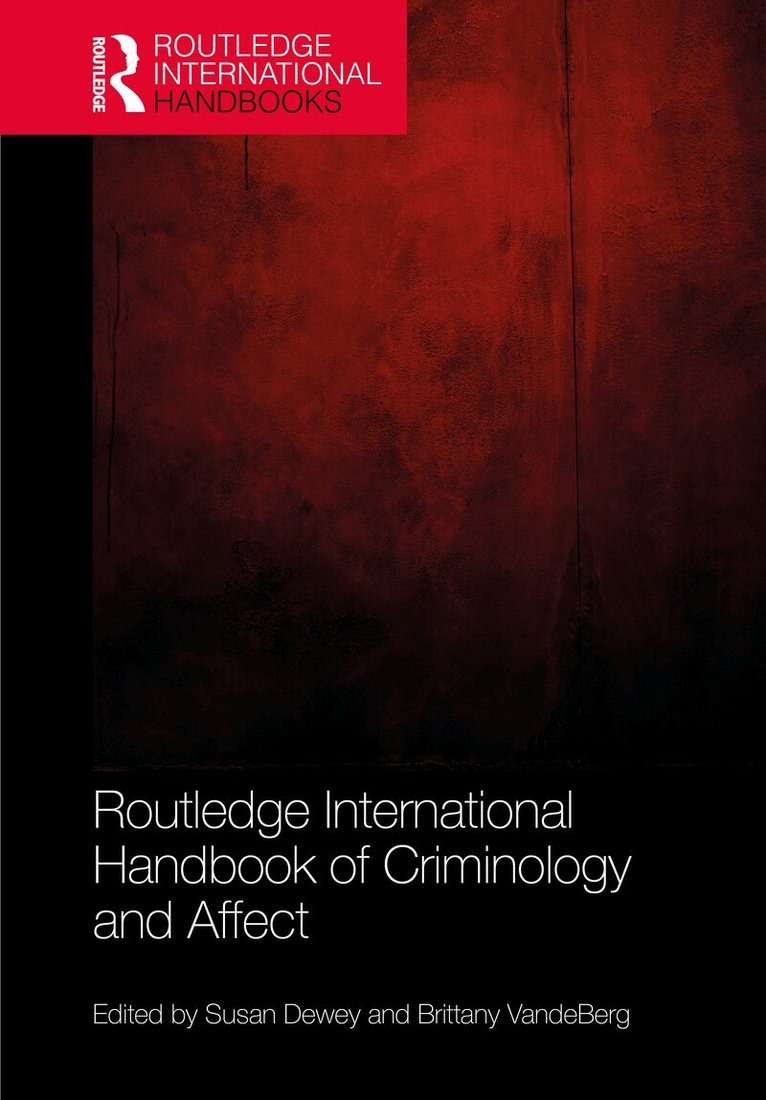
    Routledge International Handbook of Criminology and Affect

    AvSusan Dewey,Brittany VandeBerg

    Inbunden, Engelska, 2026

    Del i serien Routledge International Handbooks

    3 553 kr

    Beställningsvara. Skickas inom 10-15 vardagar. Fri frakt över 249 kr.

    Beskrivning

    This unprecedentedly expansive international collection of empirical and theoretical material explores the nascent field of criminology and affect. Affect theory first arose as an analytical framework to conceptualize and understand dynamic emotional relationships between individuals and the social environment. Despite the tremendous potential utility for affect theory to assist criminologists with conceptualizing crime and justice, affect remains underutilized in criminological research. Uniting research from otherwise geographically and culturally disparate locales under affect’s analytical umbrella presents a unique opportunity to demonstrate how criminologists can utilize affect theory to understand aspects of the justice process that otherwise prove elusive.The Handbook is organized around the most pressing topics of interest to researchers, policymakers, and practitioners engaged with crime and the administration of justice. The first set of chapters explore the emotional cartographies of affective governance through engagements with affective labor in penal spaces, incorporating affect theory into genocide studies, modern ruins and feeling the rules, affective meaning in group family therapy programs, and how crime concerns and perceived victimization risks affect public support for harsher criminal sanctions. Part II examines the intersection of affective economies and organizational logics by exploring emotions in the regulation of state violence, the moral economy of mafia organizations, moral economies of the illegal caviar trade, agricultural crime and farmer mental health, and friendship in the lives of urban sex workers. The key topics underpinning Part III include incorporating affect theory into understanding decades of research on correctional populations, rehabilitating emotions through prison dog programs, journeys of women under carceral control, intuition and feelings within penal evaluation, and remorse and emotions in research on criminal-legal decision-makers. Part IV focuses on traumatic affect in problem-solving courts, affective practices in rape trials, emotional dynamics of video links and video evidence in the courtroom, emotions and perceptions of visual evidence, and affective risks and responses to intimate partner violence. Part V engages with affective positionalities through narrative criminology, reflexivity and vulnerability in sexual violence research, death penalty sentencing and hauntings of the court, jury decision-making, judicial authority, and release.By focusing on emotion as a dynamic and transmissible component of human interaction, this important work illuminates how researchers and practitioners can account for the less tangible—but nonetheless extremely significant—aspects of the justice process.Erratum Note: Chapter 6, “What Helped You the Most?” A Qualitative Examination of Affective Meaning in Open-Ended Responses from a Group Family Therapy Program for First-Time Juvenile Offenders and Their Parent(s),” was contributed by Bradley G. Tripp, Alexsandra Dubin, and William H. Quinn. We regret that some of the authors’ names were omitted in the first printing of this volume.

    Produktinformation

    • Utgivningsdatum:2026-06-25
    • Mått:178 x 254 x 22 mm
    • Vikt:860 g
    • Format:Inbunden
    • Språk:Engelska
    • Serie:Routledge International Handbooks
    • Antal sidor:358
    • Förlag:Taylor & Francis Ltd
    • ISBN:9781032895093

    Utforska kategorier

    • Freudiansk psykologi inom Psykologi och pedagogik
    • Arbetspsykologi inom Psykologi och pedagogik
    • Kognitiv psykologi inom Psykologi och pedagogik

    Mer om författaren

    Susan Dewey is Professor of Criminology and Criminal Justice at The University of Alabama who uses immersive, community-based participatory research methods to understand violence, vulnerability, and criminal justice institutions. She is the author/editor of 16 book-length works and over 100 articles and reports, with this research supported by the National Science Foundation, Census Bureau, Department of Justice, Fulbright-Hays, UN Women, the Wenner-Gren Foundation for Anthropological Research, Microsoft Philanthropies, Planned Parenthood of the Rocky Mountains, the Correctional Education Association, and the National Collaborative on Gun Violence Research.Brittany VandeBerg is Professor of Criminology and Criminal Justice at The University of Alabama, where she researches violence and resilience with a particular focus on gender. VandeBerg is a special assistant to the United Nations International Law Commission Special Rapporteur for Piracy and Armed Robbery at Sea and a former consultant with the United Nations Office on Drugs and Crime (UNODC) Counter Piracy Programme and the United Nations Food and Agriculture Organization (FAO) Somalia Fisheries Sector.

    Recensioner i media

    Crime often produces strong reactions and emotions, both as a personal experience and area for policy. This is a well-known and debated topic in criminology. This handbook offers a new and exciting take on this as it sheds light on these reactions and emotions with chapters on an impressive range of criminological issues exploring different aspects and effects of affect. With this handbook the editors Dewey and VandeBerg together with authors from several continents and disciplines offer valuable contributions both to criminology and affect studies. May-Len Skilbrei, Professor of Criminology at the University of Oslo, NorwayThe editors present culturally and geographically wide-ranging case studies which examine crime and justice processes through the analytical lens of affect theory. Contributors to this volume make a strong case for why affect theory should be central to both criminological theorizing and criminal justice practice. The important findings presented in this publication make it a must read for criminologists, sociologists, psychologists, anthropologists, gender studies specialists, critical theorists, and political scientists. In sum, anyone wishing to effectively deal with offenders as well as those involved in the challenging work of criminal justice practice will find this work useful.Richard J. Chacon, Professor of Anthropology at Winthrop University

    Innehållsförteckning

    • 1. Criminology and Affect: An Introduction to Key Theories, Methods, and Challenges Part I: Emotional Cartographies of Affective Governance 2. Emotional Cartographies of Affective Governance: An Introduction 3. Emotional Cartographies of Affective Labor in Penal Spaces: A Global South Case from the Philippines 4. Genocide and Affect Theory 5. Feeling Your Way, and Feeling the Rules: Modern Ruins and the Navigation of Lingering Normativity 6. "What Helped You the Most?" A Qualitative Examination of Affective Meaning in Open-Ended Responses from a Group Family Therapy Program for First-Time Juvenile Offenders and Their Parent(s) 7. Do Crime Concerns and Perceived Risk of Victimization Affect Public Support for Harsher Criminal Sanctions? A Reexamination of the Effect of Fear of Crime on Punitiveness in Various Societies Part II: Affective Economic and Organizational Logics 8. Affective Economic and Organizational Logics: An Introduction 9. Police Affects: How the Law Constructs Emotions in Regulating State Violence 10. The Moral Economy of Organized Crime 11. "Caviar Hysteria" and the Affective Moral Economies of Illegal Caviar Trade in Europe 12. Agricultural Crime and Farmer Mental Health: Balancing Positive and Negative Affects 13. Bonds That Matter: Friendship in the Lives of Urban Sex Workers in Brazil Part III: Carceral Affects 14. Carceral Affects: An Introduction 15. Affect, Emotion, and Coping in Correctional Populations: A Review of 25 Years of Published Studies in The Prison Journal 16. Rehabilitating Emotion: Experiences of Formerly Incarcerated Men Who Participated in Prison Dog Programs 17. The Affective Journeys of Women under Carceral Control 18. Hairs on the Back of the Neck: Intuition, Gut Feeling and Affect within Penal Evaluation 19. The Double-Edged Sword of Remorse and Emotions in Research on Criminal-Legal Decisionmakers Part IV: Traumatic Affect 20. Traumatic Affect: An Introduction 21. Traumatic Affect and Problem-Solving Courts 22. Affecting and Affective Practice: New (Materialist) Insights into Rape Trials 23. Digital Technologies in the Courtroom: Exploring the Emotional Dynamics of Video Links and Video-Recorded Evidence 24. Emotion and Perceptions of Visual Evidence 25. Affective Risks, Criminal Justice System, and Intimate Partner Violence in Postsocialist China Part V: Affective Positionalities 26. Affective Positionalities: An Introduction 27. What Does Narrative Criminology Narrate? The Necessity of (Re)Turning to Unconscious Affects 28. Emotional Entanglements: Vulnerability and Reflexivity in Researching Sexual Violence 29. Hauntings of the Court: Affective Citizens in Death Penalty Sentencing 30. Affective Arrangements, Jury Decision-Making, and Justice 31. The "Ick" Factor: Fear, Loathing, and Release 32. Affect, Emotion and the Making of Judicial Authority