• Fri frakt över 249 kr
  • •
  • Snabba leveranser
  • •
  • Billiga böcker
Kundservice

Du är på sajten för privatpersoner.

Företag, bibliotek eller offentlig verksamhet?

Du handlar på classic.bokus.com, där alla dina funktioner finns intakta.
Till classic.bokus.com
Bokus logotyp. Gå till startsidan.
  • Erbjudanden
  • Nyheter
  • Student
  • Topplistor
  • Barn & ungdom
  • Bokus Play
  • E-böcker
  • Pocketböcker
  • Spel & pussel

10% rabatt på allt med kod: NYSTART10 →

Sidfot

Mina sidor

    Hjälp

    • Kundservice
    • Vanliga frågor och svar
    • Frakt och leverans
    • Retur vid ångerrätt
    • Reklamera vara
    • Betalning
    • Köpvillkor
    • Allmänna villkor
    • Information om webbplatsens tillgänglighet

    Om Bokus

    • Om oss
    • Pressrum
    • För studenter
    • För företag
    • För bibliotek och offentlig verksamhet
    • För leverantörer
    • Hållbarhet

    Populärt

    • Aktuella erbjudanden
    • Presentkort
    • Studentlitteratur
    • Nya böcker
    • Topplistor
    • Signerade böcker
    • Engelska böcker

    Inspiration

    • Boktips
    • BookTok
    • Populära bokserier
    • Barnbokskaraktärer
    • Populära författare
    Logotyp för Bokus
    Följ oss på Facebook (extern länk)Följ oss på Instagram (extern länk)Följ oss på YouTube (extern länk)Följ oss på TikTok (extern länk)
    bokus @ CookiesAnpassa cookiesIntegritetspolicyKöpvillkor
    Till Citymail hemsida (extern länk)Till Budbee hemsida (extern länk)Till Postnord hemsida (extern länk)Till Schenker hemsida (extern länk)Till Early Bird hemsida (extern länk)Till Walleys hemsida (extern länk)
    1. Psykologi och pedagogik
    2. Psykologi
    3. Barnpsykologi och utvecklingspsykologi
    • Nyhet

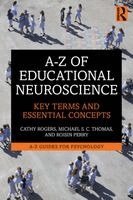
    A-Z of Educational Neuroscience

    Key Terms and Essential Concepts

    AvCathy Rogers,Roisin Perry

    Häftad, Engelska, 2026

    Del i serien A-Z Guides for Psychology

    372 kr

    Beställningsvara. Skickas inom 10-15 vardagar. Fri frakt över 249 kr.

    Fler format och utgåvor

    Inbunden

    2 056 kr

    Beskrivning

    This accessible guide explores the fascinating intersections between neuroscience, psychology, and education, offering an easy-to-navigate A–Z format that unpacks key concepts, debates, and themes essential to understanding how the brain learns.From emotions and motivation to memory and attention, the authors reveal how groundbreaking neuroscience challenges traditional beliefs about learning and provides practical insights for transforming education. With clear explanations, concrete examples, and evidence-based recommendations, this book empowers readers to apply neuroscience to real-world teaching and learning. Readers can dip into individual entries or explore the guide in its entirety. It serves as a trusted reference for topics such as growth mindset, screen time, dyslexia, and more. Cross-referenced entries allow readers to follow interconnected ideas, while curated “top ten” lists offer tailored starting points for specific audiences.This indispensable resource is essential reading for students of psychology, neuroscience, and education, providing a lively and comprehensive primer. It is equally valuable for teachers, school leaders, SEND specialists, and policymakers, equipping them with evidence-based insights to inform their decisions and unlock the potential of every learner.

    Produktinformation

    • Utgivningsdatum:2026-09-07
    • Mått:156 x 234 x 13 mm
    • Vikt:460 g
    • Format:Häftad
    • Språk:Engelska
    • Serie:A-Z Guides for Psychology
    • Antal sidor:232
    • Förlag:Taylor & Francis Ltd
    • ISBN:9781032991672

    Utforska kategorier

    • Barnpsykologi och utvecklingspsykologi inom Psykologi och pedagogik
    • Kognitiv psykologi inom Psykologi och pedagogik
    • Biovetenskap inom Naturvetenskap och teknik

    Mer om författaren

    Dr. Cathy Rogers earned her PhD in Educational Neuroscience at Birkbeck, University of London, following a career in science television production. She now works as a science writer.Dr. Roisin Perry has a PhD in Psychology and Human Development and is a Lecturer at the University of West London. Her research focuses on cognitive development, social inequalities, and neurodiversity.Professor Michael S. C. Thomas is Professor of Cognitive Neuroscience at Birkbeck, University of London. From 2010 to 2025, he served as Director of the University of London Centre for Educational Neuroscience. In January 2026, he took up the post of Chief Scientific Adviser to the UK Department for Education.

    Recensioner i media

    'This book's an invaluable tool for navigating the science of how we learn. Its novel format makes it super handy for translating jargon into useful concepts for everyday practice. Every teacher should keep one close by!' Paul Howard-Jones, Professor of Neuroscience and Education, University of Bristol 'A–Z of Educational Neuroscience is an essential guide for bridging neuroscience and classroom practice. It covers a wide range of topics from early cognitive development, adolescent social-emotional growth and attainment gaps to screen time. Rigorous and accessible, it translates complex neuroscience into practical, evidence-based insights for educators, parents and policymakers.' Sarah-Jayne Blakemore, Professor of Psychology and Cognitive Neuroscience, University of Cambridge Centre for Child, Adolescent and Family Research

    Innehållsförteckning

    • Introduction A AbstractionAction Research – see Qualitative/quantitative methods ADHD Adolescence AI Revolution Amygdala Analogies Anxiety Attention Autism Spectrum Disorder Automaticity B Banding/Setting/Streaming – see Grouping Behaviour Belonging Bilingualism Brain Scan to Lesson Plan Breakfast Clubs – see Nutrition, Wellbeing, Gaps Bridge Too Far C Circadian Rhythms Classroom Environment Class Size Climate Crisis Cognitive Control – see Executive functions, Prefrontalcortex Cognitive Load Theory Collaborative Learning Counterintuitive Concepts Creativity Culture Curiosity D Desirable Difficulties – see Forgetting, Learning, Testing Developmental Change Developmental Language Disorder Dyscalculia Dyslexia Dyspraxia E Early Career Framework Early Years Ecological Systems Embodiment Emotional Intelligence – see Multiple intelligences Emotions Errors Ethics Evolution Exams – see Testing Executive Functions Exercise – see Sport 80F Feedback Forgetting Fun G Gaps – Attainment Genetics Gender Giftedness Grit – see Perseverance Grouping Growth Mindset H Health Hemispheres Hippocampus Holidays Homework Hormones I Individual Differences – see Uniqueness Intelligence J Jellyfish K Knowledge L Language – see Developmental language disorder,Literacy, Phonics Learning Learning Styles – see Multimodality, Neuromyths Lifelong Learning Literacy M Memory – see Learning, Working memory Mental Effort Mental Health Metacognition Methods to Know What Works Mindfulness – see Wellbeing, Transfer Mistakes – see Errors Motivation Motor Skills – see Early years, Embodiment, Jellyfish Multilingualism – see Bilingualism Multimodality Multiple Intelligences N Nature Nurture Neuroanatomy Neurodiversity Neuromyths Neurotransmitters Novelty Numeracy Nutrition O Old Age Oracy P Peers PerseverancePersonalised Learning Phones Phonics Physical Exercise – see Sport Plasticity Play Policy Predictive Brain Prefrontal Cortex Q Qualitative/Quantitative Methods R Random Allocation Relevance Resilience Retrieval – see Learning, Revision Revision RewardRisk Taking S Science of Learning Screen Time Sensorimotor System – see Embodiment, Jellyfish Sleep Social Brain Social Media – see AI revolution, Phones, Screen time Socioeconomic Status – see Ecological systems, Culture, Gaps Spatial Cognition Special Educational Needs and Disabilities (Send) – see Neurodiversity, Autism, ADHD, Dyslexia,Dyscalculia Sport Stress T Teachers Technology – see AI revolution, Phones, Screen time, Video games Testing Top Tips for Monday Morning Transfer U Uniqueness V Video Games Visible Learning W Well-being What Doesn’t Work? What Works? Working Memory Why the Brain Matters? Z Zeitgebers