• Fri frakt över 249 kr
  • •
  • Snabba leveranser
  • •
  • Billiga böcker
Kundservice

Du är på sajten för privatpersoner.

Företag, bibliotek eller offentlig verksamhet?

Du handlar på classic.bokus.com, där alla dina funktioner finns intakta.
Till classic.bokus.com
Bokus logotyp. Gå till startsidan.
  • Erbjudanden
  • Nyheter
  • Student
  • Topplistor
  • Barn & ungdom
  • Bokus Play
  • E-böcker
  • Pocketböcker
  • Spel & pussel

10% rabatt på allt med kod: NYSTART10 →

Sidfot

Mina sidor

    Hjälp

    • Kundservice
    • Vanliga frågor och svar
    • Frakt och leverans
    • Retur vid ångerrätt
    • Reklamera vara
    • Betalning
    • Köpvillkor
    • Allmänna villkor
    • Information om webbplatsens tillgänglighet

    Om Bokus

    • Om oss
    • Pressrum
    • För studenter
    • För företag
    • För bibliotek och offentlig verksamhet
    • För leverantörer
    • Hållbarhet

    Populärt

    • Aktuella erbjudanden
    • Presentkort
    • Studentlitteratur
    • Nya böcker
    • Topplistor
    • Signerade böcker
    • Engelska böcker

    Inspiration

    • Boktips
    • BookTok
    • Populära bokserier
    • Barnbokskaraktärer
    • Populära författare
    Logotyp för Bokus
    Följ oss på Facebook (extern länk)Följ oss på Instagram (extern länk)Följ oss på YouTube (extern länk)Följ oss på TikTok (extern länk)
    bokus @ CookiesAnpassa cookiesIntegritetspolicyKöpvillkor
    Till Citymail hemsida (extern länk)Till Budbee hemsida (extern länk)Till Postnord hemsida (extern länk)Till Schenker hemsida (extern länk)Till Early Bird hemsida (extern länk)Till Walleys hemsida (extern länk)
    1. Samhälle och politik
    2. Samhälle och kultur
    3. Kultur och medier
    4. Referensverk och tvärvetenskap

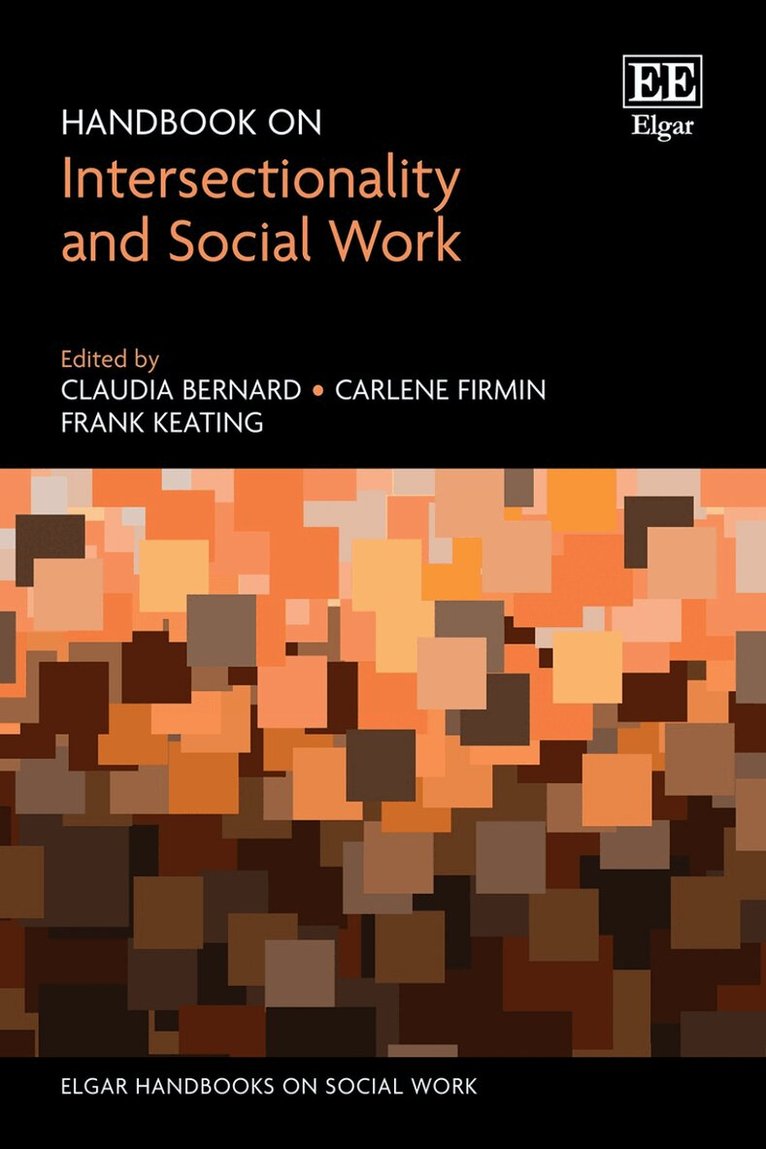
    Handbook on Intersectionality and Social Work

    AvClaudia Bernard,Carlene Firmin

    Inbunden, Engelska, 2026

    Del i serien Elgar Handbooks on Social Work

    3 711 kr

    Beställningsvara. Skickas inom 5-8 vardagar. Fri frakt över 249 kr.

    Beskrivning

    The Handbook on Intersectionality and Social Work presents diverse perspectives on the systemic inequalities that impact social work across the globe. The Handbook examines the conceptual and analytical terrain of intersectionality and the insights it presents for social work practice, pedagogy and research. An international group of leading and emerging scholars provides wide-ranging analysis of intersectionality from different vantage points in social work. They demonstrate how intersectional thinking, values and knowledge can be applied to social work practice, theory and education and extend the analysis of oppressions, such as racism, sexism, ageism, ableism and heterosexism, in contemporary social work. Drawing on a variety of approaches, from law, policy, sociology and pedagogy, amongst others, the Handbook demonstrates remarkable breadth, and showcases new ways of harnessing intersectionality to explore the experiences of minoritised individuals and groups in welfare and social care systems. The Handbook is an essential resource for students and academics in social work, sociology and social policy, particularly those with an interest in intersectionality and diversity, equity and inclusion. It is also a valuable read for educators, practitioners and policymakers involved in social work across the globe.

    Produktinformation

    • Utgivningsdatum:2026-06-30
    • Mått:169 x 244 x undefined mm
    • Format:Inbunden
    • Språk:Engelska
    • Serie:Elgar Handbooks on Social Work
    • Förlag:Edward Elgar Publishing Ltd
    • ISBN:9781035324453

    Utforska kategorier

    • Referensverk och tvärvetenskap inom Samhälle och politik
    • Diskriminering och rättvisa inom Samhälle och politik
    • Sociala grupper och identitet inom Samhälle och politik

    Mer om författaren

    Edited by Claudia Bernard, Professor, Goldsmiths, University of London, Carlene Firmin, Professor, Durham University and Frank Keating, Professor Emeritus, Royal Holloway, University of London, UK

    Recensioner i media

    ‘This excellent Handbook unpacks how we should understand the concept of intersectionality, and what this means for social work practice and policymaking. The varied contributions go beyond description, giving meaning to how an intersectional lens and ways of working are fundamental to social work as a discipline and a profession.’

    Innehållsförteckning

    • ContentsIntroduction: Handbook on Intersectionality and Social Work 1Claudia Bernard, Carlene Firmin and Frank KeatingPART I LAW, POLICY AND SOCIAL WORK EDUCATION FRAMEWORKS1 Rights, knowledge and skills for intersectional social work 10Kish Bhatti-Sinclair2 Legal frameworks and scope to apply intersectionality: children’s services 26Anna Gupta3 Legal frameworks and scope to apply intersectionality: adult services 38Trish Hafford-Letchfield4 Critical and intersectional approaches in social policy: uses for social work 52Joe Whelan5 Intersectionality and the matrix of coloniality 64Lisa Werkmeister Rozas6 Towards an intersectional approach to social work pedagogy and learning 76Prospera TedamPART II THE ROLE OF SOCIAL WORK IN STRUCTURAL CHANGE7 Intersectional social work responses to criminalisation and criminalisingsystems 90Patrick Williams and Lauren Wroe8 Educational exclusion and social work: an intersectional lens 103Roma Thomas9 Social work within a hostile environment: intersectional approaches torecognising the (potential) vulnerability of young male refugees 114Muireann Ní Raghallaigh10 Intersectionality as an antidote to coloniality in social work and familytherapy 130Rhea V. Almeida and José Miguel Paez11 Arab-Palestinians in Israel: poverty, social work, and intersectionality 144Michal Krumer-Nevo, Ensherach Khoury and Limor Lotan12 Methods for developing intersectional approaches to structural socialwork: from advocacy to critical reflection 157Tina MattssonPART III THE ROLE OF SOCIAL WORK IN CONTEXTUAL CHANGE13 “The now is a whole make-up of the past”: intersectionality and Blacksexual minority men within social work contexts 168Lance Keene14 A rationale for social work interventions into hate relationships 186Catherine Donovan, John Clayton and Stephen Macdonald15 Where did context go? Revisiting patch, community, and locality modelsof social and youth work through an intersectional lens 199Rick Bowler16 Reframing child protection social worker talk about mothers who usesubstances: providing safer contexts for them and their children 211Eileen Joy and Suzette Jackson (Te Ātiawa, Taranaki)17 Contextual Safeguarding: one entry point to intersectional social workwith adolescents 224Carlene Firmin and Patriche BentickPART IV INTERSECTIONAL PRACTICE: PRACTICAL APPLICATIONAND PROCESSES – DIRECT WORK WITH CHILDREN ANDFAMILIES18 An intersectional understanding of child abuse and neglect 239Claudia Bernard19 Child victims of modern slavery: making sense of commercial child sexualexploitation through an intersectionality lens 252Pearson Nkhoma20 Applying intersectionality to interventions with harmful practices 269Geetanjali Gangoli and Lihan Miao21 Intersectionality and care experience 280Autumn Roesch-Marsh and Maryam Ishaq22 Intersectional perspectives on young people’s transitions from out-of-homecare 292Rajendra Rambajue and Christopher D. O’Connor23 Integrating intersectionality into social work practice with individuals andfamilies 304Sara Matsuzaka, Kimberly Hudson and Gita R. Mehrotra24 Kinship care at the intersection of race, gender, and class 316Cynthia OkpokiriPART V INTERSECTIONAL PRACTICE: PRACTICAL APPLICATION ANDPROCESSES – DIRECT WORK WITH ADULTS25 Taking account of inequalities and intersectionality in later life: criticalgerontological social work and the lifecourse 330Alisoun Milne26 Addressing inequalities in mental health through an intersectional lens 343Jo Warner27 Intersectional perspectives on informal care 354Yvette Wittenberg and Rick Kwekkeboom28 Navigating the crossroads: an intersectional approach to race and gender inrefugee contexts from a critical social work perspective 364Kim Robinson29 An intersectional approach to understanding and working with disabledcommunities 376Carmen Yau30 Transitional Safeguarding and intersectionality 388Christine Cocker, Adi Cooper and Dez HolmesConcluding reflections 403Frank Keating, Claudia Bernard and Carlene Firmin