• Fri frakt över 249 kr
  • •
  • Snabba leveranser
  • •
  • Billiga böcker
Kundservice

Du är på sajten för privatpersoner.

Företag, bibliotek eller offentlig verksamhet?

Du handlar på classic.bokus.com, där alla dina funktioner finns intakta.
Till classic.bokus.com
Bokus logotyp. Gå till startsidan.
  • Erbjudanden
  • Nyheter
  • Student
  • Topplistor
  • Barn & ungdom
  • Bokus Play
  • E-böcker
  • Pocketböcker
  • Spel & pussel

Må bättre, för mindre! Upp till 50% rabatt på hälsoböcker

Sidfot

Mina sidor

    Hjälp

    • Kundservice
    • Vanliga frågor och svar
    • Frakt och leverans
    • Retur vid ångerrätt
    • Reklamera vara
    • Betalning
    • Köpvillkor
    • Allmänna villkor
    • Information om webbplatsens tillgänglighet

    Om Bokus

    • Om oss
    • Pressrum
    • För studenter
    • För företag
    • För bibliotek och offentlig verksamhet
    • För leverantörer
    • Hållbarhet

    Populärt

    • Aktuella erbjudanden
    • Presentkort
    • Studentlitteratur
    • Nya böcker
    • Topplistor
    • Signerade böcker
    • Engelska böcker

    Inspiration

    • Boktips
    • BookTok
    • Populära bokserier
    • Barnbokskaraktärer
    • Populära författare
    Logotyp för Bokus
    Följ oss på Facebook (extern länk)Följ oss på Instagram (extern länk)Följ oss på YouTube (extern länk)Följ oss på TikTok (extern länk)
    bokus @ CookiesAnpassa cookiesIntegritetspolicyKöpvillkor
    Till Citymail hemsida (extern länk)Till Budbee hemsida (extern länk)Till Postnord hemsida (extern länk)Till Schenker hemsida (extern länk)Till Early Bird hemsida (extern länk)Till Walleys hemsida (extern länk)
    1. Samhälle och politik
    2. Samhälle och kultur
    3. Kultur och medier
    4. Referensverk och tvärvetenskap

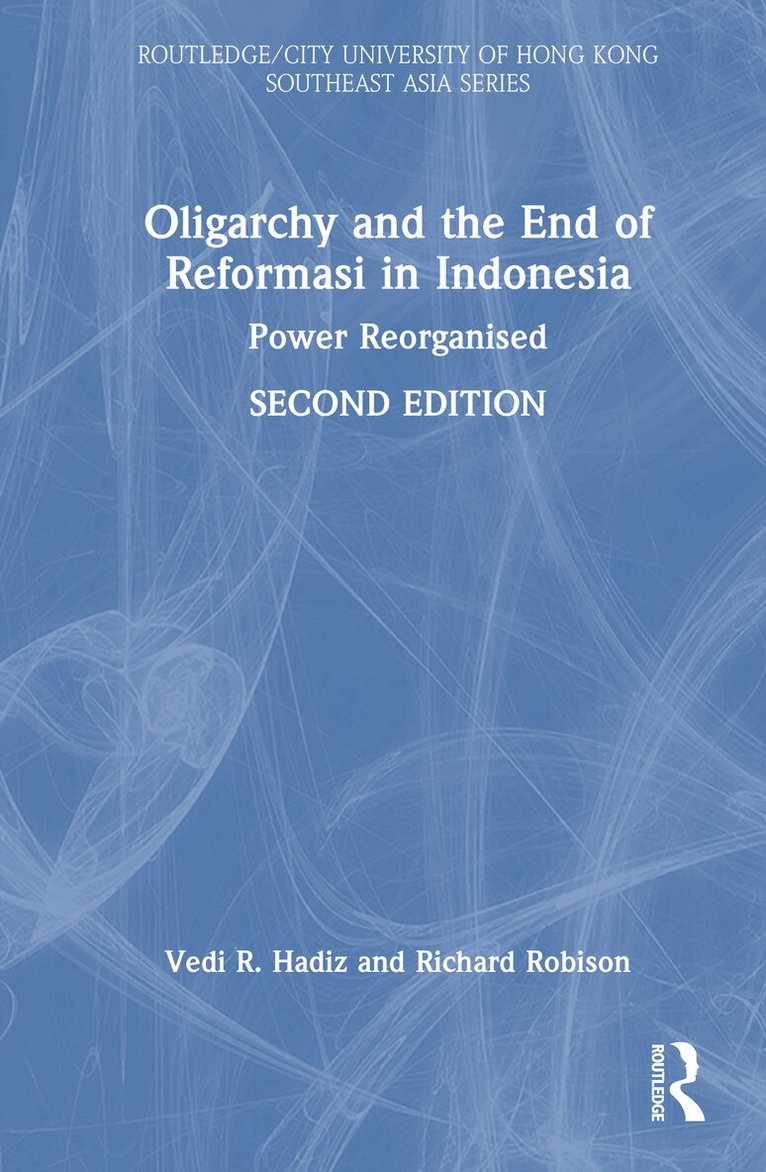
    Oligarchy and the End of Reformasi in Indonesia

    Power Reorganised

    AvVedi R. Hadiz,Richard Robison

    Inbunden, Engelska, 2026

    Del i serien Routledge/City University of Hong Kong Southeast Asia Series

    2 506 kr

    Beställningsvara. Skickas inom 10-15 vardagar. Fri frakt över 249 kr.

    Fler format och utgåvor

    Häftad

    646 kr

    Beskrivning

    Offering an in-depth account of how the forces and institutions of oligarchy established their ascendancy in post-authoritarian Indonesia, this volume represents the new and updated edition of a highly influential study.In the wake of neo-liberal markets and democracy being progressively replaced by a more state-centred and nationalist vision of Indonesia’s destiny, this new edition charts the evolution of oligarchic power following Jokowi’s rise to power. Chapters argue that the developments of the last decade, now shaping the presidency of Prabowo Subianto, represent the culmination of processes of power reorganisation and oligarchic consolidation set in motion during the early post-Soeharto period. The book challenges resurgent pluralist explanations about the relationship between democracy and market institutions, demonstrating how democratic politics, populist impulses, and oligarchic domination can ultimately co-exist and sustain one another.This revised edition of one of the most highly cited and influential works on modern Indonesian politics will be suitable as a textbook on Indonesian and Southeast Asian society and economy. It will also be of interest to academics in Southeast Asian politics, as well as those interested in political economy, development and society in general.

    Produktinformation

    • Utgivningsdatum:2026-06-22
    • Mått:156 x 234 x 24 mm
    • Vikt:930 g
    • Format:Inbunden
    • Språk:Engelska
    • Serie:Routledge/City University of Hong Kong Southeast Asia Series
    • Antal sidor:398
    • Upplaga:2
    • Förlag:Taylor & Francis Ltd
    • ISBN:9781041017684

    Utforska kategorier

    • Referensverk och tvärvetenskap inom Samhälle och politik
    • Nationalekonomi inom Ekonomi och Ledarskap
    • Statsskick: diktatur inom Samhälle och politik

    Mer om författaren

    Vedi R. Hadiz (FASSA) is Professor of Asian Studies and Redmond Barry Distinguished Professor at the Asia Institute, University of Melbourne, where he was Director. He has also been Assistant Deputy Vice-Chancellor International at the University of Melbourne. At Murdoch University, he was Professor of Asian Societies and Politics and at the National University of Singapore, Associate Professor of Sociology. He has written on oligarchy and capitalism, democracy and populism and labour movements in Indonesia/Southeast Asia and the Middle East.Richard Robison (FASSA) is Honorary Professorial Fellow at the Asia Institute, University of Melbourne, and Emeritus Professor, Murdoch University. He was formerly Professor of Political Economy at the International Institute of Social Studies in The Hague, the Netherlands, and Director of the Australian Research Council’s Special Centre for the Study of Political and Economic Change in Asia at Murdoch University, Australia. He has written widely on the political economy of Indonesia and Southeast Asia.

    Recensioner i media

    "Readers with an interest in Indonesian politics will eagerly welcome this updated version of a classic study. Reorganising Power in Indonesia set the parameters of debate on the nature of politics in post-Soeharto Indonesia and it remains an indispensable volume today."-- Edward Aspinall, Australian National University

    Innehållsförteckning

    • Part I Historical And Theoretical FrameworksIntroductionChapter 1 Theories of Change and the Case Of IndonesiaChapter 2 The Genesis Of Oligarchy: Soeharto’s New Order, 1965–1982Part II The Triumph Of Oligarchy, 1982–1997Chapter 3 Hijacking the MarketsChapter 4 Capturing the Political RegimeChapter 5 Disorganising Civil SocietyPart III The Oligarchy In Crisis, 1997–1998 Chapter 6 Economic CatastropheChapter 7 Political UnravellingPart IV Oligarchy ReconstitutedChapter 8 Reorganising Economic PowerChapter 9 Reorganising Political PowerChapter 10 Can Oligarchy Survive?Part V Power ReorganisedChapter 11 Power Reorganised: Towards the End of ReformasiChapter 12 Economic Nationalism and State CapitalismChapter 13 Oligarchy Beyond Reformasi: New Tensions and Contradictions