Inbunden, Engelska, 2026
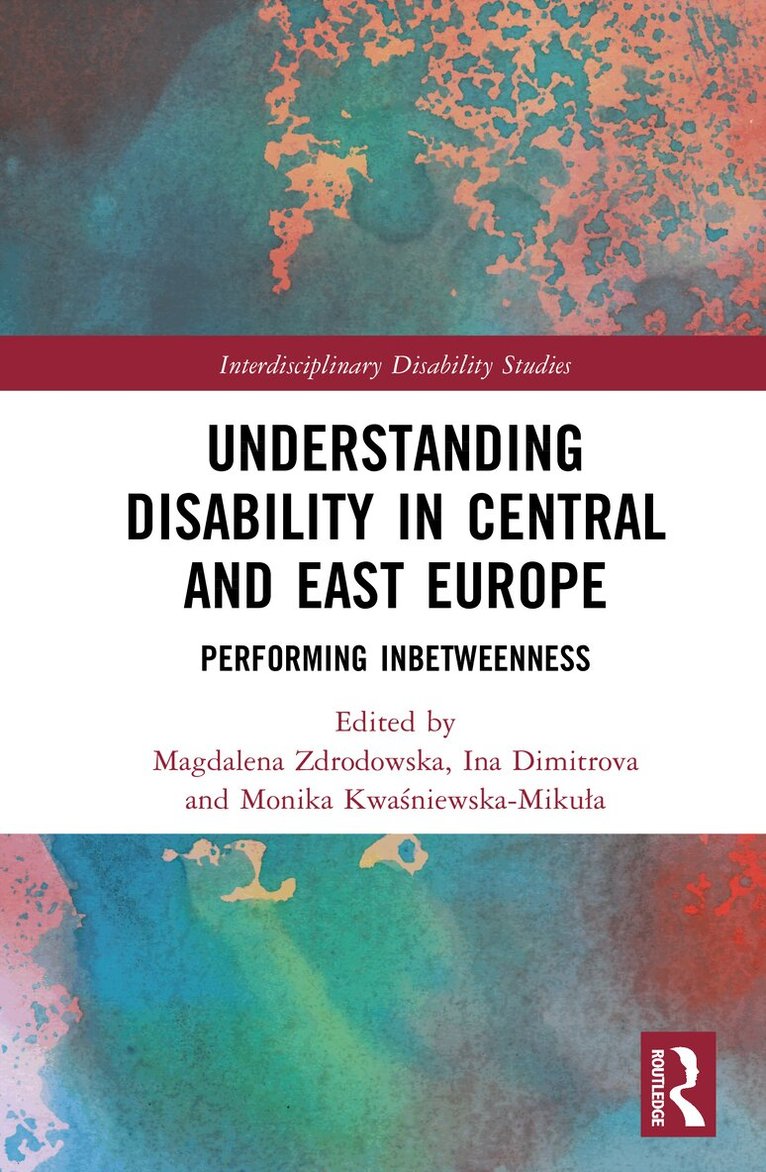
Understanding Disability in Central and Eastern Europe
Performing Inbetweenness
Av Magdalena Zdrodowska, Ina Dimitrova, Monika Kwaśniewska-Mikuła
Del i serien Interdisciplinary Disability Studies
2577 kr
Beställningsvara. Skickas inom 10-15 vardagar. Fri frakt över 249 kr.
Beskrivning
Produktinformation
- Utgivningsdatum: 2026-09-29
- Mått: 156 x 234 x 20 mm
- Vikt: 690 g
- Format: Inbunden
- Språk: Engelska
- Serie: Interdisciplinary Disability Studies
- Antal sidor: 270
- Förlag: Taylor & Francis Ltd
- ISBN: 9781041028963
Mer om författaren
Magdalena Zdrodowska is an Assistant Professor in the Institute of Audiovisual Arts, Jagiellonian University in Kraków, Poland. She is an anthropologist, and film and media scholar, working at the crossroads of deaf studies, disability studies, and history of cinema. She is an author of Television on the Borderlands (2013) and Telephone, Cinema and Cyborgs: The Mutual Relations between Deafness and Technology (2021), both published in Polish. She is working on her third book Deaf Cinema. She is a co-founder of Disability Studies in East Europe: Reconfigurations research platform.Ina Dimitrova is Associate Professor of social philosophy and bioethics at University of Plovdiv “Paisii Hilendarski”, Bulgaria. Her research lies at the intersection of disability studies, science and technology studies, and history of medicine, with a particular focus on disability activism, disability history, and the history of psychiatry in socialist Bulgaria. She has participated in research projects examining patterns of care for people with disabilities in Bulgaria, as well as in participatory initiatives exploring barriers to independent living in the postsocialist region.Monika Kwaśniewska-Mikuła is an Assistant Professor at the Department of Theatre and Drama. She is an author of books Od wstrętu do sublimacji. Teatr Krzysztofa Warlikowskiego w świetle teorii Julii Kristevej (2009), Pytanie o wspólnotę. Jerzy Grzegorzewski i Jan Klata (2016), Między hierarchią a anarchią. Teatr –Instytucja – Krytyka (2019) and #MeToo na rzecz przyszłości teatru. Projekty artystyczne o przemocy (seksualnej) w teatrze (2025). She is co-editor of the books Zła pamięć. Przeciw-historia w polskim teatrze i dramacie (2012), Teatr brzydkich uczuć (2021) Autocenzura i cenzura. Nowe ujęcia (2024) and Polish theatre after #MeToo: new discourses and (un)doings (2026, in preparation). Currently, she focuses on contemporary performance acting, disability in theater and performance (with a particular emphasis on mental health and neurodiversity).
Recensioner i media
“This book provides a much-needed boost to the field of postsocialist disability studies - the region has been woefully invisible in mainstream disability scholarship. The editors answer the call with panache, bringing together leading scholars and activists to reflect on disability from the unique perspective of the postsocialist experience.”-Teodor Mladenov, University of Dundee, United Kingdom.“From the perspective of the European Disability Forum, this volume is an important and timely contribution because it brings Central and Eastern Europe into disability studies not as a periphery, but as a place of knowledge, resistance, and new concepts. Its framing of “inbetweenness,” together with the sections on disability histories, activism, art and technology, and its attention to war, illiberalism, and structural invisibility, makes it especially powerful and relevant for today’s Europe.”-Gunta Anča, President of the European Disability Forum.“In a major contribution to global, critical, and emancipatory disability studies, established and emerging scholars and activists from Central and Eastern Europe apply cutting-edge theories and new methods to explore the generative notion of “inbetweenness.” Intersectional frameworks deftly connect the inbetweenness of disability with the inbetweenness of gender identities, experiences of migration and refuge, academic and activist spaces, and more. A must-read for otherwise approaches to disability studies in the twenty-first century.”-Sarah D. Phillips, Indiana University, United States.
Betyg & recensioner
0 recensioner
Inga recensioner tillgängliga.