• Fri frakt över 249 kr
  • •
  • Snabba leveranser
  • •
  • Billiga böcker
Kundservice

Du är på sajten för privatpersoner.

Företag, bibliotek eller offentlig verksamhet?

Du handlar på classic.bokus.com, där alla dina funktioner finns intakta.
Till classic.bokus.com
Bokus logotyp. Gå till startsidan.
  • Erbjudanden
  • Nyheter
  • Student
  • Topplistor
  • Barn & ungdom
  • Bokus Play
  • E-böcker
  • Pocketböcker
  • Spel & pussel

10% rabatt på allt med kod: NYSTART10 →

Sidfot

Mina sidor

    Hjälp

    • Kundservice
    • Vanliga frågor och svar
    • Frakt och leverans
    • Retur vid ångerrätt
    • Reklamera vara
    • Betalning
    • Köpvillkor
    • Allmänna villkor
    • Information om webbplatsens tillgänglighet

    Om Bokus

    • Om oss
    • Pressrum
    • För studenter
    • För företag
    • För bibliotek och offentlig verksamhet
    • För leverantörer
    • Hållbarhet

    Populärt

    • Aktuella erbjudanden
    • Presentkort
    • Studentlitteratur
    • Nya böcker
    • Topplistor
    • Signerade böcker
    • Engelska böcker

    Inspiration

    • Boktips
    • BookTok
    • Populära bokserier
    • Barnbokskaraktärer
    • Populära författare
    Logotyp för Bokus
    Följ oss på Facebook (extern länk)Följ oss på Instagram (extern länk)Följ oss på YouTube (extern länk)Följ oss på TikTok (extern länk)
    bokus @ CookiesAnpassa cookiesIntegritetspolicyKöpvillkor
    Till Citymail hemsida (extern länk)Till Budbee hemsida (extern länk)Till Postnord hemsida (extern länk)Till Schenker hemsida (extern länk)Till Early Bird hemsida (extern länk)Till Walleys hemsida (extern länk)
    1. Juridik
    2. Rättsvetenskap
    3. Rättshistoria

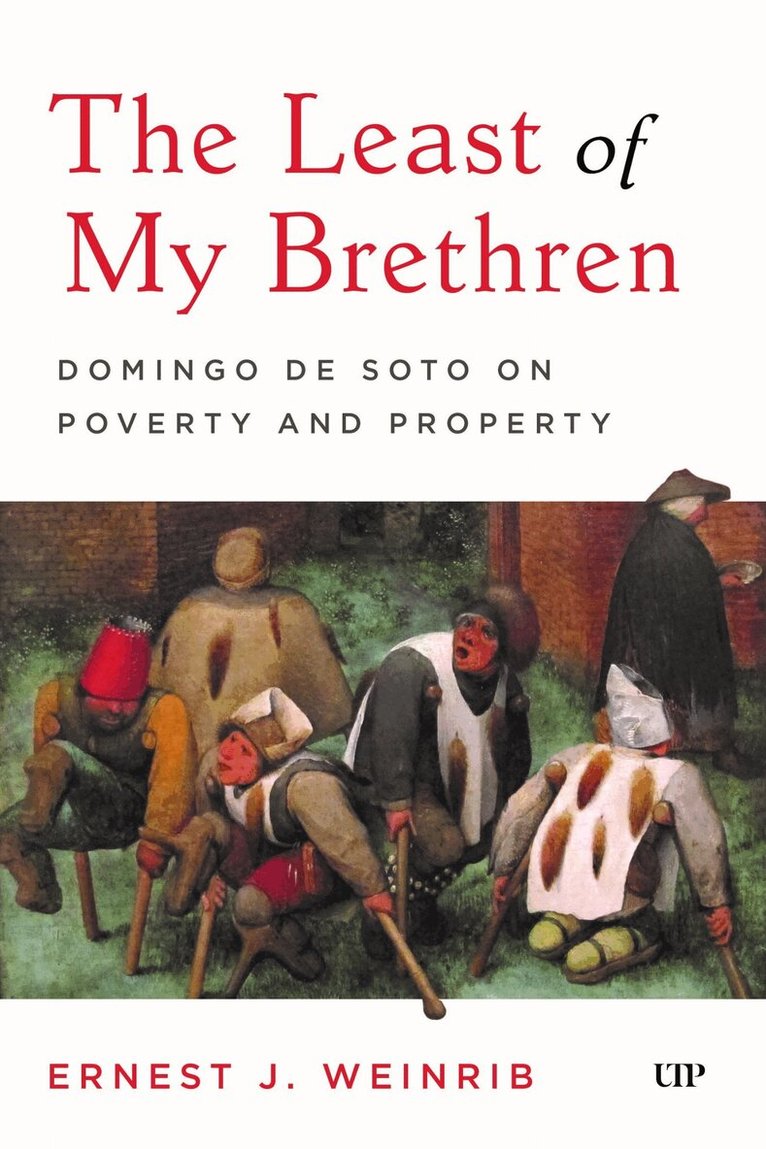
    Least of My Brethren

    Domingo De Soto on Poverty and Property

    AvErnest J. Weinrib

    Inbunden, Engelska, 2026

    Del i serien Toronto Studies in Medieval Law

    732 kr

    Beställningsvara. Skickas inom 5-8 vardagar. Fri frakt över 249 kr.

    Fler format och utgåvor

    E-bok

    884 kr

    E-bok

    884 kr

    Beskrivning

    As pauperism and begging dramatically increased throughout Europe in the sixteenth century, poverty began to be treated as the object of governmental regulation rather than of individual benevolence. The new approach – which has been viewed as the early glimmering of the modern welfare state – aroused much controversy. This book presents translations of Domingo de Soto’s intervention in the controversy (In Causa Pauperum Deliberatio), as well as of his treatments of poverty and property in his magisterial De Iustitia et Iure and elsewhere. Accompanying the translations is an extensive introductory essay that analyses the juridical significance of Soto’s reflections on rights, poverty, and property. Among other matters, the introductory essay elucidates Soto’s notion of the right to beg, as well as the different ways to conceptualize the relationship between extreme necessity and private property. Throughout, Soto’s views are presented in the light of other scholastic thinkers from whom he drew, or with whom he disagreed, or who explicated his ideas. The essay also notes connections to the thought of the great Dutch jurist of the next century, Hugo Grotius.Legal theorist and classicist Ernest Weinrib brings together the disciplines to illuminate Soto’s role in the intellectual history of poverty and of its relation to private property.

    Produktinformation

    • Utgivningsdatum:2026-05-12
    • Mått:159 x 235 x 19 mm
    • Vikt:460 g
    • Format:Inbunden
    • Språk:Engelska
    • Serie:Toronto Studies in Medieval Law
    • Antal sidor:256
    • Förlag:University of Toronto Press
    • ISBN:9781049801346

    Utforska kategorier

    • Rättshistoria inom Juridik
    • Medeltiden inom Historia och arkeologi
    • Religion: allmänt inom Filosofi och religion

    Mer om författaren

    Ernest Weinrib is a university professor emeritus at the Faculty of Law, University of Toronto where he taught courses on law and classics for more than five decades.

    Innehållsförteckning

    • Domingo de Soto on Poverty and PropertyI The Crisis of Pauperism: Tavera’s LawII The Precept of AlmsgivingIII Roads and HospitalityIV IusV Subjective RightsVI The Right to BegVII Lucrum CessansVIII Common Possession and Private PropertyIX Extreme NecessityX RestitutionXI Conclusion Translated TextsDeliberation in the Matter of the Poor (1545) (the Proposed Regulation of Beggars)Chapter II: Containing the NarrationChapter III: On VagabondsChapter IV: On Foreign BeggarsChapter V: Response to ObjectionsChapter VI: On Pilgrims to SantiagoChapter VII: On the End Applicable to the Arrangements about the PoorChapter VIII: On the Obligation to Give Alms Incumbent upon ChristiansChapter IX: On Examining the Poverty of BeggarsChapter X: On Examining the Life of the PoorChapter XI: On the Reason for Permitting Solicitation from Door to DoorChapter XII: In Which the Reasons and Causes for Prohibiting the Poor from Begging Are Examined Commentary on Aquinas, Summa Theologiae II-II, q. 32 (1539–1540) (the Precept of Almsgiving)De Dominio 1–8 (1535) (Ownership and Use)De Dominio 19–23 (1535) (the Origin of Private Property)De Iustitia et Iure, IV, q. 1, a. 1 (1553) (Private Property and Right)De Iustitia et Iure, IV, q. 3, a. 1 (1553) (the Origin of Private Property)De Iustitia et Iure, V, q. 3, a. 4 (1553) (Stealing out of Necessity)De Iustitia et Iure, IV, q. 7, a. 1 (1553) (Restitution of What Was Taken)Note on the Texts TranslatedBibliographyIndex