• Fri frakt över 249 kr
  • •
  • Snabba leveranser
  • •
  • Billiga böcker
Kundservice

Du är på sajten för privatpersoner.

Företag, bibliotek eller offentlig verksamhet?

Du handlar på classic.bokus.com, där alla dina funktioner finns intakta.
Till classic.bokus.com
Bokus logotyp. Gå till startsidan.
  • Erbjudanden
  • Nyheter
  • Student
  • Topplistor
  • Barn & ungdom
  • Bokus Play
  • E-böcker
  • Pocketböcker
  • Spel & pussel

10% rabatt på allt med kod: NYSTART10 →

Sidfot

Mina sidor

    Hjälp

    • Kundservice
    • Vanliga frågor och svar
    • Frakt och leverans
    • Retur vid ångerrätt
    • Reklamera vara
    • Betalning
    • Köpvillkor
    • Allmänna villkor
    • Information om webbplatsens tillgänglighet

    Om Bokus

    • Om oss
    • Pressrum
    • För studenter
    • För företag
    • För bibliotek och offentlig verksamhet
    • För leverantörer
    • Hållbarhet

    Populärt

    • Aktuella erbjudanden
    • Presentkort
    • Studentlitteratur
    • Nya böcker
    • Topplistor
    • Signerade böcker
    • Engelska böcker

    Inspiration

    • Boktips
    • BookTok
    • Populära bokserier
    • Barnbokskaraktärer
    • Populära författare
    Logotyp för Bokus
    Följ oss på Facebook (extern länk)Följ oss på Instagram (extern länk)Följ oss på YouTube (extern länk)Följ oss på TikTok (extern länk)
    bokus @ CookiesAnpassa cookiesIntegritetspolicyKöpvillkor
    Till Citymail hemsida (extern länk)Till Budbee hemsida (extern länk)Till Postnord hemsida (extern länk)Till Schenker hemsida (extern länk)Till Early Bird hemsida (extern länk)Till Walleys hemsida (extern länk)
    1. Naturvetenskap och teknik
    2. Teknik och industri
    3. Tillverkningsteknik

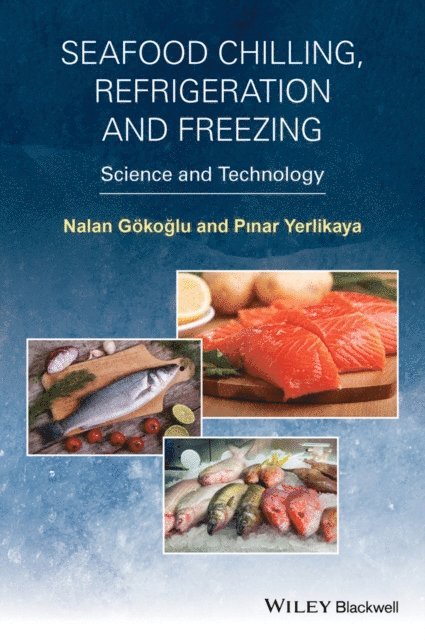
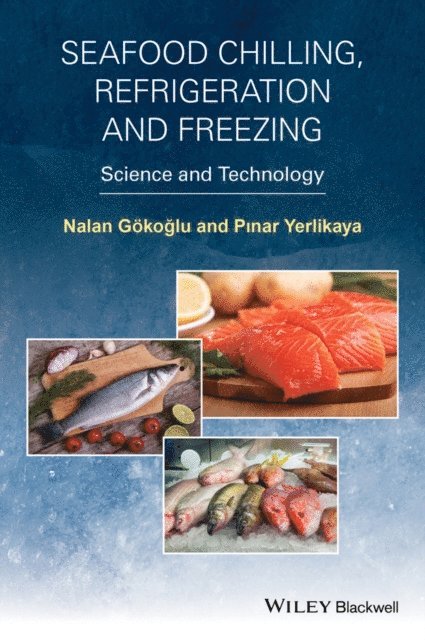
    Seafood Chilling, Refrigeration and Freezing

    Science and Technology

    AvNalan Gokoglu,Pinar Yerlikaya

    Inbunden, Engelska, 2015

    Del i serien *Wiley-Blackwell

    1 456 kr

    Beställningsvara. Skickas inom 5-8 vardagar. Fri frakt över 249 kr.

    Beskrivning

    Fish and seafood are highly perishable, and must be preserved immediately after being caught or harvested. It is very important both to preserving its quality and to ensure that it does not pose any risks to human health upon consumption. Chilling, refrigeration and freezing are the major preservation methods used with seafood and fish products, all three processes aiming to preserve the freshness and flavour of the fish. Consumer demand for fish remains high despite escalating prices in the last ten years which have seen the retail cost of the most popular breeds (cod, haddock, salmon) more than double for unfrozen fish. Many consumers appear to be willing to pay a premium for freshness and quality, both of which are closely linked in shoppers’ minds with the efficient chilling and refrigeration of the fish along the supply chain. At the same time, frozen fish and seafood has also grown more popular with shoppers, as a cheaper, more convenient alternative to refrigerated fresh fish and seafood.Seafood Chilling, Refrigeration and Freezing presents the science behind the chilling, refrigerating and freezing of fish and seafood, describing the chemical, microbiological and physical changes which take place during preservation, and considering the new technologies which can be used, highlighting their benefits and their economic implications. The book takes account of the different requirements for different breeds of fish and seafood, and includes both traditional and novel technologies, providing both current and future perspectives. It will be required reading for food scientists, fish processors and retailers as well as fish specialists, researchers and process designers.

    Produktinformation

    • Utgivningsdatum:2015-07-10
    • Mått:158 x 236 x 18 mm
    • Vikt:454 g
    • Format:Inbunden
    • Språk:Engelska
    • Serie:*Wiley-Blackwell
    • Antal sidor:256
    • Förlag:John Wiley and Sons Ltd
    • ISBN:9781118512180

    Utforska kategorier

    • Tillverkningsteknik inom Naturvetenskap och teknik

    Mer om författaren

    Nalan Gökoðlu is the Dean of the Fisheries Faculty at Akdeniz University in Turkey. She has worked as a researcher on fish processing, preservation and quality issues for almost 25 years, and also teaches in these subjects.Pinar Yerlýkaya is in the Fisheries Faculty at Akdeniz University, Turkey, where she works on fish processing and quality issues.

    Innehållsförteckning

    • Preface ix1 Introduction 11.1 Spoilage of seafood 11.2 Preservation of seafood 21.2.1 Chilling 31.2.2 Refrigeration 31.2.3 Freezing 32 Chemical composition of fish 52.1 Proteins 52.1.1 Sarcoplasmic proteins 62.1.2 Myofibrillar proteins 72.1.3 Stroma proteins 82.1.4 Non]protein nitrogen compounds 92.1.4.1 Free amino acids 92.1.4.2 Peptides 102.1.4.3 Nucleotides 102.1.4.4 Guanidine compounds 122.1.4.5 Trimethylamine oxide (TMAO) 122.1.4.6 Urea 132.1.4.7 Betaines 132.2 Lipids 132.2.1 Saturated fatty acids 152.2.2 Mono]unsaturated fatty acids 162.2.3 Poly]unsaturated fatty acids 162.3 Carbohydrates 182.4 Minerals 192.4.1 Macroelements 202.4.2 Microelements 212.5 Vitamins 222.5.1 Fat]soluble vitamins 232.5.2 Water]soluble vitamins 242.6 Conclusion 25References 323 Quality changes and spoilage of fish 383.1 Introduction 383.2 Factors affecting quality of fish 393.2.1 Species 393.2.2 Size 403.2.3 Distance to port 413.2.4 Diet of fish 413.2.5 Fishing grounds and methods 413.2.6 Sex 423.3 Post]mortem changes in fish muscle 433.3.1 Rigor mortis 443.3.2 Chemical changes 453.3.3 Microbiological changes 483.3.4 Enzymatic changes 503.3.5 Sensory changes 54References 554 Chilling 584.1 Fundamentals of chilling 584.2 Chilling of fish 604.2.1 Chilling methods of fish: traditional and advanced 604.2.1.1 Chilling with ice 604.2.1.2 Chilling with water–ice mix/slurry ice 814.2.1.3 Use of chilled /refrigerated sea water 854.2.1.4 Chilling with dry]ice 894.2.1.5 Super]chilling 924.3 Chilling on board 964.3.1 Icing on board 974.3.2 Bulk stowage 1004.3.3 Shelved stowage 1024.3.4 Boxed stowage 1024.3.5 Quantity of ice needed on board 1034.3.6 Use of refrigerated seawater 1034.3.7 Use of chilled seawater 1044.4 Combination of chilling with traditional and advanced preserving technologies 104References 1075 Quality changes of fish during chilling 1135.1 Introduction 1135.2 Chemical changes 1155.3 Microbiological changes 1195.4 Enzymatic changes 1195.5 Physical changes 1225.6 Sensory changes 123References 1236 Refrigeration 1286.1 Introduction 1286.2 Fundamentals of refrigeration 1296.3 Refrigeration systems 1336.3.1 Vapour]compression system 1356.3.2 Air]cycle system 1446.3.3 Absorption system 1456.3.4 Thermoelectric system 1456.3.5 Evaporative cooler 1466.4 Refrigerants 1466.4.1 Classification of refrigerants 1476.4.1.1 Halocarbons 1486.4.1.2 Hydrocarbons (HCs) 1496.4.1.3 Inorganic compounds 1496.4.1.4 Refrigerant blends 1506.4.2 Ozone depletion potential 1516.4.3 Global warming potential 1516.4.4 Safety of refrigerants 1526.5 Refrigeration of fish 1526.6 Refrigeration on board 1536.6.1 Refrigeration capacity 1556.7 Combination of refrigeration with traditional and advanced preserving technologies 157References 1607 Freezing technology 1637.1 Principles of freezing 1637.1.1 Water and ice 1647.1.2 Nucleation in pure water 1657.1.3 Freezing point depression 1657.1.4 Crystallization and crystal growth 1667.1.5 Recrystallization 1677.1.6 Freezing time 1687.1.7 Freezing velocity 1707.2 Biological aspects of freezing 1707.2.1 Cryopreservation of cells and other biomaterials 1707.2.2 Biological ice nucleation 1727.2.3 Antifreeze proteins 1737.3 Freezing methods 1747.3.1 Air blast freezing 1757.3.2 Indirect contact freezing 1777.3.3 Immersion freezing 1787.3.4 Cryogenic freezing 179References 1818 Freezing and frozen storage of fish 1868.1 Effects of freezing and frozen storage on fish quality 1868.1.1 Chemical and nutritional changes 1878.1.2 Microbiological changes 1918.1.3 Physical changes 1938.1.4 Sensory changes 1958.2 Shelf life of frozen fish 1968.3 Freezing of fish on board 1988.4 Transportation of frozen fish 2008.5 Combination of freezing with traditional and advanced preserving technologies 201References 2039 Thawing of fish 2089.1 Quality changes of fish during thawing 2089.2 Thawing methods of frozen fish 2139.2.1 Thawing with air 2139.2.2 Thawing with water 2149.2.3 Thawing under vacuum 2159.2.4 Thawing with electrical resistance 2159.2.5 Dielectric thawing 2179.2.6 Microwave thawing 2179.2.7 Thawing with hydrostatic high pressure 2199.2.8 Ultrasound]assisted thawing 2219.2.9 Summary 2239.3 Recommendation for GMP in seafood thawing 223References 224Index 228