• Fri frakt över 249 kr
  • •
  • Snabba leveranser
  • •
  • Billiga böcker
Kundservice

Du är på sajten för privatpersoner.

Företag, bibliotek eller offentlig verksamhet?

Du handlar på classic.bokus.com, där alla dina funktioner finns intakta.
Till classic.bokus.com
Bokus logotyp. Gå till startsidan.
  • Erbjudanden
  • Nyheter
  • Student
  • Topplistor
  • Barn & ungdom
  • Bokus Play
  • E-böcker
  • Pocketböcker
  • Spel & pussel

10% rabatt på allt med kod: NYSTART10 →

Sidfot

Mina sidor

    Hjälp

    • Kundservice
    • Vanliga frågor och svar
    • Frakt och leverans
    • Retur vid ångerrätt
    • Reklamera vara
    • Betalning
    • Köpvillkor
    • Allmänna villkor
    • Information om webbplatsens tillgänglighet

    Om Bokus

    • Om oss
    • Pressrum
    • För studenter
    • För företag
    • För bibliotek och offentlig verksamhet
    • För leverantörer
    • Hållbarhet

    Populärt

    • Aktuella erbjudanden
    • Presentkort
    • Studentlitteratur
    • Nya böcker
    • Topplistor
    • Signerade böcker
    • Engelska böcker

    Inspiration

    • Boktips
    • BookTok
    • Populära bokserier
    • Barnbokskaraktärer
    • Populära författare
    Logotyp för Bokus
    Följ oss på Facebook (extern länk)Följ oss på Instagram (extern länk)Följ oss på YouTube (extern länk)Följ oss på TikTok (extern länk)
    bokus @ CookiesAnpassa cookiesIntegritetspolicyKöpvillkor
    Till Citymail hemsida (extern länk)Till Budbee hemsida (extern länk)Till Postnord hemsida (extern länk)Till Schenker hemsida (extern länk)Till Early Bird hemsida (extern länk)Till Walleys hemsida (extern länk)
    1. Psykologi och pedagogik
    2. Pedagogik
    3. Skolan och förskolan

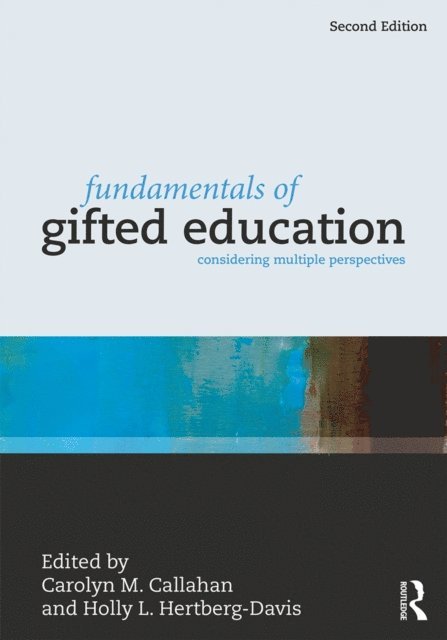
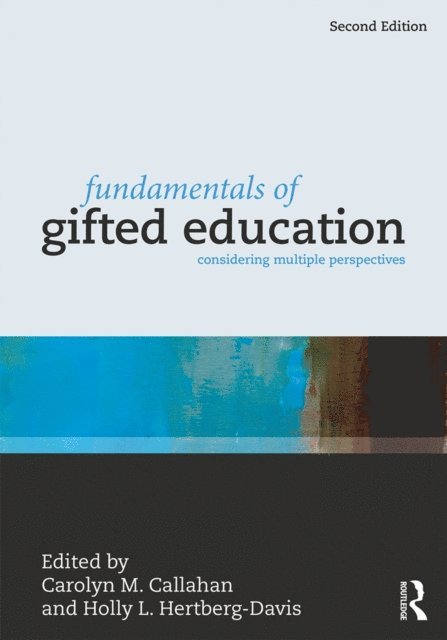
    Fundamentals of Gifted Education

    Considering Multiple Perspectives

    AvCarolyn M. Callahan,Holly L. Hertberg-Davis

    Häftad, Engelska, 2017

    1 261 kr

    Beställningsvara. Skickas inom 10-15 vardagar. Fri frakt över 249 kr.

    Beskrivning

    The field of gifted education is characterized by a perplexing array of perspectives concerning such fundamental issues as definition, identification, curriculum, social and emotional development, and underserved populations. Fundamentals of Gifted Education provides a coherent framework for planning effective programs, providing appropriate educational services, and evaluating programs for the gifted. Parts are organized around fundamental issues confronting the field and follow a common structure: an introductory chapter that provides an overview of the theme of that part as well as guiding points and questions for the reader followed by representative point-of-view chapters written by leading experts that provide varied perspectives on the topic at hand.
    Produktinformation

    • Utgivningsdatum:2017-08-25
    • Mått:178 x 254 x 40 mm
    • Vikt:1 020 g
    • Format:Häftad
    • Språk:Engelska
    • Antal sidor:548
    • Upplaga:2
    • Förlag:Taylor & Francis Ltd
    • ISBN:9781138192386

    Utforska kategorier

    • Skolan och förskolan inom Psykologi och pedagogik
    • Studievägledning och elevhälsa inom Psykologi och pedagogik
    • Specialundervisning inom Psykologi och pedagogik

    Mer om författaren

    Carolyn M. Callahan is Commonwealth Professor Emeritus of Education at the University of Virginia. She has been a principal investigator on projects of the National Research Center on the Gifted and Talented for more than 20 years. She has published more than 200 refereed articles and 50 book chapters across a broad range of topics on gifted education. She is a Past-President of The Association for the Gifted and the National Association for Gifted Children and co-editor of Critical Issues in Gifted Education.Holly L. Hertberg-Davis is an educational consultant specializing in differentiation of instruction, advanced curriculum, and professional development.

    Innehållsförteckning

    • Chapter 1: Introduction Part I. Foundations 2. Beliefs, Philosophies, and Definitions Chapter 3. An Eventful Modern History of Gifted Education 4. Policy-Related Definitions of Giftedness: A Call for Change 5. Gifted Behaviors versus Gifted Individuals 6. The DMGT/IMTD: Building Talented Outputs Out of Gifted Inputs 7. Problematizing Gifted Education: Thinking Radically About Our Beliefs and Practice Part II: Identification 8. Considerations for the Identification of Gifted and Talented Students 9. Identification of Gifted and Talented Students 10. Traditional Identification Instruments 11. Uses and Misuses of Matrices in Identifying Gifted Students: Considerations for Better Practice 12. Identifying Gifted Learners: Utilizing Non-verbal Assessment 13. Utilizing Non-test Assessments in Identifying Gifted and Talented Learners 14. Response to Intervention (RtI) Approaches to Identification in Gifted Education 15. The Characteristics of Gifted and Talented Students Part III: Service Delivery Options and Programming Models for Gifted Students 16. Contexts for Instruction: An Introduction to Service Delivery Options and Programming Models in Gifted Education 17. Evidence Overcomes Excuses: Academic Acceleration is an Effective Intervention for High Ability Students 18. Pull-Out Programs as a Service Delivery Option 19. The Schoolwide Enrichment Model: A Focus on Student Creative Productivity, Strengths and Interests 20. Cluster Grouping 21. Programming Response to the Social and Emotional Characteristics of Gifted Children 22. Options for Secondary Gifted Students Part IV. Curricular and Instructional Decisions 23. Defensible Curriculum for Gifted Learners: Where the Rubber Meets the Road 24. The Multiple Menu Model: A Guide for Developing Gifted Differentiated Curriculum and Instruction 25. Differentiating with Depth and Complexity 26. Differentiated Instruction 27. The CLEAR Curriculum Model 28. Integrated Curriculum Model 29. The Parallel Curriculum Model 30. Advanced Placement and International Baccalaureate Programs Part V. Specific Populations 31. Heterogeneity among the Gifted: Not an Oxymoron 32. Gifted Males and Females: The Same but Different 33. Twice-exceptional Students: Gifted Students with Disabilities Impacting Learning 34. Underachieving Gifted Students 35. Gifted African Americans 36.Increasing the Participation and Success of African-American Students in Gifted Programs 37. Gifted Latino Students: Identifying and Nurturing Talent 38. Gifted Students from Rural Environments 39. Highly Gifted Students PART VI. Parents and Gifted Students 40. Working with Parents of Gifted Students 41. Parents and the Development of Gifted Students 42. Parenting a Twice Exceptional Child 43. Homeschooling: An Alternative Approach for Gifted and Talented Learners? Part VII. Evaluation and Policy in Gifted Education 44. Evaluating, Reflecting, Affirming, and Redirecting: An Introduction to the Evaluation of Gifted Programs 45. Evaluating Curriculum Models Used in Gifted and Talented Programs 46. Evaluating Services Offered to Gifted and Talented Students: A Planning Guide 47. Policy and Gifted Education