• Fri frakt över 249 kr
  • •
  • Snabba leveranser
  • •
  • Billiga böcker
Kundservice

Du är på sajten för privatpersoner.

Företag, bibliotek eller offentlig verksamhet?

Du handlar på classic.bokus.com, där alla dina funktioner finns intakta.
Till classic.bokus.com
Bokus logotyp. Gå till startsidan.
  • Erbjudanden
  • Nyheter
  • Student
  • Topplistor
  • Barn & ungdom
  • Bokus Play
  • E-böcker
  • Pocketböcker
  • Spel & pussel

10% rabatt på allt med kod NYSTART10 →

Sidfot

Mina sidor

    Hjälp

    • Kundservice
    • Vanliga frågor och svar
    • Frakt och leverans
    • Retur vid ångerrätt
    • Reklamera vara
    • Betalning
    • Köpvillkor
    • Allmänna villkor
    • Information om webbplatsens tillgänglighet

    Om Bokus

    • Om oss
    • Pressrum
    • För studenter
    • För företag
    • För bibliotek och offentlig verksamhet
    • För leverantörer
    • Hållbarhet

    Populärt

    • Aktuella erbjudanden
    • Presentkort
    • Studentlitteratur
    • Nya böcker
    • Topplistor
    • Signerade böcker
    • Engelska böcker

    Inspiration

    • Boktips
    • BookTok
    • Populära bokserier
    • Barnbokskaraktärer
    • Populära författare
    Logotyp för Bokus
    Följ oss på Facebook (extern länk)Följ oss på Instagram (extern länk)Följ oss på YouTube (extern länk)Följ oss på TikTok (extern länk)
    bokus @ CookiesAnpassa cookiesIntegritetspolicyKöpvillkor
    Till Citymail hemsida (extern länk)Till Budbee hemsida (extern länk)Till Postnord hemsida (extern länk)Till Schenker hemsida (extern länk)Till Early Bird hemsida (extern länk)Till Walleys hemsida (extern länk)
    1. Samhälle och politik
    2. Samhälle och kultur
    3. Sociala grupper och identitet
    4. Genusvetenskap

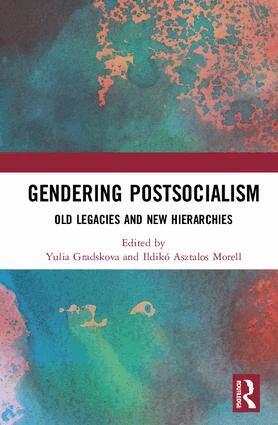
    Gendering Postsocialism

    Old Legacies and New Hierarchies

    AvYulia Gradskova,Ildikó Asztalos Morell

    Inbunden, Engelska, 2018

    Del i serien Global Gender

    2 422 kr

    Beställningsvara. Skickas inom 10-15 vardagar. Fri frakt över 249 kr.

    Beskrivning

    Gendering Postsocialism explores changes in gendered norms and expectations in Eastern Europe and Eurasia after the fall of the Berlin Wall. The dismantlement of state socialism in these regions triggered monumental shifts in their economic landscape, the involvement of their welfare states in social citizenship and, crucially, their established gender norms and relations, all contributing to the formation of the postsocialist citizen. Case studies examine a wide range of issues across 15 countries of the post-Soviet era. These include gender aspects of the developments in education in Kazakhstan, Uzbekistan and Hungary, controversies around abortion legislation in Poland, migrant women and housing as a gendered problem in Russia, challenges facing women’s NGOs in Bosnia, and identity formation of unemployed men in Lithuania. This close analysis reveals how different variations of neoliberal ideology, centred around the notion of the self-reliant and self-determining individual, have strongly influenced postsocialist gender identities, whilst simultaneously showing significant trends for a “retraditionalising” of gender norms and expectations.This volume suggests that despite integration with global political and free market systems, the postsocialist gendered subject combines strategies from the past with those from contemporary ideologies to navigate new multifaceted injustices around gender in Eastern Europe and Eurasia.

    Produktinformation

    • Utgivningsdatum:2018-03-21
    • Mått:156 x 234 x 18 mm
    • Vikt:600 g
    • Format:Inbunden
    • Språk:Engelska
    • Serie:Global Gender
    • Antal sidor:266
    • Förlag:Taylor & Francis Ltd
    • ISBN:9781138296060

    Utforska kategorier

    • Genusvetenskap inom Samhälle och politik
    • Ekonomiska system inom Ekonomi och Ledarskap
    • Geografi inom Naturvetenskap och teknik

    Mer om författaren

    Yulia Gradskova, Södertörn University, Sweden, is a historian dealing with post-Soviet history. She is the co-author of Gender Equality on a Grand Tour (2017 – with E.Blomberg, Y.Waldemarson, A.Zvinkliene) and the co-editor of And They Lived Happily Ever After (2012 – with H.Carlbäck and Zh.Kravchenko).Ildikó Asztalos Morell, sociologist from Mälardalen and Uppsala University (Sweden) with an interest in rural, gender and ethnicity studies of transition societies. She is the author of Emancipation’s Dead-End Roads (1999) and co-editor of Gender Regimes, Citizen Participation and Rural Restructuring (2008 – with B.Bock).

    Innehållsförteckning

    • Chapter 1 The gendered subject of postsocialism: state-socialist legacies, global challenges and (re)building of tradition; Part 1 New gendered geographies; Chapter 2 "They are hardly feminists and could learn a lot": Swedish-Bosnian encounters for gender equality and peace, 1993–2013; Chapter 3 Elderly care in Russia and sidelka from Central Asia; Chapter 4 Around the corner? Female empowerment, security, and elite mind-sets in Georgia; Part 2 Neoliberal governance and the gendered enterprising self; Chapter 5 Russian hostesses in Japan: a way towards self-fulfilment?; Chapter 6 Postsocialist gender failures: men in the economies of recognition; Chapter 7 "A mom who has time for everything": mothers between work and family in contemporary Ukraine; Chapter 8 The agency of a Roma women’s NGO in marginalised rural municipalities in Hungary; Part 3 Resilient legacies of state socialism; Chapter 9 "Women have always had harder lives": gender roles and representations of the self in the oral recollections of older Czech women; Chapter 10 Home is the "place of women’s strength": gendering housing in Soviet and post-Soviet Russia; Chapter 11 Post-Soviet legacies in girls’ education in Kazakhstan and Uzbekistan; Part 4 The postsocialist societies between marketisation, democratisation and retraditionalisation; Chapter 12 "Gender restoration" and "masculinisation" of political life in Poland: the controversies over the abortion legislation after 1989; Chapter 13 Obstacles for women in technical higher education in Hungary; Chapter 14 Gendered identities among medical professionals in postsocialist Russian cinema; Index