• Fri frakt över 249 kr
  • •
  • Snabba leveranser
  • •
  • Billiga böcker
Kundservice

Du är på sajten för privatpersoner.

Företag, bibliotek eller offentlig verksamhet?

Du handlar på classic.bokus.com, där alla dina funktioner finns intakta.
Till classic.bokus.com
Bokus logotyp. Gå till startsidan.
  • Erbjudanden
  • Nyheter
  • Student
  • Topplistor
  • Barn & ungdom
  • Bokus Play
  • E-böcker
  • Pocketböcker
  • Spel & pussel

Må bättre, för mindre! Upp till 50% rabatt på hälsoböcker

Sidfot

Mina sidor

    Hjälp

    • Kundservice
    • Vanliga frågor och svar
    • Frakt och leverans
    • Retur vid ångerrätt
    • Reklamera vara
    • Betalning
    • Köpvillkor
    • Allmänna villkor
    • Information om webbplatsens tillgänglighet

    Om Bokus

    • Om oss
    • Pressrum
    • För studenter
    • För företag
    • För bibliotek och offentlig verksamhet
    • För leverantörer
    • Hållbarhet

    Populärt

    • Aktuella erbjudanden
    • Presentkort
    • Studentlitteratur
    • Nya böcker
    • Topplistor
    • Signerade böcker
    • Engelska böcker

    Inspiration

    • Boktips
    • BookTok
    • Populära bokserier
    • Barnbokskaraktärer
    • Populära författare
    Logotyp för Bokus
    Följ oss på Facebook (extern länk)Följ oss på Instagram (extern länk)Följ oss på YouTube (extern länk)Följ oss på TikTok (extern länk)
    bokus @ CookiesAnpassa cookiesIntegritetspolicyKöpvillkor
    Till Citymail hemsida (extern länk)Till Budbee hemsida (extern länk)Till Postnord hemsida (extern länk)Till Schenker hemsida (extern länk)Till Early Bird hemsida (extern länk)Till Walleys hemsida (extern länk)
    1. Psykologi och pedagogik
    2. Pedagogik
    3. Pedagogisk teori och filosofi

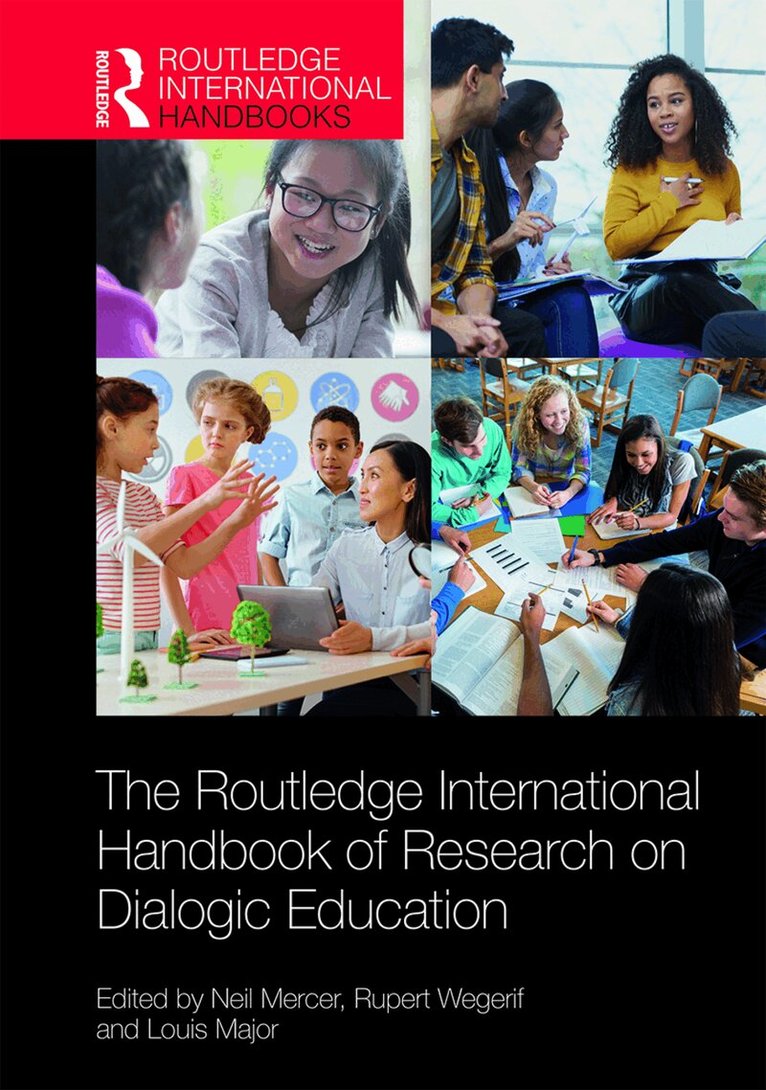
    Routledge International Handbook of Research on Dialogic Education

    AvNeil Mercer,Rupert Wegerif

    Inbunden, Engelska, 2019

    Del i serien Routledge International Handbooks of Education

    3 553 kr

    Beställningsvara. Skickas inom 10-15 vardagar. Fri frakt över 249 kr.

    Beskrivning

    The Routledge International Handbook of Research on Dialogic Education provides a comprehensive overview of the main ideas and themes that make up the exciting and diverse field of Dialogic Education. With contributions from the world’s leading researchers, it describes underpinning theoretical approaches, debates, methodologies, evidence of impact, how Dialogic Education relates to different areas of the curriculum and ways in which work in this field responds to the profound educational challenges of our time.The handbook is divided into seven sections, covering:The theory of Dialogic EducationClassroom dialogueDialogue, teachers and professional developmentDialogic Education for literacy and languageDialogic Education and digital technologyDialogic Education in science and mathematicsDialogic Education for transformative purposesExpertly written and researched, the handbook marks the coming of age of Dialogic Education as an important and distinctive area of applied educational research. Featuring chapters from authors working in different educational contexts around the world, the handbook is of international relevance and provides an invaluable resource for researchers and students concerned with the study of educational dialogue and allied areas of socio-cultural research. It will interest students on PhD programmes in Education Faculties, Master's level courses in Education and postgraduate teacher-training courses. The accounts of results achieved by high-impact research projects around the world will also be very valuable for policy makers and practitioners.

    Produktinformation

    • Utgivningsdatum:2019-10-11
    • Mått:175 x 249 x 43 mm
    • Vikt:1 317 g
    • Format:Inbunden
    • Språk:Engelska
    • Serie:Routledge International Handbooks of Education
    • Antal sidor:714
    • Förlag:Taylor & Francis Ltd
    • ISBN:9781138338517

    Utforska kategorier

    • Pedagogisk teori och filosofi inom Psykologi och pedagogik
    • Pedagogisk psykologi inom Psykologi och pedagogik

    Mer om författaren

    Neil Mercer is Emeritus Professor of Education at the University of Cambridge, where he is also the Director of Oracy Cambridge: the Hughes Hall Centre for Effective Spoken Communication and a Life Fellow of the college Hughes Hall.Rupert Wegerif is Professor of Education at the University of Cambridge where he co-leads the Cambridge Educational Dialogue Research (CEDiR) Group. Louis Major is a Senior Research Associate at the University of Cambridge interested in the role of technology in supporting educational dialogue and interaction.

    Innehållsförteckning

    • Notes on Editors Notes on Contributors Introduction Section I: The Theory of Dialogic Education Introduction to the Theory of Dialogic Education 1. Towards a Dialogic Theory of Education for the Internet Age 2. Dialogism and Education 3. Who’s Talking? (And what does it mean for ‘us’?) 4. Educational Processes and Dialogical Construction of Self 5. Linguistic Ethnographic Analysis of Classroom Dialogue 6. Collaborative Argumentation-Based Learning 7. Learning, Discursive Faultiness, and Dialogic Engagement 8. Dialogic Educational Approaches in Ibero-American Countries: A Systematic Mapping Review Section II: Classroom Dialogue Introduction to Classroom Dialogue 9. Metatalk for Dialogic Turn in the First Years of Schooling 10. Embedding a Dialogic Pedagogy in the Classroom: What is the Research Telling Us? 11. Analysing Student Talk Moves in Whole-Class Teaching 12. Visual Learning Analytics to Support Classroom Discourse Analysis for Teacher Professional Learning and Development 13. Classroom Dialogue and Student Attainment: Distinct Roles for Teacher-Led and Small-Group Interaction? 14. Distinctively Democratic Discourse in Classrooms Section III: Dialogue, Teachers and Professional Development Introduction to Dialogue, Teachers and Professional development 15. Teachers’ Collaborative Dialogues in Contexts of Lesson Study 16. How Dialogic Teachers Create the Dialogic Classroom: Lessons from Japanese Teachers 17. Teacher Professional Development to Support Classroom Dialogue: Challenges and Promises 18. Designing Professional Development to Support Teachers’ Facilitation of Argumentation 19. Attitudes Towards Dialogic Teaching and the Choice to Teach: The role of preservice teachers’ perceptions on their own school experience Section IV: Dialogic Education for Literacy and Language Introduction to Dialogic Education for Literacy and Language 20. Oracy Education: The Development of Young People’s Spoken Language Skills 21. A Dialogic Approach to Understanding and Promoting Literacy Practices in the Primary Classroom 22. Dialogue-Intensive Pedagogies for Promoting Literature Thinking 23. Reading as a Transaction of Meaning Making: exploring the dialogic space between texts and readers 24. Research on Dialogic Literary Gatherings 25. Writing Talk: Developing Metalinguistic Understanding through Dialogic Teaching 26. Mapping the Terrain of Dialogic Literacy Pedagogies Section V: Dialogic Education and Digital Technology Introduction to Dialogic Education and Digital technology 27. ‘Affordances for Dialogue’: The Role of Digital Technology in Supporting Productive Classroom Talk 28. Establishing and Maintaining Joint Attention in Classroom Dialogues: Digital Technology, Microblogging and Ground Rules 29. Designing a Dialogic Technology-Enhanced Pedagogy to Support Collaborative Creativity 30. Researching the Materiality of Communication in an Educational Makerspace: The Meaning of Social Objects 31. The Polyphonic Model of Collaborative Learning 32. Progressive Dialogue in Computer-Supported Collaborative Knowledge Building 33. Democratization and Education: Conditions and Technology for Dialogic Transformative Political Education 35. Pedagogical Link-Making with Digital Technology in Science Classrooms: New Perspectives on Connected Learning 36. Triangulating Identity, Groups and Objects: A University Case Section VI: Dialogic Education in Science and Mathematics Introduction to Dialogic Education in Science and Mathematics 37. The Details Matter in Mathematics Classroom Dialogue 38. The Role of Dialogue in Science Epistemic Practices 39. The Future of Dialogic Education: An Opportunity and a Challenge 40. Dialogic Thinking Together Towards Abstract Reasoning 41. Dialogue and Shared Cognition: An Examination of Student-Student Talk in the Negotiation of Mathematical Meaning during Collaborative Problem Solving Section VII: Dialogic Education for Transformative Purposes Introduction to Dialogic Education for Transformative Purposes 42. Interactions and Dialogue in Education: Dialogical Tensions as Resources or Obstacles 43. Understanding Conflict Transformation Dialogue Through Coding Based on Buber and Rogers 44. Creating an ‘Ethic of Care’ in a Vertical Tutor Group: Addressing Student’s Challenges through Dialogue 45. The Power of a Dialogical Framework to Articulate Collaborative Learning in the 21st century 46. The Potential of Halaqah to be a Transformative Islamic Dialogic Pedagogy 47. Exploring the Impact of Interactive Groups: Dialogic Interactions Involving Families and Community Members 48. Dialogic pedagogy in a post-truth world