• Fri frakt över 249 kr
  • •
  • Snabba leveranser
  • •
  • Billiga böcker
Kundservice

Du är på sajten för privatpersoner.

Företag, bibliotek eller offentlig verksamhet?

Du handlar på classic.bokus.com, där alla dina funktioner finns intakta.
Till classic.bokus.com
Bokus logotyp. Gå till startsidan.
  • Erbjudanden
  • Nyheter
  • Student
  • Topplistor
  • Barn & ungdom
  • Bokus Play
  • E-böcker
  • Pocketböcker
  • Spel & pussel

10% rabatt på allt med kod NYSTART10 →

Sidfot

Mina sidor

    Hjälp

    • Kundservice
    • Vanliga frågor och svar
    • Frakt och leverans
    • Retur vid ångerrätt
    • Reklamera vara
    • Betalning
    • Köpvillkor
    • Allmänna villkor
    • Information om webbplatsens tillgänglighet

    Om Bokus

    • Om oss
    • Pressrum
    • För studenter
    • För företag
    • För bibliotek och offentlig verksamhet
    • För leverantörer
    • Hållbarhet

    Populärt

    • Aktuella erbjudanden
    • Presentkort
    • Studentlitteratur
    • Nya böcker
    • Topplistor
    • Signerade böcker
    • Engelska böcker

    Inspiration

    • Boktips
    • BookTok
    • Populära bokserier
    • Barnbokskaraktärer
    • Populära författare
    Logotyp för Bokus
    Följ oss på Facebook (extern länk)Följ oss på Instagram (extern länk)Följ oss på YouTube (extern länk)Följ oss på TikTok (extern länk)
    bokus @ CookiesAnpassa cookiesIntegritetspolicyKöpvillkor
    Till Citymail hemsida (extern länk)Till Budbee hemsida (extern länk)Till Postnord hemsida (extern länk)Till Schenker hemsida (extern länk)Till Early Bird hemsida (extern länk)Till Walleys hemsida (extern länk)
    1. Psykologi och pedagogik
    2. Psykologi
    3. Psykologiska teorier och skolor
    4. Freudiansk psykologi

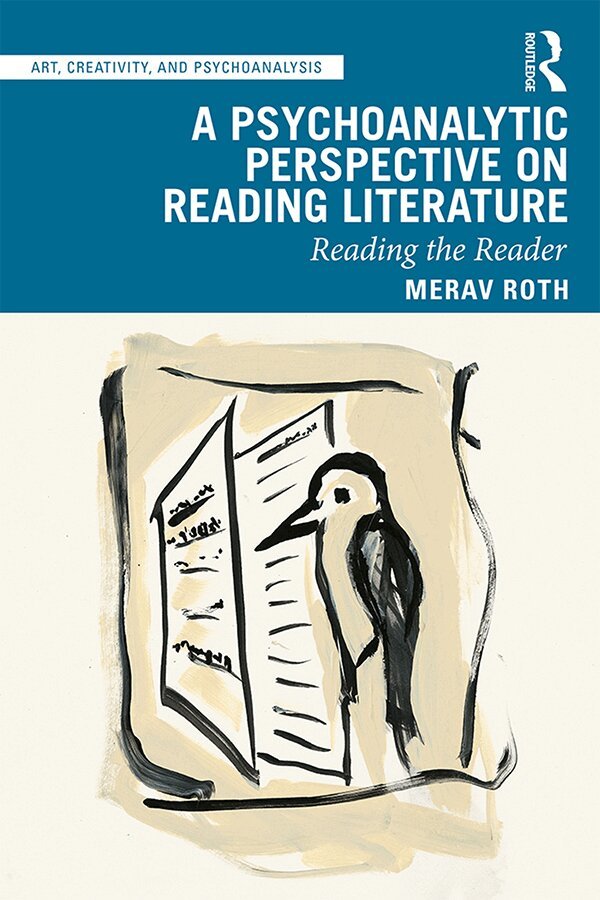
    Psychoanalytic Perspective on Reading Literature

    Reading the Reader

    AvMerav Roth

    Häftad, Engelska, 2019

    Del i serien Art, Creativity, and Psychoanalysis Book Series

    606 kr

    Beställningsvara. Skickas inom 10-15 vardagar. Fri frakt över 249 kr.

    Fler format och utgåvor

    E-bok

    653 kr

    E-bok

    714 kr

    Inbunden

    2 027 kr

    Beskrivning

    What are the unconscious processes involved in reading literature? How does literature influence our psychological development and existential challenges? A Psychoanalytic Perspective on Reading Literature offers a unique glimpse into the unconscious psychic processes and development involved in reading. The author listens to the 'free associations' of various literary characters, in numerous scenarios where the characters are themselves reading literature, thus revealing the mysterious ways in which reading literature helps us and contributes to our development. The book offers an introduction both to classic literature (Poe, Proust, Sartre, Semprún, Pessoa, Agnon and more) and to the major psychoanalytic concepts that can be used in reading it – all described and widely explained before being used as tools for interpreting the literary illustrations. The book thus offers a rich lexical psychoanalytic source, alongside its main aim in analysing the reader’s psychological mechanisms and development. Psychoanalytic interpretation of those literary readers opens three main avenues to the reader’s experience: the transference relations toward the literary characters;the literary work as means to transcend beyond the reader’s self-identity and existential boundaries; andmobilization of internal dialectic tensions towards new integration and psychic equilibrium. An Epilogue concludes by emphasising the transformational power embedded in reading literature.The fascinating dialogue between literature and psychoanalysis illuminates hitherto concealed aspects of each discipline and contributes to new insights in both fields. A Psychoanalytic Perspective on Reading Literature will be of great interest not only to psychoanalytic-psychotherapists and literature scholars, but also to a wider readership beyond these areas of study.

    Produktinformation

    • Utgivningsdatum:2019-09-02
    • Mått:156 x 234 x 20 mm
    • Vikt:512 g
    • Format:Häftad
    • Språk:Engelska
    • Serie:Art, Creativity, and Psychoanalysis Book Series
    • Antal sidor:336
    • Förlag:Taylor & Francis Ltd
    • ISBN:9781138391314

    Utforska kategorier

    • Freudiansk psykologi inom Psykologi och pedagogik
    • Psykoterapi som behandlingsmetod inom Medicin
    • Litteraturteori inom Skönlitteratur

    Mer om författaren

    Merav Roth, PhD is a training analyst and cultural researcher. She is former chair of the postgraduate Klein studies programme and of the doctoral unit for the interdisciplinary psychoanalytic PhD and is currently chair of the psychotherapy programme at the Sackler School of Medicine, Tel-Aviv University, Israel. She co-edited Melanie Klein: Essential Writings Volume II with J. Durban (2013).

    Recensioner i media

    Merav Roth’s book makes an important and unique contribution to the burgeoning study of reciprocal relations between literature and psychoanalysis. It will enrich true readers and writers alike with better understanding of the deep psychic processes involved in reading. As an author with a wealth of experience in both writing and teaching literature, as well as someone for whom - thanks to my late wife, the psychoanalyst Rivka Yehoshua - psychoanalysis was ‘family’, I was astonished to discover through this book novel and intriguing ideas of which I was previously unaware. At a time when writing workshops are flourishing and people write more than they read, Merav Roth’s book is particularly important in challenging both readers and writers to delve ever more deeply into the hidden layers of the process of writing and reading."-A.B. Yehoshua, writer and Professor of Literature, Haifa University, Israel"This book represents the confluence and mutual enrichment of two centrally important explorations of the human mind: literature and psychoanalysis. Its originality and uniqueness lie in the fascinating way in which they are brought together as equal partners in this dialogue. While well-versed in the breadth and depth of psychoanalytic thought, both classical and contemporary, it is not a psychoanalytic attempt to explain literature. Rather, using a range of literary works, it takes the reader-within-literature as the subject who articulates that which psychoanalysis reads in our minds. Thus, it brilliantly and simultaneously re-creates the immediacy of the experience of reading and the experience of being read and understood in terms of psyche and mind. For this enrichment it is warmly recommended for all readers, both literary and psychoanalytic."-Shmuel Erlich, Sigmund Freud Professor of Psychoanalysis (Emeritus), The Hebrew University of Jerusalem; Past-President, Israel Psychoanalytic Society"A psychoanalytic perspective on reading literature - Reading the reader": "...Unlike the act of peeling which essentially reduces the object at hand –Roth’s reading rather resembles the opening of a multitude of gates leading into an ever-expanding textual world. This recalls somehow the children in The Lion, the Witch and the Wardrobe who step into a wardrobe only to find themselves entering a magical kingdom. The author does not simply apply her sharp clinical listening to the text, nor does she collapse into the mechanical substitution whereby attending to a literary work equals listening to a patient’s text. Rather, she moves Like a dancer, turning the literary text into a room of mirrors where transferences to the text multiply constantly. Rather than chaos, she distills from this movement a rich and transparent image. This productively reflects the dialectical quality Roth identifies in the texts she discusses and is also, as mentioned, a structural part of her own writing. She too, in her role of reader/writer, moves between the wish to achieve a full explanation and the choice to leave empty spaces that enable the reading/writing dynamic of her own text, in much the same way they produce the dynamic of reading and writing in the literary texts themselves. She, too, casts a beam of bright light on darker places, while, also shrouding other places which strike the innocent reader as clear and lucid, by creating fold upon fold, resonance upon resonance, a whirl of echoes and echoes of echoes – an acrobatic feat which she concludes skillfully by landing on her two feet. Her writing, in this sense, produces the very thing it describes. Over and beyond the linearity of the texts, Roth unravels the linearity of the reader him or herself. Who, then, is this reader/writer? This is how she opens her book: I am descended from a family of writers stretching over generations. The sound I grew up with was not the ticking of a clock but the tapping of a typewriter. The morning began with the clicking of its keys; their silence announced that it was time for lunch. The intervals between my mother’s bursts of writing left us all in suspense. When the writing resumed we sighed with relief. My mother’s silences were rarely spoken; they were translated into written words. Her writing was testimony to a fact that every child wants to deny; that most of her inner being was inaccessible and that within her were worlds I would never reach. ‘Reading the writer’ was to remain an enigma. (ibid, p. 11)That girl, whose first attempt to decipher a text was aimed at the musical score of the clicking of her mother’s typewriter, transformed the question of "Reading the writer" – the one which was bound to remain unanswered – into the question of "Reading the reader". In the very act of responding, though, she herself becomes a writer: from being the reader of the other’s literary piece, she turns into the one who, while reading, creates a literary piece of her own. This book does not just afford a look at the work of mourning which constitutes the act of reading. It harbors in itself the possibility for a work of mourning, pointing in its reading to the precious and meaningful not only in literature, but in human existence itself." Extract from Dana Amir (2021) When the Writer’s Eye Meets the Reader’s Eye: A Review of “A Psychoanalytic Perspective on Reading Literature: Reading the Reader” by Merav Roth, Psychoanalytic Perspectives, 18:2, 274-278, DOI: 10.1080/1551806X.2020.1801068

    Innehållsförteckning

    • Preface AcknowledgementsPermissions acknowledgementsIntroduction: reading the reader Part I: Transference relations of the literary reader 1: The distancing paradox 2: The bestowal of meaning 3: Seven types of identification 4: Resistance to reading 5: The idealization of the author 6: Mutual witnessing 7: Reparation of the ethical position Part II: Reading literature as a means of transcendence 8: Transcendence beyond self-identity 9: Transcendence beyond the boundaries of human vulnerability and mortality Part III: From psychic equilibrium to psychic change: the dialectic forces of literature10: The dialectic between the present and the absent 11: The dialectic between the familiar and the uncanny 12: The dialectic between the symbolic order and disorder 13: The dialectic between ‘continuous-doing’ and ‘emergent-being’ 13a First illustration: Aharon Appelfeld’s The Man Who Never Stopped Sleeping 13b Second illustration: Søren Kierkegaard’s book Fear and Trembling: Dialectical Lyric 13c Third illustration: Otto Dov Kulka’s book Landscapes of the Metropolis of Death 14: Epilogue: the transformative power of reading literatureIndex