• Fri frakt över 249 kr
  • •
  • Snabba leveranser
  • •
  • Billiga böcker
Kundservice

Du är på sajten för privatpersoner.

Företag, bibliotek eller offentlig verksamhet?

Du handlar på classic.bokus.com, där alla dina funktioner finns intakta.
Till classic.bokus.com
Bokus logotyp. Gå till startsidan.
  • Erbjudanden
  • Nyheter
  • Student
  • Topplistor
  • Barn & ungdom
  • Bokus Play
  • E-böcker
  • Pocketböcker
  • Spel & pussel

10% rabatt på allt med kod: NYSTART10 →

Sidfot

Mina sidor

    Hjälp

    • Kundservice
    • Vanliga frågor och svar
    • Frakt och leverans
    • Retur vid ångerrätt
    • Reklamera vara
    • Betalning
    • Köpvillkor
    • Allmänna villkor
    • Information om webbplatsens tillgänglighet

    Om Bokus

    • Om oss
    • Pressrum
    • För studenter
    • För företag
    • För bibliotek och offentlig verksamhet
    • För leverantörer
    • Hållbarhet

    Populärt

    • Aktuella erbjudanden
    • Presentkort
    • Studentlitteratur
    • Nya böcker
    • Topplistor
    • Signerade böcker
    • Engelska böcker

    Inspiration

    • Boktips
    • BookTok
    • Populära bokserier
    • Barnbokskaraktärer
    • Populära författare
    Logotyp för Bokus
    Följ oss på Facebook (extern länk)Följ oss på Instagram (extern länk)Följ oss på YouTube (extern länk)Följ oss på TikTok (extern länk)
    bokus @ CookiesAnpassa cookiesIntegritetspolicyKöpvillkor
    Till Citymail hemsida (extern länk)Till Budbee hemsida (extern länk)Till Postnord hemsida (extern länk)Till Schenker hemsida (extern länk)Till Early Bird hemsida (extern länk)Till Walleys hemsida (extern länk)
    1. Historia och arkeologi
    2. Historia
    3. Historia: särskilda händelser och ämnen
    4. Socialhistoria och kulturhistoria

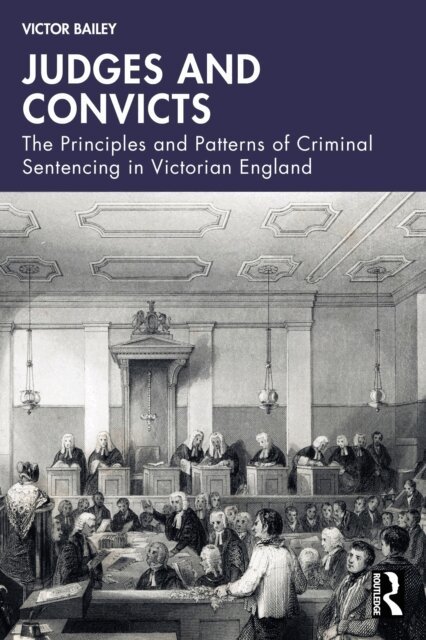
    Nineteenth-Century Crime and Punishment

    AvVictor Bailey

    Inbunden, Engelska, 2021

    Del i serien Routledge Historical Resources

    2 117 kr

    Beställningsvara. Skickas inom 10-15 vardagar. Fri frakt över 249 kr.

    Beskrivning

    This four volume collection looks at the essential issues concerning crime and punishment in the long nineteenth-century. Through the presentation of primary source documents, it explores the development of a modern pattern of crime and a modern system of penal policy and practice, illustrating the shift from eighteenth century patterns of crime (including the clash between rural custom and law) and punishment (unsystematic, selective, public, and body-centred) to nineteenth century patterns of crime (urban, increasing, and a metaphor for social instability and moral decay, before a remarkable late-century crime decline) and punishment (reform-minded, soul-centred, penetrative, uniform and private in application). The first two volumes focus on crime itself and illustrate the role of the criminal courts, the rise and fall of crime, the causes of crime as understood by contemporary investigators, the police ways of ‘knowing the criminal,’ the role of ‘moral panics,’ and the definition of the ‘criminal classes’ and ‘habitual offenders’. The final two volumes explore means of punishment and look at the shift from public and bodily punishments to transportation, the rise of the penitentiary, the convict prison system, and the late-century decline in the prison population and loss of faith in the prison.

    Produktinformation

    • Utgivningsdatum:2021-07-26
    • Mått:156 x 234 x 26 mm
    • Vikt:675 g
    • Format:Inbunden
    • Språk:Engelska
    • Serie:Routledge Historical Resources
    • Antal sidor:396
    • Förlag:Taylor & Francis Ltd
    • ISBN:9781138587311

    Utforska kategorier

    • Socialhistoria och kulturhistoria inom Historia och arkeologi
    • Europas historia inom Historia och arkeologi
    • Straffrätt: lagar inom Juridik

    Mer om författaren

    Victor Bailey is the Charles W. Battey Distinguished Professor of British History at the University of Kansas, USA

    Innehållsförteckning

    • Volume I: Crime and CriminalsPart 1. Crime Numbers1. ‘First Report of the Commissioners appointed to Inquire as to the best means of establishing an efficient Constabulary Force’ [169], Parliamentary Papers, 1839, vol. XIX, pp. 8-10; 13-16.2. Archibald Alison, ‘Imprisonment and transportation: the increase of crime,’ Blackwood’s Edinburgh Magazine, LV, May 1844, pp. 533-45.3. Anon., ‘The Statistics of Female Crime,’ Economist, 11 Sept. 1858, pp. 1010-11.4. Mayhew and Binny, The Criminal Prisons of London, 1862, pp. 457-59.5. W. D. Morrison, ‘The Increase of Crime,’ Nineteenth Century, XXXI, June 1892, pp. 950-957.6. E. F. Du Cane, ‘The Decrease of Crime,’ Nineteenth Century, XXXIII, March 1893, pp. 480-492.7. ‘Report from the Departmental Committee on Prisons,’ [c.-7702: Report], Parliamentary Papers, 1895, vol. LVI, pp. 7-8.Part 2. Types of Crime2.1: Juvenile Crime8. Stephen Lushington (judge), evidence to ‘Report from the Select Committee on the State of the Gaols and other places of confinement,’ [579], Parliamentary Papers, 1819, vol. VII, pp. 162-165.9. John Wade, Treatise on the Police and Crimes of the Metropolis (1829), pp. 158-63.10. Evidence of Thieves collected by W. A. Miles: The National Archives (hereafter TNA), HO 73/16. Papers for 1839 Report of Constabulary Force: Interviews of juvenile offenders.11. Two female cases, aged 17 and 18, from August 1837, TNA, HO 73/2, pt. 2, Aug. 1837.2.2: Female Crime12. Old Bailey Sessions Papers: Mary Young, aged 22, et al; 29 May 1828. 13. Old Bailey Sessions Papers: two cases of female thieves, sentenced to transportation, 1840 and 1842, aged 14-15 and 18-19.14. Old Bailey Sessions Papers: Martha Barrett; 9 April 1829, Infanticide case.15. Edwin Lankester (Coroner), ‘Infanticide,’ Transactions of the National Association for the Promotion of Social Science, 1866, pp. 216-24.16. The Times, 15 Aug. 1866, p. 7, ‘Dr. Lancaster on Child Murder’.17. Henry Mayhew, London Labour and the London Poor, 1862, vol. 1, pp. 412-414.18. Rev. G. P. Merrick (Chaplain, Millbank Prison), Work Among the Fallen As Seen in the Prison Cell, July, 1890.2.3: Social Crime19. George Bishop, Observations, Remarks, and Means, to Prevent Smuggling (1783). 20. Old Bailey Sessions Papers: Smuggling (case of John Bishop), 1788; Executed.21. W.A. Miles on Cheshire wrecking; letter to Commissioners of the Constabulary Force, c. 1837, in H. Brandon (ed.), Poverty, Mendicity and Crime (1839), pp. 74-79.2.4: Ethnic Crime22. ‘First Report of the Commissioners appointed to Inquire as to the best means of establishing an efficient Constabulary Force’ [169], Parliamentary Papers, 1839, vol. XIX, pp. 167-169.23. Board of Trade (Alien Immigration), ‘Reports on the Volume and Effects of Recent Immigration from Eastern Europe Into the U.K.,’ 1894 [C.-7406], pp. 60-62; Memorandum by Labour Department, Part 1.- General Character and Effects of the Influx; (vi), Condition as regards Crime.Part 3. Causes of Crime24. An Address to the Grand Jury of the County of Middlesex, at the General Session of the Peace holden at the County Session-House, on Monday the 12th of September, 1785 by William Mainwaring, Chairman of the Sessions: London, 1785.25. P. Colquhoun, A Treatise on the Police of the Metropolis, 5th ed. (London, 1797), pp. 32-41.26. Observations on a Late Publication: Intituled A Treatise on the Police of the Metropolis, By P. Colquhoun, By a Citizen of London: But No Magistrate (London, 1800).27. W. A. Miles, A Letter to Lord John Russell concerning Juvenile Delinquency (Shrewsbury, 1837).28. Archibald Alison, ‘Causes of the Increase of Crime,’ Blackwood’s Edinburgh Magazine, LVI, July 1844, pp.1-14.29. ‘First Report of the Commissioners appointed to Inquire as to the best means of establishing an efficient Constabulary Force’ [169], Parliamentary Papers, 1839, vol. XIX, pp. 73-74.30. Rev. John Clay, ‘On the Effect of Good or Bad Times on Committals to Prison,’ Journal of the Statistical Society of London, vol. 18, March 1855, pp. 74-79.31. Richard Hussey Walsh, ‘A Deduction from the Statistics of Crime for the last Ten Years,’ Journal of the Statistical Society of London, vol. 20, March 1857, pp. 77-78.32. W. D. Morrison, ‘The Study of Crime,’ Mind, vol. 1, Oct. 1892, pp. 503-515.Part 4. Dangerous & Criminal Classes33. Archibald Alison, ‘Causes of the Increase of Crime,’ Blackwood’s Edinburgh Magazine, LVI, July 1844, p. 2, 12.34. Jelinger Symons, Tactics for the Times: As Regards the Condition and Treatment of the Dangerous Classes (1849), pp. 1, 55.35. Thomas Plint, Crime in England, Its Relation, Character, and Extent, (1851), pp. 144-154.36. Henry Mayhew, evidence to the ‘Select Committee on Transportation,’ [17], Parliamentary Papers, 1856, vol. XVII [17], qq. 3488-89; 3531-3538.37. Henry Mayhew, ‘Statement of a Returned Convict,’ London Labour and the London Poor, vol. 3 (1861), pp. 386-388.38. Charles Booth, Life and Labour of the People in London (1902), 3rd series, Religious Influences, vol. 2, London North of Thames; The Inner Ring, pp. 111-112; 115.39. Charles Booth, Life and Labour of the People in London (1902), 1st. series, Poverty, vol. 1, East Central & South London, pp. 37-39; 174-75.40. Charles Booth, Life and Labour of the People in London (1902), 1st. series, Poverty, vol. 1, East Central & South London, pp. 7-13.41. Henrietta O. Barnett, ‘East London and Crime’, The National Review, XII, Dec. 1888, pp. 433-443.Part 5. The Born Criminal42. Lieut.-Col. E. F. Du Cane, ‘Address on Repression of Crime’, Transactions of the National Association for the Promotion of Social Science, 1875, pp. 300-308.43. J. B. Thomson, ‘The Hereditary Nature of Crime,’ Journal of Mental Science, XV, 1870, pp. 487-498.44. Havelock Ellis, The Criminal (1st ed. 1890; 4th ed. 1913), pp. xxii-xxvi; 17; 261-69; 342-44; 346-48; 366-67.45. H. B. Simpson, ‘Crime and Punishment,’ Contemporary Review, LXX, July-Dec., 1896, pp. 91-100.46. Sir Evelyn Ruggles-Brise, ‘A Criminological Inquiry in English Prisons,’ in The English Prison System (1921), pp. 198-215.