• Fri frakt över 249 kr
  • •
  • Snabba leveranser
  • •
  • Billiga böcker
Kundservice

Du är på sajten för privatpersoner.

Företag, bibliotek eller offentlig verksamhet?

Du handlar på classic.bokus.com, där alla dina funktioner finns intakta.
Till classic.bokus.com
Bokus logotyp. Gå till startsidan.
  • Erbjudanden
  • Nyheter
  • Student
  • Topplistor
  • Barn & ungdom
  • Bokus Play
  • E-böcker
  • Pocketböcker
  • Spel & pussel

10% rabatt på allt med kod: NYSTART10 →

Sidfot

Mina sidor

    Hjälp

    • Kundservice
    • Vanliga frågor och svar
    • Frakt och leverans
    • Retur vid ångerrätt
    • Reklamera vara
    • Betalning
    • Köpvillkor
    • Allmänna villkor
    • Information om webbplatsens tillgänglighet

    Om Bokus

    • Om oss
    • Pressrum
    • För studenter
    • För företag
    • För bibliotek och offentlig verksamhet
    • För leverantörer
    • Hållbarhet

    Populärt

    • Aktuella erbjudanden
    • Presentkort
    • Studentlitteratur
    • Nya böcker
    • Topplistor
    • Signerade böcker
    • Engelska böcker

    Inspiration

    • Boktips
    • BookTok
    • Populära bokserier
    • Barnbokskaraktärer
    • Populära författare
    Logotyp för Bokus
    Följ oss på Facebook (extern länk)Följ oss på Instagram (extern länk)Följ oss på YouTube (extern länk)Följ oss på TikTok (extern länk)
    bokus @ CookiesAnpassa cookiesIntegritetspolicyKöpvillkor
    Till Citymail hemsida (extern länk)Till Budbee hemsida (extern länk)Till Postnord hemsida (extern länk)Till Schenker hemsida (extern länk)Till Early Bird hemsida (extern länk)Till Walleys hemsida (extern länk)
    1. Historia och arkeologi
    2. Historia
    3. Historia: särskilda händelser och ämnen
    4. Socialhistoria och kulturhistoria

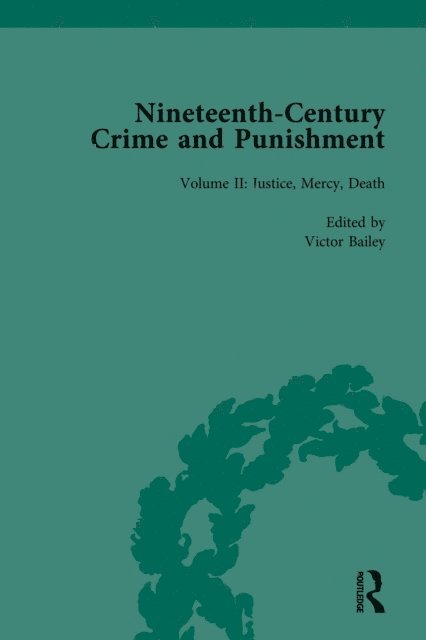
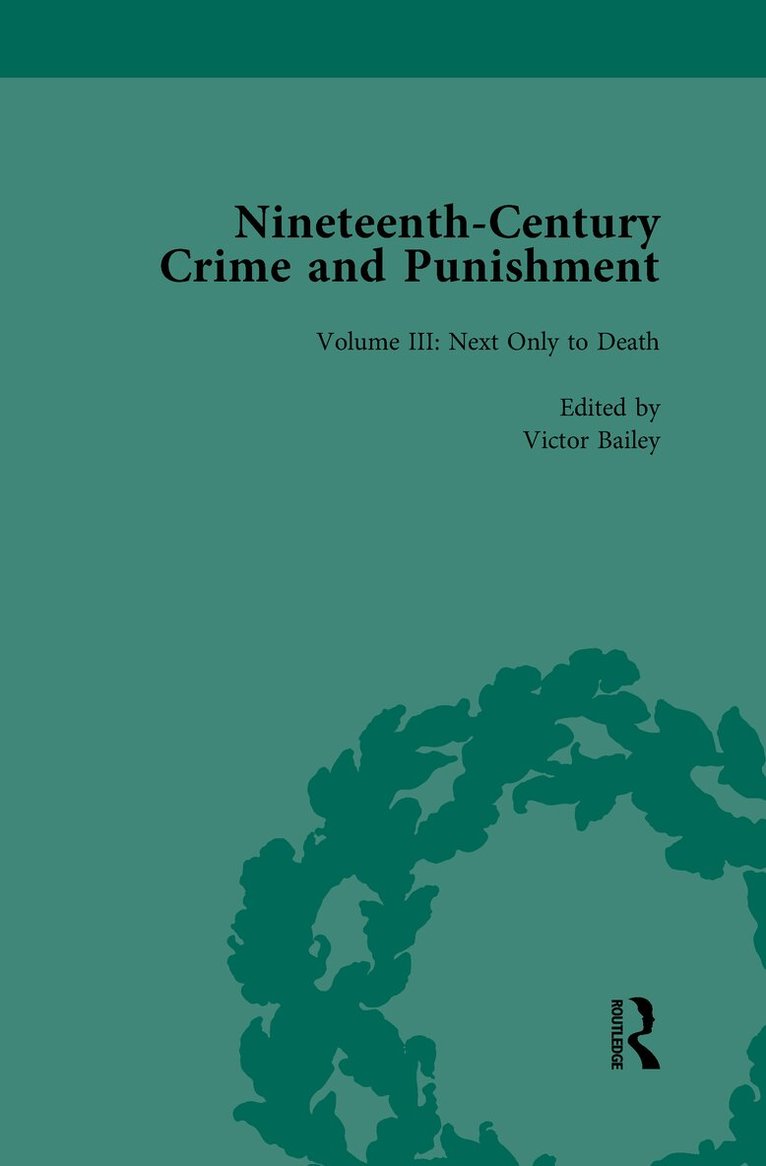
    Nineteenth-Century Crime and Punishment

    AvVictor Bailey

    Inbunden, Engelska, 2021

    Del i serien Routledge Historical Resources

    2 117 kr

    Beställningsvara. Skickas inom 10-15 vardagar. Fri frakt över 249 kr.

    Beskrivning

    This four volume collection looks at the essential issues concerning crime and punishment in the long nineteenth-century. Through the presentation of primary source documents, it explores the development of a modern pattern of crime and a modern system of penal policy and practice, illustrating the shift from eighteenth century patterns of crime (including the clash between rural custom and law) and punishment (unsystematic, selective, public, and body-centred) to nineteenth century patterns of crime (urban, increasing, and a metaphor for social instability and moral decay, before a remarkable late-century crime decline) and punishment (reform-minded, soul-centred, penetrative, uniform and private in application). The first two volumes focus on crime itself and illustrate the role of the criminal courts, the rise and fall of crime, the causes of crime as understood by contemporary investigators, the police ways of ‘knowing the criminal,’ the role of ‘moral panics,’ and the definition of the ‘criminal classes’ and ‘habitual offenders’. The final two volumes explore means of punishment and look at the shift from public and bodily punishments to transportation, the rise of the penitentiary, the convict prison system, and the late-century decline in the prison population and loss of faith in the prison.
    Produktinformation

    • Utgivningsdatum:2021-07-26
    • Mått:156 x 234 x 25 mm
    • Vikt:675 g
    • Format:Inbunden
    • Språk:Engelska
    • Serie:Routledge Historical Resources
    • Antal sidor:386
    • Förlag:Taylor & Francis Ltd
    • ISBN:9781138587328

    Utforska kategorier

    • Socialhistoria och kulturhistoria inom Historia och arkeologi
    • Europas historia inom Historia och arkeologi
    • Straffrätt: lagar inom Juridik

    Mer om författaren

    Victor Bailey is the Charles W. Battey Distinguished Professor of British History at the University of Kansas, USA

    Innehållsförteckning

    • Volume II: Justice, Mercy and DeathPart 1. Magistrates and the Sessions’ Courts1. Charles Cottu, On the Administration of Criminal Justice in England (1822), pp. 24-27; 29-30; 33-35; 37-39.2. Reginald W. Jeffery, Dyott’s Diary 1781-1845 (1907), vol. 1: 326-7; 332-33; 351; 354-55; 359. Vol. 2: 18-21; 70-71; 95-96; 98-102; 119-20; 172-3; 275-6; 289-91; 298-99.3. William Hone, The Clerical Magistrate, 1819, a coda to The Political House that Jack Built. 4: John Paget, ‘The London Police Courts’, Blackwood’s Edinburgh Magazine, vol. CXVIII, Oct. 1875, pp. 379-389.Part 2. Judges and the Assize Courts5. Charles Cottu, On the Administration of Criminal Justice in England (1822), pp. 42-44; 66-69; 87-95; 99; 102-103; 105-7.6. Old Bailey Sessions Papers, 8 May 1799; murder of Bow Street patrol man. Part 3. Prerogative of Mercy7: Edmund Burke, ‘Some Thoughts on the Approaching Executions’, Works, vol. V (Boston, 1839), pp. 197-203.8. Mr. Baron Perryn, mercy, death penalty, 1787: TNA, HO47/6: Judges’ Reports.9. Sir William Ashurst, mercy, death penalty, 1787: TNA, HO47/6: Judges’ Reports.10. Sir James Eyre, mercy, death penalty, 1787: TNA, HO47/6: Judges’ Reports.11. Letters written by Circuit Judges, 1819. Death penalty, mercy: TNA, HO6/4. 12. Letters written by Circuit Judges, 1819. Imprisonment mercy cases: TNA, HO 6/4. 13. Baron Hotham to Lord Auckland, 1800, in J. & Barbara Hammond, The Town Labourer, 1st pub. 1917.14. Mary Thrale (ed.), The Autobiography of Francis Place (1771-1854), (Cambridge University Press, 1972), pp. 132-135.15. Old Bailey Sessions Papers, May 1799, case of Matthew Stinson. 16. The Journal of Mrs Arbuthnot (Duke of Wellington’s testimony); and The Greville Diary (Charles Greville): Recorder’s Reports; prerogative of mercy, 1826 and 1829.17. Edward Law, Lord Ellenborough, A Political Diary 1828-1830, vol. 1, pp. 154-55; 267-68.18. Memorandum as to the exercise of the Royal Prerogative of Pardon, 8 May 1874; TNA, HO 45/9362/33391.19. A.G. Gardiner, The Life of Sir William Harcourt (1923), vol. 1, pp. 399-400.20. Shane Leslie (compiler), Sir Evelyn Ruggles-Brise (1938): the Lipski case, 1887, pp. 61-63.Part 4. The Doctrine of Maximum Severity21. Martin Madan, Appendix to "Thoughts on Executive Justice" occasioned by a Charge to the Grand Jury for the County of Surrey, at the Lent Assizes, 1785, by the Hon. Sir Richard Perryn.22. William Paley, ‘Of Crimes and Punishments’, in The Principles of Moral and Political Philosophy (1785), pp. 373-393.23. Sir Samuel Romilly, Observations on the Criminal Law of England as it Relates to Capital Punishments, And On The Mode In Which It Is Administered (London: T. Cadell and W. Davies, 1810): substance of a speech delivered in the House of Commons on 9 Feb. 1810, Hansard, vol. 15.Part 5. Public Punishments24. The Times, 17 November 1786, p. 3: whipping in London; death of offender.25. ‘Pillory’, Morning Herald, 28 Sept. 1810. 26. The Journal of Samuel Curwen Loyalist, ed by Andrew Oliver (1972), pp. 774-75. July 1781 27. Rev. J. Leifchild, Remarkable Facts (London, 1867), pp. 219-223.28. Nottingham execution, 1844, TNA, HO45/OS 681. 29. Charles Dickens, letter, The Times, 19 Nov. 1849.30. The Times, Nov. 20, 1849, p. 4: defence of public executions.31. John Ashton, ‘Life of the Mannings’, Modern Street Ballads (1888), pp. 368-370.32. Henry Mayhew, ‘On Capital Punishments’, in Society for Promoting the Amendment of the Law, Three Papers on Capital Punishment. By Edward Webster, A. H. Dymond, Henry Mayhew. Read at the General Meeting of the Society, Jul 7, 1856 (London: Cox (Bros) & Wyman, 1856), pp. 33-36, 44-45, 46-61. Part 6. Pruning the Fatal Tree33. Hansard (Lords), 27 Feb. 1812, cols. 966-72, ‘Frame Work Bill’34. Lord Byron, ‘An Ode to the Framers of the Frame Bill’, Morning Chronicle, 2 March 1812.35. Speech of Thomas Fowell Buxton, ‘motion for the appointment of a select committee to consider of so much of the Criminal Law as relates to Capital Punishment in Felonies’, Hansard (Commons), 2 March 1819, cols. 806-824.36. James Mackintosh & Secretary Peel, Hansard, vol. 9, May 21, 1823, cols. 408-411; 421-424. 37. Memoirs of Joseph John Gurney, ed. J.B. Braithwaite, vol. 1 (1862), pp. 120-22 (1816); 395-96 (1829); 412-415 (1830).Part 7. Resisting Abolition38. James Fitzjames Stephen, ‘Capital Punishments’, Fraser’s Magazine, vol. LXIX, June 1864, pp. 753-764.Part 8. Sentencing39. Old Bailey Sessions Papers: Joseph Howell (aged 14), William Harwood (aged 14), Oct. 1820. 40. Calendar of Prisoners, Liverpool October Sessions, 22 Oct. 1849. 41. ‘The disproportion between the punishments adjudged to crimes of equal magnitude’, The Times, 24 Aug. 1846, p. 4.42. ‘Lord Penzance on sentencing inequality’, Hansard, Lords, 4 April 1870, cols.1148, 1152-54.43. Mr. Sergeant Cox, ‘How far should previous convictions be taken into account in sentencing Criminals?’, Transactions of the National Association for the Promotion of Social Science, 1874, pp. 281-287, 297-299, 301-303.44. Du Cane, Chairman of the Prison Commission, to Permanent Under-Secretary of State, Home Office, 4 Feb. 1884; Sir William Harcourt to Lord Chancellor. 10 Dec. 1884; Du Cane memo 16 March 1885: TNA, HO45/18479/565861.45. James Fitzjames Stephen, ‘Variations in the Punishment of Crime’, Nineteenth Century, vol. XVII, May 1885, pp. 755-776.46. C. H. Hopwood, ‘Crime and Punishment’, The New Review, vol. VIII, May 1893, pp. 620-626.47. The Judges’ Memorandum of 1901 on Normal Punishments, in R.M. Jackson, Enforcing the Law (1972), pp. 391-399.