• Fri frakt över 249 kr
  • •
  • Snabba leveranser
  • •
  • Billiga böcker
Kundservice

Du är på sajten för privatpersoner.

Företag, bibliotek eller offentlig verksamhet?

Du handlar på classic.bokus.com, där alla dina funktioner finns intakta.
Till classic.bokus.com
Bokus logotyp. Gå till startsidan.
  • Erbjudanden
  • Nyheter
  • Student
  • Topplistor
  • Barn & ungdom
  • Bokus Play
  • E-böcker
  • Pocketböcker
  • Spel & pussel

10% rabatt på allt med kod: NYSTART10 →

Sidfot

Mina sidor

    Hjälp

    • Kundservice
    • Vanliga frågor och svar
    • Frakt och leverans
    • Retur vid ångerrätt
    • Reklamera vara
    • Betalning
    • Köpvillkor
    • Allmänna villkor
    • Information om webbplatsens tillgänglighet

    Om Bokus

    • Om oss
    • Pressrum
    • För studenter
    • För företag
    • För bibliotek och offentlig verksamhet
    • För leverantörer
    • Hållbarhet

    Populärt

    • Aktuella erbjudanden
    • Presentkort
    • Studentlitteratur
    • Nya böcker
    • Topplistor
    • Signerade böcker
    • Engelska böcker

    Inspiration

    • Boktips
    • BookTok
    • Populära bokserier
    • Barnbokskaraktärer
    • Populära författare
    Logotyp för Bokus
    Följ oss på Facebook (extern länk)Följ oss på Instagram (extern länk)Följ oss på YouTube (extern länk)Följ oss på TikTok (extern länk)
    bokus @ CookiesAnpassa cookiesIntegritetspolicyKöpvillkor
    Till Citymail hemsida (extern länk)Till Budbee hemsida (extern länk)Till Postnord hemsida (extern länk)Till Schenker hemsida (extern länk)Till Early Bird hemsida (extern länk)Till Walleys hemsida (extern länk)
    1. Samhälle och politik
    2. Samhälle och kultur
    3. Kultur och medier
    4. Kulturvetenskap

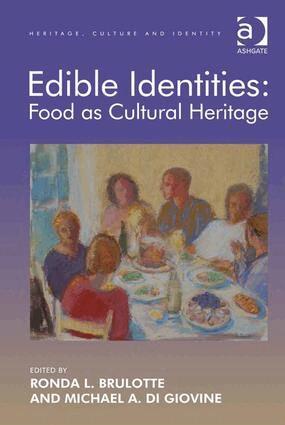
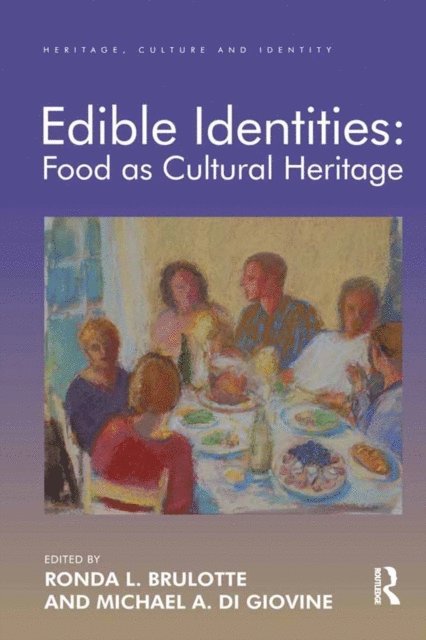
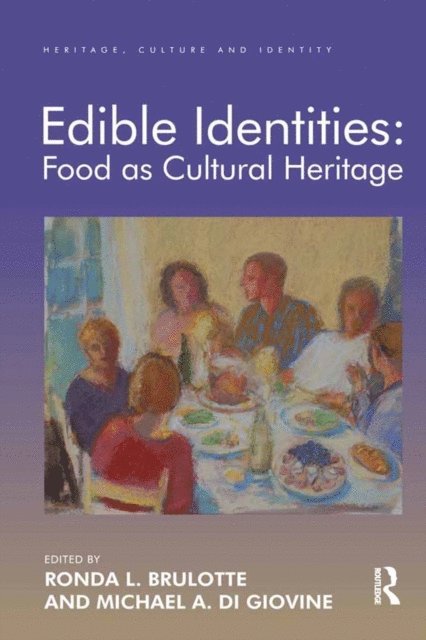
    Edible Identities: Food as Cultural Heritage

    AvRonda L. Brulotte,Michael A. Di Giovine

    Häftad, Engelska, 2016

    Del i serien Heritage, Culture and Identity

    863 kr

    Beställningsvara. Skickas inom 10-15 vardagar. Fri frakt över 249 kr.

    Fler format och utgåvor

    E-bok

    1 023 kr

    E-bok

    1 023 kr

    Inbunden

    2 421 kr

    Beskrivning

    Food - its cultivation, preparation and communal consumption - has long been considered a form of cultural heritage. A dynamic, living product, food creates social bonds as it simultaneously marks off and maintains cultural difference. In bringing together anthropologists, historians and other scholars of food and heritage, this volume closely examines the ways in which the cultivation, preparation, and consumption of food is used to create identity claims of 'cultural heritage' on local, regional, national and international scales. Contributors explore a range of themes, including how food is used to mark insiders and outsiders within an ethnic group; how the same food's meanings change within a particular society based on class, gender or taste; and how traditions are 'invented' for the revitalization of a community during periods of cultural pressure. Featuring case studies from Europe, Asia and the Americas, this timely volume also addresses the complex processes of classifying, designating, and valorizing food as 'terroir,' 'slow food,' or as intangible cultural heritage through UNESCO. By effectively analyzing food and foodways through the perspectives of critical heritage studies, this collection productively brings two overlapping but frequently separate theoretical frameworks into conversation.

    Produktinformation

    • Utgivningsdatum:2016-12-02
    • Mått:156 x 234 x 18 mm
    • Vikt:390 g
    • Format:Häftad
    • Språk:Engelska
    • Serie:Heritage, Culture and Identity
    • Antal sidor:252
    • Förlag:Taylor & Francis Ltd
    • ISBN:9781138634947

    Utforska kategorier

    • Kulturvetenskap inom Samhälle och politik
    • Antropologi inom Samhälle och politik

    Mer om författaren

    Ronda L. Brulotte is Assistant Professor of Anthropology and faculty affiliate with the Latin American and Iberian Institute at the University of New Mexico. Michael A. Di Giovine is an Assistant Professor of Anthropology at West Chester University of Pennsylvania, and Honorary Fellow at the University of Wisconsin-Madison. He is also a member of the American Anthropological Association's Task Force on Cultural Heritage.

    Recensioner i media

    "How can something as perishable as food become a concrete connection with the past? This imaginative and sophisticated collection of case studies shows us how cuisines can both unite and divide people, connecting daily routine meals with lofty ideals of nationality and global citizenship. It is full of convincing evidence that communities are not just imagined, they are also eaten." - Richard Wilk, Indiana University, USA"This path-breaking collection examines cuisine and cultural heritage as they create and reinforce culinary identities across shifting planes of local, national, and transnational contexts. The essays, by leading specialists in food studies as well as by young scholars, focus on the US, Italy, Japan, Mexico, Slovenia, Spain, France, and Germany, as well as on UNESCO’s role in promoting cultural heritage movements. An appetizing world tour of culinary heritage, and a must-read for serious food specialists." - Ted Bestor, Harvard University, USA and author of Tsukiji: The Fish Market at the Center of the World "This is an excellent book. For those with an interest in food, heritage and tourism (separately and combined), it is a valuable academic text; for everyone else, it is still valuable as an important read. ... The book comprises an introduction by the authors and then 14 case studies from different parts of the world: one from Asia, two from South America, three from North America and seven from Europe, as well as a chapter looking at the work of UNESCO. ... What I really liked about the book was the passion and insight exhibited within each of the chapters." - Sean Beer, in Journal of Heritage Tourism"'The unifying thread throughout the book is the paramount importance of preserving food as cultural heritage and as ancestral knowledge as a representation of the maintenance and restoration of physical, cultural, and spiritual well-being. When food rituals are properly performed, they unite us with our heritage, our community, and our planet." - Annals of Tourism Research"I highly recommend this volume for classroom use and beyond. It is a significant contribution to scholarship in cultural studies, history, political science, anthropology, folklore, food studies, and any other field concerned with the state of the world today. It is an admirable and useful demonstration of the observation made by the editors that "Through the materiality of ethnic food and food-based experiences, complex, difficult-to-articulate problems and prejudices can find expression" (p. 9)."- Journal of Anthropological Research Lucy M. Long, Center for Food and Culture, Bowling Green, Ohio"I found Brulotte and Di Giovine’s book to be an exciting journey into the realm of food and heritage, politics and practices, identity and rebellion in the face of change through immigration, commodification and globalization. … I highly recommend this book for anyone interested in understanding the relationship between tradition, as a part of authenticity, and innovation, as a requisite for market differentiation, as well as the nature of constructed identity as it relates to local/global food and/or heritage tourism studies." - Sue Slocum, George Mason University, Hospitality and Society

    Innehållsförteckning

    • Contents: Introduction: food and foodways as cultural heritage, Michael A. Di Giovine and Ronda L. Brulotte; Re-inventing a tradition of invention: entrepreneurialism as heritage in American artisan cheesemaking, Heather Paxson; Terroir in D.C.? Inventing food traditions for the nation's capital, Warren Belasco; Of cheese and ecomuseums: food as cultural heritage in the northern Italian Alps, Cristina Grasseni; Edible authenticities: heirloom vegetables and culinary heritage in Kyoto, Japan, Greg de St. Maurice; The everyday as extraordinary: revitalization, religion, and the elevation of cucina casareccia to heritage cuisine in Pietrelcina, Italy, Michael A. Di Giovine; Take the chicken out of the box: demystifying the sameness of African American culinary heritage in the U.S., Psyche Williams-Forson; Caldo De Piedra and claiming pre-Hispanic cuisine as cultural heritage, Ronda L. Brulotte and Alvin Starkman; Hallucinating the Slovenian way: the myth of Salamander Brandy, an indigenous Slovenian psychedelic drug, Miha Kozorog; Haute traditional cuisines: how UNESCO’s List of Intangible Heritage links the cosmopolitan to the local, Clare A. Sammells; Reinventing edible identities: Catalan cuisine and Barcelona’s market halls, Josep-Maria Garcia-Fuentes, Manel Guàrdia Bassols and José Luis Oyón Bañales; French chocolate as intangible cultural heritage, Susan Terrio; Daily bread, global distinction? The German bakers’ craft and cultural value-enhancement regimes, Regina F. Bendix; The Mexican and transnational lives of corn: technological, political, edible object, Erick Castellanos and Sarah Bergstresser; Cultural heritage in food activism: local and global tensions, Carole Counihan; Index.