• Fri frakt över 249 kr
  • •
  • Snabba leveranser
  • •
  • Billiga böcker
Kundservice

Du är på sajten för privatpersoner.

Företag, bibliotek eller offentlig verksamhet?

Du handlar på classic.bokus.com, där alla dina funktioner finns intakta.
Till classic.bokus.com
Bokus logotyp. Gå till startsidan.
  • Erbjudanden
  • Nyheter
  • Student
  • Topplistor
  • Barn & ungdom
  • Bokus Play
  • E-böcker
  • Pocketböcker
  • Spel & pussel

10% rabatt på allt med kod: NYSTART10 →

Sidfot

Mina sidor

    Hjälp

    • Kundservice
    • Vanliga frågor och svar
    • Frakt och leverans
    • Retur vid ångerrätt
    • Reklamera vara
    • Betalning
    • Köpvillkor
    • Allmänna villkor
    • Information om webbplatsens tillgänglighet

    Om Bokus

    • Om oss
    • Pressrum
    • För studenter
    • För företag
    • För bibliotek och offentlig verksamhet
    • För leverantörer
    • Hållbarhet

    Populärt

    • Aktuella erbjudanden
    • Presentkort
    • Studentlitteratur
    • Nya böcker
    • Topplistor
    • Signerade böcker
    • Engelska böcker

    Inspiration

    • Boktips
    • BookTok
    • Populära bokserier
    • Barnbokskaraktärer
    • Populära författare
    Logotyp för Bokus
    Följ oss på Facebook (extern länk)Följ oss på Instagram (extern länk)Följ oss på YouTube (extern länk)Följ oss på TikTok (extern länk)
    bokus @ CookiesAnpassa cookiesIntegritetspolicyKöpvillkor
    Till Citymail hemsida (extern länk)Till Budbee hemsida (extern länk)Till Postnord hemsida (extern länk)Till Schenker hemsida (extern länk)Till Early Bird hemsida (extern länk)Till Walleys hemsida (extern länk)
    1. Naturvetenskap och teknik
    2. Matematik och naturvetenskap
    3. Biologi
    4. Biovetenskap

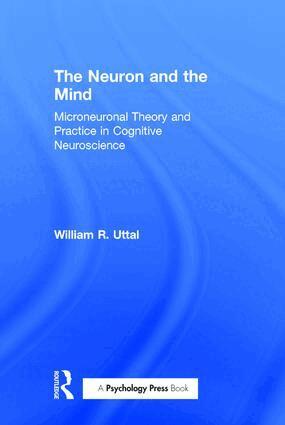
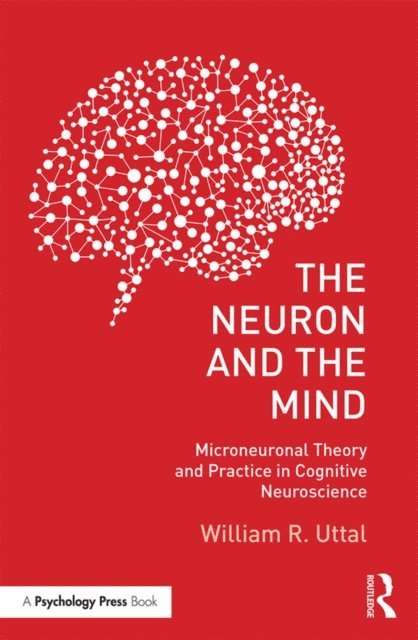
    Neuron and the Mind

    Microneuronal Theory and Practice in Cognitive Neuroscience

    AvWilliam R. Uttal

    Häftad, Engelska, 2016

    989 kr

    Beställningsvara. Skickas inom 10-15 vardagar. Fri frakt över 249 kr.

    Fler format och utgåvor

    Inbunden

    3 305 kr

    E-bok

    1 177 kr

    E-bok

    1 174 kr

    Beskrivning

    This book, a companion to William R. Uttal’s earlier work on macrotheories theories of mind-brain relationships, reviews another set of theories—those based on microneuronal measurements. Microneural theories maintain the integrity of individual neurons either in isolation or as participants in the great neuronal networks that make up the physical brain. Despite an almost universal acceptance by cognitive neuroscientists that the intangible mind must, in some way, be encoded by network states, Uttal shows that the problem of how the transformation occurs is not yet supported by empirical research findings at the micro as well as at the macro levels of analysis. Theories of the neuronal network survive more as metaphors than as robust explanations. This book also places special emphasis on the technological developments that stimulate these metaphors. A major conclusion drawn in this book is that it is not at all certain that the mind-brain problem is solvable in the sense that many other grand scientific problems are.

    Produktinformation

    • Utgivningsdatum:2016-07-20
    • Mått:152 x 229 x 17 mm
    • Vikt:272 g
    • Format:Häftad
    • Språk:Engelska
    • Antal sidor:204
    • Förlag:Taylor & Francis Ltd
    • ISBN:9781138640207

    Utforska kategorier

    • Biovetenskap inom Naturvetenskap och teknik
    • Kognitiv psykologi inom Psykologi och pedagogik

    Mer om författaren

    William R. Uttal is Professor Emeritus (Engineering) at Arizona State University and Professor Emeritus (Psychology) at the University of Michigan. He was one of the pioneering researchers in computational modeling and is the author of numerous books and over 140 scholarly articles.

    Innehållsförteckning

    • PrefaceChapter 1 IntroductionChapter 2 Single Neuron Technique and TheoryChapter 3 Network Theories—Technique and TheoryChapter 4 Intermediate Level Neuronal Networks—The Roleof Models Chapter 5 Large Scale Computer Simulations (Theories) of CognitionChapter 6 Conclusions and Emerging PrinciplesChapter 6 SummaryIndicesBibliography