• Fri frakt över 249 kr
  • •
  • Snabba leveranser
  • •
  • Billiga böcker
Kundservice

Du är på sajten för privatpersoner.

Företag, bibliotek eller offentlig verksamhet?

Du handlar på classic.bokus.com, där alla dina funktioner finns intakta.
Till classic.bokus.com
Bokus logotyp. Gå till startsidan.
  • Erbjudanden
  • Nyheter
  • Student
  • Topplistor
  • Barn & ungdom
  • Bokus Play
  • E-böcker
  • Pocketböcker
  • Spel & pussel

10% rabatt på allt med kod: NYSTART10 →

Sidfot

Mina sidor

    Hjälp

    • Kundservice
    • Vanliga frågor och svar
    • Frakt och leverans
    • Retur vid ångerrätt
    • Reklamera vara
    • Betalning
    • Köpvillkor
    • Allmänna villkor
    • Information om webbplatsens tillgänglighet

    Om Bokus

    • Om oss
    • Pressrum
    • För studenter
    • För företag
    • För bibliotek och offentlig verksamhet
    • För leverantörer
    • Hållbarhet

    Populärt

    • Aktuella erbjudanden
    • Presentkort
    • Studentlitteratur
    • Nya böcker
    • Topplistor
    • Signerade böcker
    • Engelska böcker

    Inspiration

    • Boktips
    • BookTok
    • Populära bokserier
    • Barnbokskaraktärer
    • Populära författare
    Logotyp för Bokus
    Följ oss på Facebook (extern länk)Följ oss på Instagram (extern länk)Följ oss på YouTube (extern länk)Följ oss på TikTok (extern länk)
    bokus @ CookiesAnpassa cookiesIntegritetspolicyKöpvillkor
    Till Citymail hemsida (extern länk)Till Budbee hemsida (extern länk)Till Postnord hemsida (extern länk)Till Schenker hemsida (extern länk)Till Early Bird hemsida (extern länk)Till Walleys hemsida (extern länk)
    1. Kultur
    2. Scenkonst och film
    3. Dansböcker

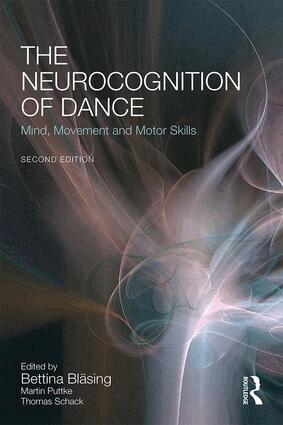
    Neurocognition of Dance

    Mind, Movement and Motor Skills

    AvBettina Bläsing

    Inbunden, Engelska, 2018

    2 493 kr

    Beställningsvara. Skickas inom 10-15 vardagar. Fri frakt över 249 kr.

    Beskrivning

    Dance has always been an important aspect of all human cultures, and the study of human movement and action has become a topic of increasing relevance over the last decade, bringing dance into the focus of the cognitive sciences. Since the first edition of The Neurocognition of Dance was published, research into the cognitive science of dance has expanded extensively, with the number of scientific studies focusing on dance and dance-related topics in cognitive psychology growing significantly.Featuring three new chapters addressing topics that have become highly relevant to the field in recent years – neuroaesthetics, entrainment, and choreographic cognition – as well as progress in teaching based on novel methods, this comprehensively revised and updated new edition of The Neurocognition of Dance is full of cutting-edge insights from scientists, researchers, and professionals from the world of dance.Also now including online material such as links to video clips, colour images and hands-on material for practical application, this book is an essential companion for students and professionals from fields including dance, cognitive psychology, sport psychology and sport science, movement science, and cognitive robotics.
    Produktinformation

    • Utgivningsdatum:2018-07-23
    • Mått:156 x 234 x 25 mm
    • Vikt:750 g
    • Format:Inbunden
    • Språk:Engelska
    • Antal sidor:304
    • Upplaga:2
    • Förlag:Taylor & Francis Ltd
    • ISBN:9781138847859

    Utforska kategorier

    • Dansböcker inom Kultur
    • Biovetenskap inom Naturvetenskap och teknik
    • Biologisk psykologi och neuropsykologi inom Psykologi och pedagogik

    Mer om författaren

    Bettina Bläsing is a Responsible Investigator at the Center of Excellence Cognitive Interaction Technology (CITEC) at Bielefeld University, Germany. She studied Biology at Bielefeld University and Animal Behaviour at the University of Edinburgh, Scotland. Bettina worked as science journalist and editor, as scientific coordinator at the University of Leipzig and as a postdoctoral researcher at the Max Planck Institute for Evolutionary Anthropology before joining the Neurocognition and Action Research Group at Bielefeld University in 2006. Her main research interests are mental representations of movement, body and space, the control and learning of complex full body movements and manual actions, and expertise in sports and dance. Martin Puttke was formerly a dancer, headmaster and artistic director of the State Ballet School Berlin. He was also the ballet director of the State Opera Ballet Company Berlin and of the Aalto Ballett Theater Essen. He is a renowned ballet pedagogue. In 1988 he became a Professor at the Hochschule für Schauspielkunst 'Ernst Busch' Berlin. His main interest is the renewal of the school of classical dance by his new system DANAMOS.Thomas Schack is Professor and Head of the Neurocognition and Action Research Group at Bielefeld University. He is Principal Investigator at the Center of Excellence Cognitive Interaction Technology (CITEC) and member of the Research Institute for Cognition and Robotics (CoR-Lab). His main research interests concern mental movement representation, mental training, cognitive robotics and the neurocognitive basis of complex movement.

    Innehållsförteckning

    • Ipke Wachsmuth: Foreword for the first editionFreya Vass-Rhee: Foreword for the second editionBettina Bläsing, Martin Puttke & Thomas Schack: Introduction: Moving towards a multidisciplinary neuro-cognitive science of dancePart II: The dance perspectiveMartin Puttke: Learning to dance means learning to think!Galeet BenZion: The Kinematics Teaching Methodology: Marrying kinesthetic stimuli with reading instructionElizabeth Waterhouse: In-Sync: Entrainment in danceGregor Zöllig: Searching for that 'other land of dance': The phases in developing a choreographyScott deLahunta & Philip Barnard: Seeing the ‘choreographic mind’: Three analytic lenses developed to probe and notate creative thinking in dancePart II: The science perspectiveThomas Schack: Building blocks and architecture of dance: a cognitive–perceptual perspectiveDavid A. Rosenbaum: Shall we dance again? Action researchers and dancers can move togetherHolk Cruse & Malte Schilling: Getting cognitiveBettina Bläsing: The dancer’s memory: learning with the body from the remembered, the percieved and the imaginedPart III: Neurocognitive Studies of DanceBeatriz Calvo-Merino: Neural mechanisms for seeing danceEmily S. Cross: Building a dance in the human brain: Insights from expert and novice dancersGuido Orgs, Beatriz Calvo-Merino & Emily S. Cross: Knowing dance or knowing how to dance? Sources of expertise in aesthetic appreciation of human movement.Corinne Jola: Choreographed science: Merging dance and cognitive neuroscience