• Fri frakt över 249 kr
  • •
  • Snabba leveranser
  • •
  • Billiga böcker
Kundservice

Du är på sajten för privatpersoner.

Företag, bibliotek eller offentlig verksamhet?

Du handlar på classic.bokus.com, där alla dina funktioner finns intakta.
Till classic.bokus.com
Bokus logotyp. Gå till startsidan.
  • Erbjudanden
  • Student
  • Topplistor
  • Barn & ungdom
  • Bokus Play
  • E-böcker
  • Ljudböcker
  • Pocketböcker
  • Spel och pussel

Pocketfynda! Hundratals böcker för 49 kr/st →

Sidfot

Mina sidor

    Hjälp

    • Kundservice
    • Vanliga frågor och svar
    • Frakt och leverans
    • Retur vid ångerrätt
    • Reklamera vara
    • Betalning
    • Köpvillkor
    • Allmänna villkor
    • Information om webbplatsens tillgänglighet

    Om Bokus

    • Om oss
    • Pressrum
    • För studenter
    • För företag
    • För bibliotek och offentlig verksamhet
    • För leverantörer
    • Hållbarhet

    Populärt

    • Aktuella erbjudanden
    • Presentkort
    • Studentlitteratur
    • Nya böcker
    • Topplistor
    • Signerade böcker
    • Engelska böcker

    Inspiration

    • Boktips
    • BookTok
    • Barnbokskaraktärer
    • Populära författare
    Logotyp för Bokus
    Följ oss på Facebook (extern länk)Följ oss på Instagram (extern länk)Följ oss på YouTube (extern länk)Följ oss på TikTok (extern länk)
    bokus @ CookiesAnpassa cookiesIntegritetspolicyKöpvillkor
    Till Citymail hemsida (extern länk)Till Budbee hemsida (extern länk)Till Postnord hemsida (extern länk)Till Schenker hemsida (extern länk)Till Early Bird hemsida (extern länk)Till Walleys hemsida (extern länk)
    1. Samhälle och politik
    2. Samhälle och kultur
    3. Kultur och medier
    4. Medievetenskap

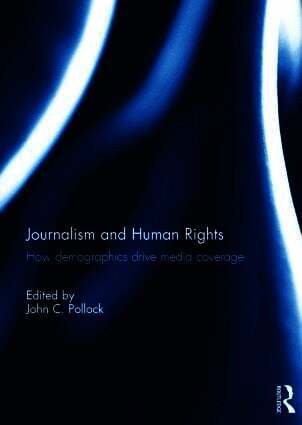
    Journalism and Human Rights

    How Demographics Drive Media Coverage

    AvJohn Pollock

    Inbunden, Engelska, 2015

    2 410 kr

    Beställningsvara. Skickas inom 10-15 vardagar. Fri frakt över 249 kr.

    Beskrivning

    This book is the first collection of original research to explore links between demographics and media coverage of emerging human rights issues. It covers cross-national reporting on human trafficking, HIV/AIDS, water contamination, and child labour; and same-sex marriage, Guantanamo detainee rights, immigration reform, and post-traumatic stress disorder in the United States. The research asks questions such as: What are the principal catalysts that propel rights issues into media agendas? Why do some surface more quickly than others? And how do the demographics of cross-national reporting differ from those driving multi-city US nationwide coverage of rights claims? Using community structure theory and innovative Media Vector content analysis, the eight chapters of this book reveal three striking patterns that show how differences in female empowerment, social or economic vulnerability, and Midwestern newspaper geographic location, link powerfully with variations in coverage of rights issues. The patterns connecting demographics and rights claims confirm that coverage of human rights can mirror the concerns of stakeholders and vulnerable groups, contrary to conventional assumptions that media typically serve as "guard dogs" reinforcing the interests of political and economic elites.This book was originally published as a special issue of The Atlantic Journal of Communication.

    Produktinformation

    • Utgivningsdatum:2015-03-26
    • Mått:174 x 246 x undefined mm
    • Vikt:476 g
    • Format:Inbunden
    • Språk:Engelska
    • Antal sidor:182
    • Förlag:Taylor & Francis Ltd
    • ISBN:9781138857896

    Utforska kategorier

    • Medievetenskap inom Samhälle och politik
    • Referensverk och tvärvetenskap inom Samhälle och politik
    • Sociologi inom Samhälle och politik

    Mer om författaren

    John C. Pollock (Ph.D. Stanford) is Professor of communication studies at The College of New Jersey, Ewing Township, NJ. He is the author of Tilted Mirrors: Media Alignment with Political and Social Change – a Community Structure Approach (2007) and edited Media and Social Inequality: Innovations in Community Structure Research (2013, 2014). He is a media sociologist and pursues interests in health communication and media and human rights.

    Recensioner i media

    "Pollock and his associates show that variations in human rights coverage are related to several demographic characteristics of the cities or the countries newspapers serve. Notably, cross-national studies demonstrate that country-level indicators of female empowerment, such as female school life expectancy and female literacy rate, play a pivotal role in explaining country-level variations in human rights coverage. Equally important are findings from U.S. nationwide multi-city studies showing that newspapers favorably cover the interests of vulnerable or marginal social groups. For example, newspaper coverage of same-sex marriage was found to be more favorable in communities with a greater number of organizations marketing to the lesbian, gay, bisexual, and transgender (LGBT) community" - Masahiro Yamamoto, Journalism & Mass Communication Quarterly"The overall patterns of results reported in the book supports the theoretical proposition that the media have the ability to produce content that can challenge dominant elites and value systems and accommodate the needs of stakeholders and vulnerable. The theoretical and methodological coherence, coupled with examinations of diverse human rights issues, adds to the robustness of the proposition." - Masahiro Yamamoto, Journalism & Mass Communication Quarterly"The authors seek to answer this question: How can the makeup of society influence media coverage of some of the biggest humanitarian challenges in the contemporary world? The authors look into demographical factors in analyzing news content across both developing countries and major U.S. cities, revealing major insights on emerging human rights issues." - Soomin Seo, Journal of Communication"The comparative framework...thus allows them to compare patterns in human rights coverage in countries with different demographic traits. By doing so, the book provides an important contribution to comparative cross-national research in media studies" - Soomin Seo, Journal of Communication "Hopefully, this will inspire the next generation of communication scholars to follow suit and dig deep into the world of comparative human rights research." - Soomin Seo, Journal of Communication

    Innehållsförteckning

    • Preface Overview: Illuminating Human Rights: How Demographics Drive Media Coverage Part I: Cross-National Coverage of Human Rights 1. Cross-National Coverage of Human Trafficking: A Community Structure Approach 2. Cross-national Coverage of HIV/AIDS: A Community Structure Approach 3. Cross-National Coverage of Water Handling: A Community Structure Approach 4. Cross-National Coverage of Child Labor: A Community Structure Approach Part II: Multi-city US Nationwide Coverage of Human Rights 5. Nationwide Coverage of Same-Sex Marriage: A Community Structure Approach 6. Nationwide Coverage of Detainee Rights at Guantanamo: A Community Structure Approach 7. Nationwide Coverage of Immigration Reform: A Community Structure Approach 8. Nationwide Coverage of Post-Traumatic Stress: A Community Structure Approach