• Fri frakt över 249 kr
  • •
  • Snabba leveranser
  • •
  • Billiga böcker
Kundservice

Du är på sajten för privatpersoner.

Företag, bibliotek eller offentlig verksamhet?

Du handlar på classic.bokus.com, där alla dina funktioner finns intakta.
Till classic.bokus.com
Bokus logotyp. Gå till startsidan.
  • Erbjudanden
  • Nyheter
  • Student
  • Topplistor
  • Barn & ungdom
  • Bokus Play
  • E-böcker
  • Pocketböcker
  • Spel & pussel

10% rabatt på allt med kod: NYSTART10 →

Sidfot

Mina sidor

    Hjälp

    • Kundservice
    • Vanliga frågor och svar
    • Frakt och leverans
    • Retur vid ångerrätt
    • Reklamera vara
    • Betalning
    • Köpvillkor
    • Allmänna villkor
    • Information om webbplatsens tillgänglighet

    Om Bokus

    • Om oss
    • Pressrum
    • För studenter
    • För företag
    • För bibliotek och offentlig verksamhet
    • För leverantörer
    • Hållbarhet

    Populärt

    • Aktuella erbjudanden
    • Presentkort
    • Studentlitteratur
    • Nya böcker
    • Topplistor
    • Signerade böcker
    • Engelska böcker

    Inspiration

    • Boktips
    • BookTok
    • Populära bokserier
    • Barnbokskaraktärer
    • Populära författare
    Logotyp för Bokus
    Följ oss på Facebook (extern länk)Följ oss på Instagram (extern länk)Följ oss på YouTube (extern länk)Följ oss på TikTok (extern länk)
    bokus @ CookiesAnpassa cookiesIntegritetspolicyKöpvillkor
    Till Citymail hemsida (extern länk)Till Budbee hemsida (extern länk)Till Postnord hemsida (extern länk)Till Schenker hemsida (extern länk)Till Early Bird hemsida (extern länk)Till Walleys hemsida (extern länk)
    1. Samhälle och politik
    2. Politik och statsskick
    3. Internationella relationer

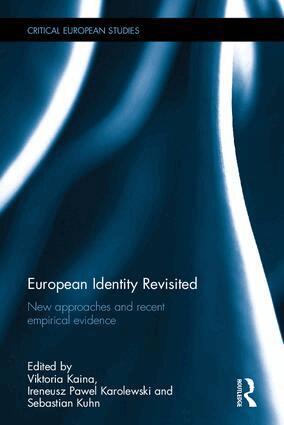
    European Identity Revisited

    New approaches and recent empirical evidence

    AvViktoria Kaina,Ireneusz Pawel Karolewski

    Inbunden, Engelska, 2015

    Del i serien Critical European Studies

    2 421 kr

    Beställningsvara. Skickas inom 10-15 vardagar. Fri frakt över 249 kr.

    Beskrivning

    It has been argued that the emergence of a European collective identity would help overcome growing disparity caused by the increasing diversity of today’s European Union, with 28 member states and more than 500 million people.Research on European integration is facing the pressing question of what holds ‘Europe’ together in times of crisis, growing distributional conflict and instability in its neighbourhood. This book departs from the ideas of group cohesion in the EU, and reflects on the newest dynamics and practices of European identity. Whilst applying innovative qualitative, quantitative and experimental research methods and an interdisciplinary approach, this volume looks at a variety of issues such as European citizenship, mobility of European citizens, space-based identities, dual identities, student identity and value-sharing. In doing so, this volume presents new perspectives on this complex and dynamic subject and points to potential solutions both in the academic discourse and the political practice of the EU.This text will be of key interest to scholars and students of European integration, European studies, international relations, citizenship studies, political sociology as well as more broadly in the social sciences.

    Produktinformation

    • Utgivningsdatum:2015-12-17
    • Mått:156 x 234 x 21 mm
    • Vikt:544 g
    • Format:Inbunden
    • Språk:Engelska
    • Serie:Critical European Studies
    • Antal sidor:286
    • Förlag:Taylor & Francis Ltd
    • ISBN:9781138886360

    Utforska kategorier

    • Internationella relationer inom Samhälle och politik
    • Kulturvetenskap inom Samhälle och politik
    • Politiskt förtryck inom Samhälle och politik

    Mer om författaren

    Viktoria Kaina is Full Professor and holds the Chair of Political Science I: State and Governance at the University of Hagen. Ireneusz P. Karolewski is Professor and holds the Chair of Political Science at the Willy Brandt Centre for German and European Studies, at the University of Wroclaw. He is also Adjunct Professor at the Chair of Political Theory, University of Potsdam. Sebastian Kuhn is Research Assistant and Lecturer at the Chair of Political Science I: State and Governance at the University of Hagen.

    Innehållsförteckning

    • Preface Viktoria Kaina and Ireneusz Pawel Karolewski Introduction Ireneusz Pawel Karolewski, Viktoria Kaina and Sebastian Kuhn PART I Theorizing European identity: Recent conceptual perspectives 1 The citizenship-identity nexus in the EU revisited Ireneusz Pawel Karolewski 2 Theorizing European identity: Contributions to constructivist IR debates on collective identity Bahar Rumelili and Münevver Cebeci 3 European identity after Ockham’s razor: European identification Jochen Roose PART II Measuring European identity: New methodological outlooks 4 European Union symbols under threat: Identity considerations Laura Cram and Stratos Patrikios 5 Experimental exposure to the EU energy label: Trust and implicit identification with the EU Philipp Heinrich 6 A Europeanization of identities? Quantitative analysis of space-based collective identities in Europe Katharina Cirlanaru PART III Explaining European identity: fresh empirical evidence 7 Crisis, resilience and EU citizenship: collective identifications of EU migrants in Norway and Denmark Deniz Neriman Duru, Asimina Michaildou and Hans-Jörg Trenz 8 Dual identity and its mechanisms: national and European identity in the Italo-Slovene border area Simona Guglielmi 9 Does immigration contribute to the formation of a European identity? A multi-level analysis in Western Europe Hannes Weber 10 European identity and diffuse support for the European Union in a time of crisis: What can we learn from University students? Kristine Mitchell 11 Commonality and EU identification: The perception of value sharing as a foundation of European identity Tuuli-Marja Kleiner and Nicola Bücker 12 Building ‘us’, and constructing ‘them’: Mass European identity building and the problem of inside-outside-definitions Viktoria Kaina and Sebastian Kuhn ‘In search of the unknown’– An essay on the need of non-knowledge in European identity research Viktoria Kaina