• Fri frakt över 249 kr
  • •
  • Snabba leveranser
  • •
  • Billiga böcker
Kundservice

Du är på sajten för privatpersoner.

Företag, bibliotek eller offentlig verksamhet?

Du handlar på classic.bokus.com, där alla dina funktioner finns intakta.
Till classic.bokus.com
Bokus logotyp. Gå till startsidan.
  • Erbjudanden
  • Nyheter
  • Student
  • Topplistor
  • Barn & ungdom
  • Bokus Play
  • E-böcker
  • Pocketböcker
  • Spel & pussel

10% rabatt på allt med kod NYSTART10 →

Sidfot

Mina sidor

    Hjälp

    • Kundservice
    • Vanliga frågor och svar
    • Frakt och leverans
    • Retur vid ångerrätt
    • Reklamera vara
    • Betalning
    • Köpvillkor
    • Allmänna villkor
    • Information om webbplatsens tillgänglighet

    Om Bokus

    • Om oss
    • Pressrum
    • För studenter
    • För företag
    • För bibliotek och offentlig verksamhet
    • För leverantörer
    • Hållbarhet

    Populärt

    • Aktuella erbjudanden
    • Presentkort
    • Studentlitteratur
    • Nya böcker
    • Topplistor
    • Signerade böcker
    • Engelska böcker

    Inspiration

    • Boktips
    • BookTok
    • Populära bokserier
    • Barnbokskaraktärer
    • Populära författare
    Logotyp för Bokus
    Följ oss på Facebook (extern länk)Följ oss på Instagram (extern länk)Följ oss på YouTube (extern länk)Följ oss på TikTok (extern länk)
    bokus @ CookiesAnpassa cookiesIntegritetspolicyKöpvillkor
    Till Citymail hemsida (extern länk)Till Budbee hemsida (extern länk)Till Postnord hemsida (extern länk)Till Schenker hemsida (extern länk)Till Early Bird hemsida (extern länk)Till Walleys hemsida (extern länk)
    1. Psykologi och pedagogik
    2. Pedagogik
    3. Pedagogisk teori och filosofi

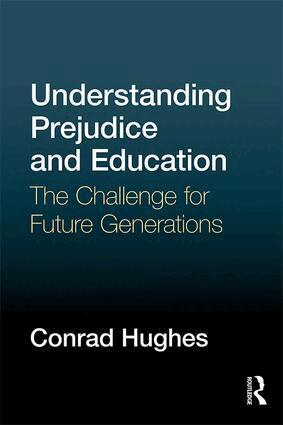
    Understanding Prejudice and Education

    The challenge for future generations

    AvConrad Hughes

    Häftad, Engelska, 2016

    648 kr

    Beställningsvara. Skickas inom 10-15 vardagar. Fri frakt över 249 kr.

    Fler format och utgåvor

    Inbunden

    2 355 kr

    E-bok

    766 kr

    E-bok

    768 kr

    Beskrivning

    What is prejudice in the 21st Century and how can education help to reduce it?This original text discusses prejudice in detail, offering a clear analysis of research and theory on prejudice and prejudice reduction, drawn from findings in social psychology, critical thinking and education. Presenting the underlying principle that prejudice can be reduced through the development of four core attributes – empathy, understanding, cognitive flexibility and metacognitive thought – the book offers effective educational strategies for preparing young people for life.Chapters explore a range of examples of classroom practice and provide a thorough engagement with the minefield of prejudice, set against challenging sociological, ideological, political and cultural questions. An integrative framework is included that can be adapted and adopted in schools, synthesising findings and emphasising the need for individuals and groups to work against preconceived beliefs and emotional reactions to situations, offering contra-intuitive, rational and affective responses. Understanding Prejudice and Education is essential reading for all those engaged in relevant undergraduate, Master’s level and postgraduate courses in education, social psychology and cultural studies, as well as teachers and school leaders interested in developing strategies to reduce prejudice in their schools.

    Produktinformation

    • Utgivningsdatum:2016-09-01
    • Mått:156 x 234 x 13 mm
    • Vikt:376 g
    • Format:Häftad
    • Språk:Engelska
    • Antal sidor:234
    • Förlag:Taylor & Francis Ltd
    • ISBN:9781138928602

    Utforska kategorier

    • Pedagogisk teori och filosofi inom Psykologi och pedagogik
    • Socialpsykologi och gruppsykologi inom Psykologi och pedagogik
    • Diskriminering och rättvisa inom Samhälle och politik

    Mer om författaren

    Conrad Hughes is Director of La Grande Boissière, the International School of Geneva, Switzerland. He has published and worked with UNESCO, the United World Colleges and the International Baccalaureate.

    Recensioner i media

    Conrad Hughes does us a real service in providing a very well-founded understanding of prejudice. But he goes further, and takes it beyond inert knowledge into cogent classroom practice aimed at countering prejudice, changing pernicious beliefs, and developing values which pay more than lip-service to this fundamental human right. This is a book for all teachers and those who train them.Professor Doug Newton, Durham University, UKConrad Hughes’ work is an original and profound contribution to academic literature in the field of education. He investigates a problem that is at once age-old and extremely contemporary: how to transform inequality and discrimination and by which intellectual, educational and pedagogical means. This book opens new theoretical and practical perspectives for critically-minded educators working in multicultural contexts.Professor Abdeljalil Akkari, University of Geneva, Switzerland Few writers could have a more suitable preparation for writing this book than Conrad Hughes...Critical thinking, a speciality of the author, is offered as a tool for clarifying and refining one's own thoughts and assumptions... These intangible topics are treated with all the competence and care one would expect from an authority on the IB's Theory of Knowledge programme.Richard Pearce, International Schools Journal, Vol XXXVII No. 2 April 2018

    Innehållsförteckning

    • 1. Introduction – Situating Education and Prejudice Part One: Reducing Prejudice in the Individual 2. Understanding Beyond the Other - Bridges Across Prejudice 3. Critical Thinking and Prejudice 4. Metacognition as a Strategy for Recognising and Controlling Prejudice 5. Empathy and the Search for Common Humanity in the Face of Prejudice Part Two: The Conditions Necessary for Prejudice Reduction 6. The Contact Hypothesis as a Strategy against Prejudice 7. Learning to Live Together through the Principles of International Education Part Three: A Framework for Schools 8. A Prejudice Reduction Framework for Schools 9. Conclusion - 21st Century Challenges to Education and Prejudice