• Fri frakt över 249 kr
  • •
  • Snabba leveranser
  • •
  • Billiga böcker
Kundservice

Du är på sajten för privatpersoner.

Företag, bibliotek eller offentlig verksamhet?

Du handlar på classic.bokus.com, där alla dina funktioner finns intakta.
Till classic.bokus.com
Bokus logotyp. Gå till startsidan.
  • Erbjudanden
  • Nyheter
  • Student
  • Topplistor
  • Barn & ungdom
  • Bokus Play
  • E-böcker
  • Pocketböcker
  • Spel & pussel

10% rabatt på allt med kod: NYSTART10 →

Sidfot

Mina sidor

    Hjälp

    • Kundservice
    • Vanliga frågor och svar
    • Frakt och leverans
    • Retur vid ångerrätt
    • Reklamera vara
    • Betalning
    • Köpvillkor
    • Allmänna villkor
    • Information om webbplatsens tillgänglighet

    Om Bokus

    • Om oss
    • Pressrum
    • För studenter
    • För företag
    • För bibliotek och offentlig verksamhet
    • För leverantörer
    • Hållbarhet

    Populärt

    • Aktuella erbjudanden
    • Presentkort
    • Studentlitteratur
    • Nya böcker
    • Topplistor
    • Signerade böcker
    • Engelska böcker

    Inspiration

    • Boktips
    • BookTok
    • Populära bokserier
    • Barnbokskaraktärer
    • Populära författare
    Logotyp för Bokus
    Följ oss på Facebook (extern länk)Följ oss på Instagram (extern länk)Följ oss på YouTube (extern länk)Följ oss på TikTok (extern länk)
    bokus @ CookiesAnpassa cookiesIntegritetspolicyKöpvillkor
    Till Citymail hemsida (extern länk)Till Budbee hemsida (extern länk)Till Postnord hemsida (extern länk)Till Schenker hemsida (extern länk)Till Early Bird hemsida (extern länk)Till Walleys hemsida (extern länk)
    1. Juridik
    2. Särskilda rättsområden
    3. Offentlig rätt

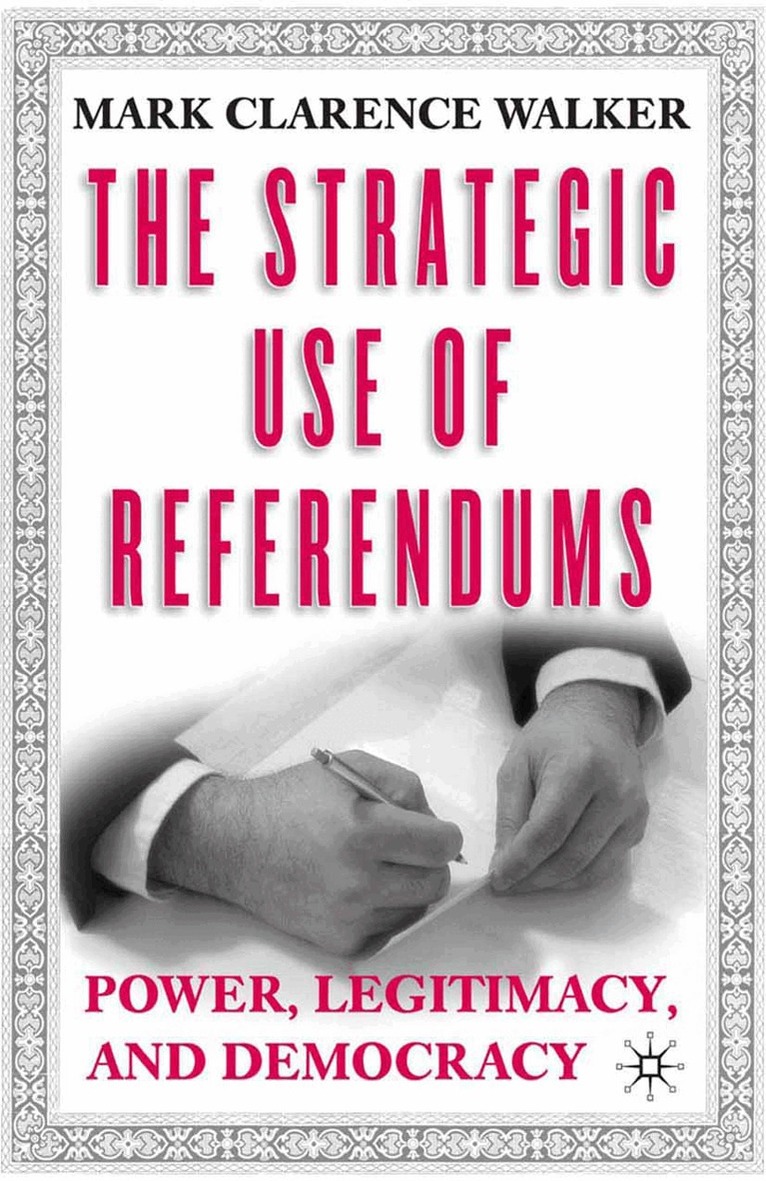
    Strategic Use of Referendums

    Power, Legitimacy, and Democracy

    AvM. Walker

    Häftad, Engelska, 2003

    547 kr

    Beställningsvara. Skickas inom 10-15 vardagar. Fri frakt över 249 kr.

    Fler format och utgåvor

    Inbunden

    547 kr

    E-bok

    694 kr

    Beskrivning

    The strategic use of referendums by leaders often confers legitimacy but it may also reflect the power struggle between leaders, groups, and institutions and in doing so not provide a democratic result for the citizenry of a country.

    Produktinformation

    • Utgivningsdatum:2003-08-02
    • Mått:140 x 216 x 10 mm
    • Vikt:220 g
    • Format:Häftad
    • Språk:Engelska
    • Antal sidor:156
    • Förlag:Palgrave Macmillan
    • ISBN:9781349527014

    Utforska kategorier

    • Offentlig rätt inom Juridik
    • Statsvetenskap och politisk teori inom Samhälle och politik
    • Filosofiska discipliner inom Filosofi och religion

    Mer om författaren

    Mark Walker is Assistant Professor, School of International Service, American University.

    Recensioner i media

    "Walker's study is a valuable contribution to our thinking about the role of referendums in late-communist and post-communist regimes as well as France and Chile. Walker deftly examines the bargaining and power relations among institutions that generate such referendums, the results of the popular votes, and the implications of these factors for our thinking about leadership, democracy, and popular will. The book is very well written and a pleasure to read." - George W. Breslauer, Professor of Political Science, Dean of Social Sciences, University of California at Berkeley "This excellent comparative work is very thorough...This analysis is quite credible, and Walker has built a very convincing case with his examples from these four countries... Mark Walker has done an excellent job in thoroughly describing the strategic aspect of referenda in four different contexts; it is to his credit that he raises many other issues in the process of this extensive and provocative analysis." - Priscilla L. Southwell, Professor of Political Science & Associate Dean of Social Sciences, University of Oregon, in Perspectives on Politics "The Strategic Use of Referendums...is a brief but informative book that contributes to several literatures, including work on leadership, comparative legislative-executive relations, and the post-Soviet states. In it, Walker places the leader who desires to increase his power (especially vis-a'-vis the legislative branch of government) at center stage and builds a theory about how the referendum can be used for that purpose." - Andrea K. Grove, Department of Political Science and Peace Studies Program, Westminster College, in International Studies Review