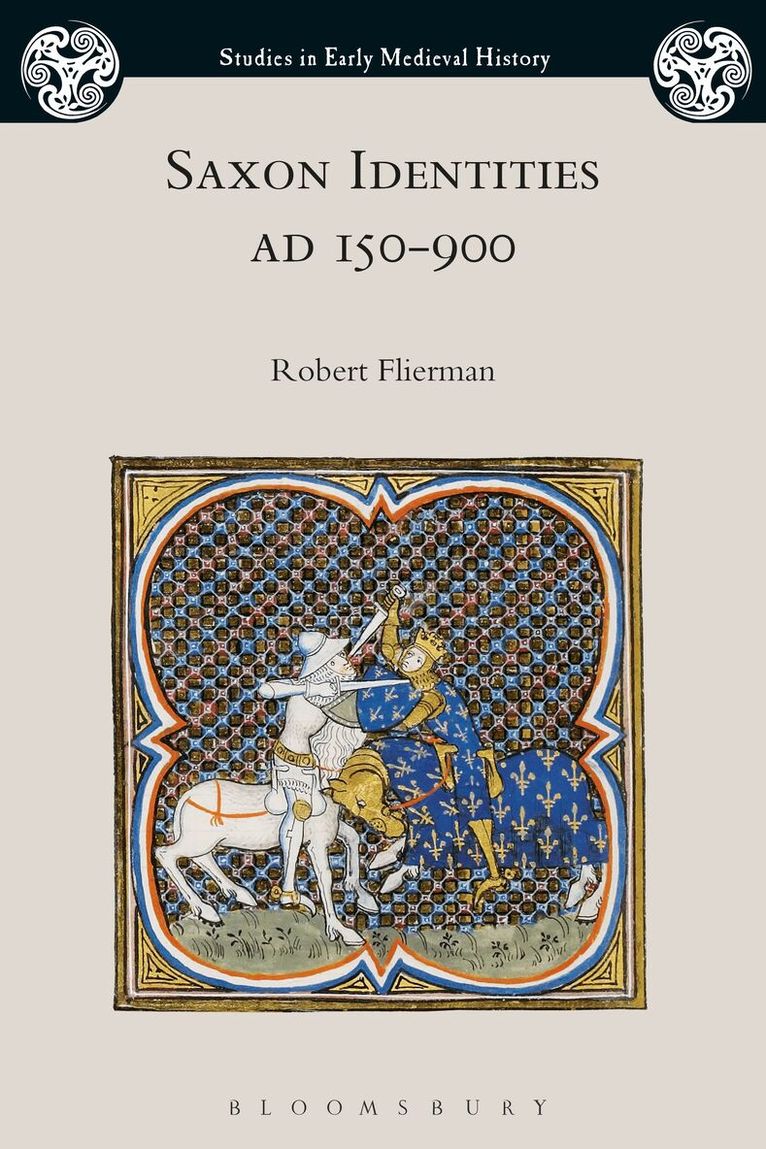
Häftad, Engelska, 2019
Saxon Identities, AD 150–900
Del i serien Studies in Early Medieval History
512 kr
Beställningsvara. Skickas inom 10-15 vardagar. Fri frakt över 249 kr.
Fler format och utgåvor
Beskrivning
Produktinformation
- Utgivningsdatum: 2019-01-24
- Mått: 156 x 234 x 22 mm
- Vikt: 413 g
- Format: Häftad
- Språk: Engelska
- Serie: Studies in Early Medieval History
- Antal sidor: 288
- Förlag: Bloomsbury Publishing PLC
- ISBN: 9781350098923
Utforska kategorier
Mer om författaren
Robert Flierman is Assistant Professor in Medieval History at the Radboud Universiteit Nijmegen, The Netherlands.
Recensioner i media
Robert Flierman’s original discussion of perceptions of the people labelled ‘Saxons’ in antiquity and the early middle ages neatly and convincingly addresses texts as instruments of identity formation. The development of views of the Saxons as disparate groups of ‘barbarian’ outsiders in Roman texts to their being regarded, in Merovingian sources at least, as a well-defined people, is traced authoritatively. The book culminates in the role of the Saxons in Carolingian war narratives and Saxon self-representation. Flierman's book is not only an important and engaging contribution to the debate about ethnicity in the barbarian successor kingdoms of Europe. It also represents a timely challenge to the assumptions of a link between textual representation and ethnic reality.
Betyg & recensioner
0 recensioner
Inga recensioner tillgängliga.