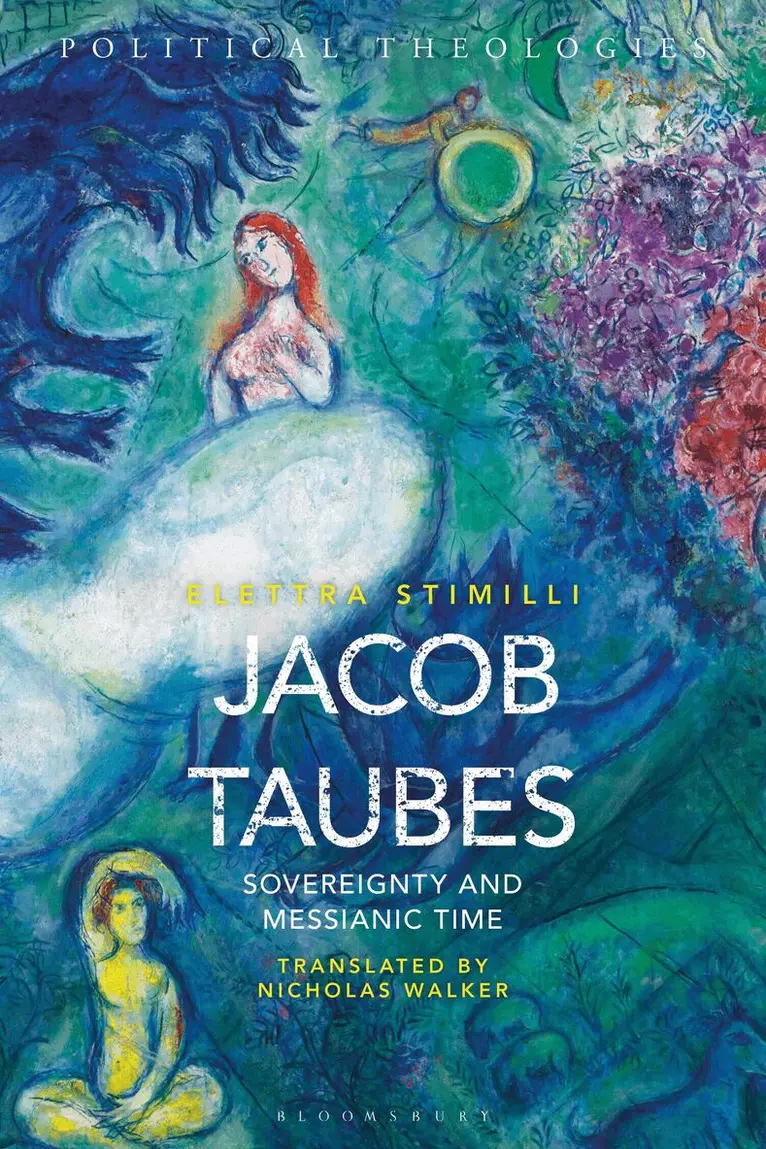
Inbunden, Engelska, 2027
Jacob Taubes
Sovereignty and Messianic Time
Av Elettra Stimilli, Arthur Bradley, Antonio Cerella
Del i serien Political Theologies
1186 kr
Kommande
Beskrivning
Produktinformation
- Utgivningsdatum: 2027-02-04
- Mått: 156 x 234 x 25 mm
- Vikt: 454 g
- Format: Inbunden
- Språk: Engelska
- Serie: Political Theologies
- Antal sidor: 240
- Förlag: Bloomsbury Publishing PLC
- ISBN: 9781350104785
Utforska kategorier
Mer om författaren
Elettra Stimilli is Professor of Theoretical Philosophy in the Department of Philosophy at the Sapienza University of Rome, Italy. She is the author of The Debt of the Living (2017), Debt and Guilt (2018), Philosophy of the Means for a New Politics of Bodies (2026) and the co-editor, with Dario Gentili and Glenda Garelli, of Italian Critical Thought (2018).
Recensioner i media
The English translation, Jacob Taubes, Sovereignty and Messianic Time, brings to the English-speaking world Elettra Stimilli’s brilliant analysis of Jacob Taubes’s entire corpus of work. Beginning with his 1947 book, Occidental Eschatology and relying on his massive correspondence, lecture courses, and essays from the 1940’s to the final years of his life, Stimilli argues for the consistency and coherence of Taubes’s thought which she shows is organized around four central concerns:1) eschatology and the logic of messianism, 2) philosophy of history, 3) ontology and theology, and 4) political theology. Most remarkable and a major contribution is her analysis running throughout the book of Taubes’s long engagement with Schmitt through letters, seminars, and visits to Plattenburg. Equally important is her extended analysis of Taubes’s ontological approach to theology emerging from his life-long engagement with Heidegger. And, finally, she shows the importance of Benjamin’s concept of history for Taubes’s struggle to think a notion of messianic time that remains tied to the concrete and worldly situation. Along the way, she shows the influence of Taubes on thinkers as far-ranging as Rosenzweig, Weber, Lyotard, and Sloterdijk. Without question, Stimilli’s work is a major tour de force, leaving no stone unturned in its analysis of Taubes’s thought. The English translation from the Italian is excellent.
Betyg & recensioner
0 recensioner
Inga recensioner tillgängliga.