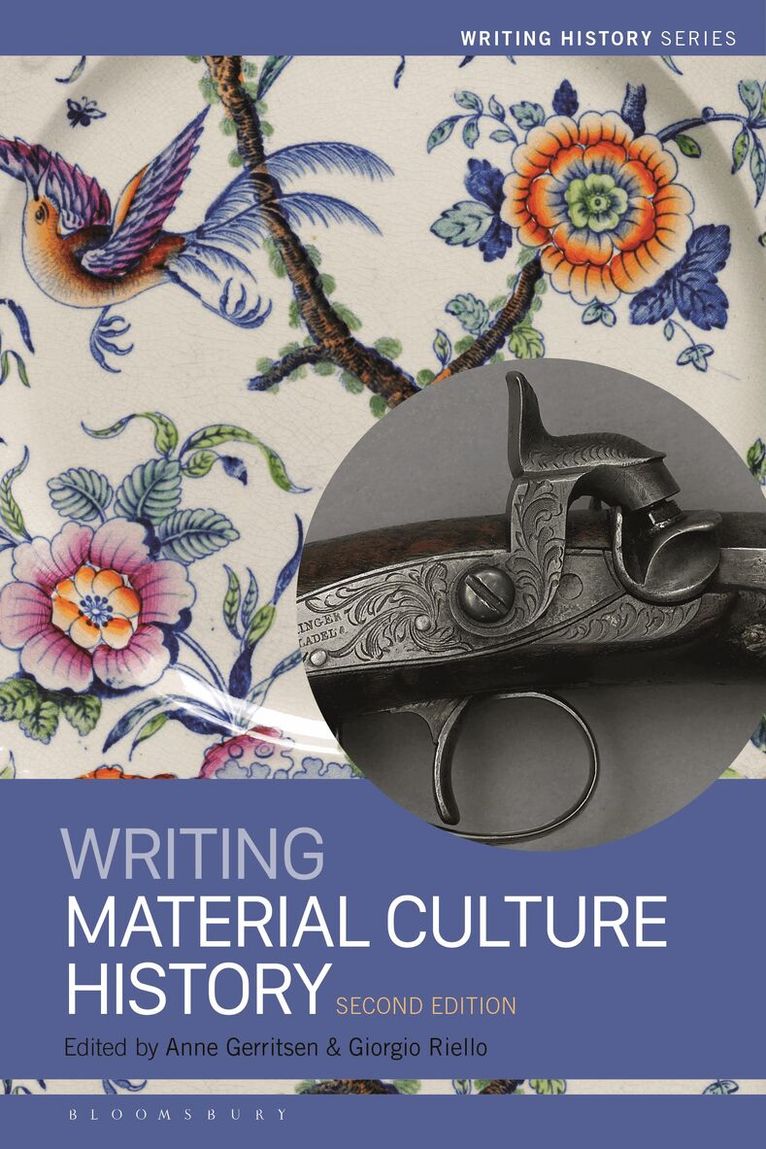
Häftad, Engelska, 2021
Writing Material Culture History
Av Anne Gerritsen, Giorgio Riello
Del i serien Writing History
407 kr
Beställningsvara. Skickas inom 7-10 vardagar. Fri frakt över 249 kr.
Fler format och utgåvor
Beskrivning
Produktinformation
- Utgivningsdatum: 2021-02-11
- Mått: 155 x 231 x 28 mm
- Vikt: 568 g
- Format: Häftad
- Språk: Engelska
- Serie: Writing History
- Antal sidor: 368
- Upplaga: 2
- Förlag: Bloomsbury Publishing PLC
- ISBN: 9781350105225
Utforska kategorier
Mer om författaren
Anne Gerritsen is Professor of History at the University of Warwick, UK. Giorgio Riello is Professor of Global History and Culture at the European University Institute and University of Warwick, UK.
Recensioner i media
Gerritsen and Riello offer us a rich and eclectic collection of essays devoted to the multiple methodologies associated with the study of material artifacts, as well as fascinating and instructive case studies of particular objects, all well-suited for undergraduate teaching and the training of future researchers. That this book should merit a second, and expanded, edition in so short a period (a scant five years) is testament to the vitality of the field of material culture studies. Noteworthy areas of new attention include the political study of objects, the material history of urban space, and the application of new technologies (3-D printing or big data for example) to the study of material culture. If historians have indeed “experienced a Damascene conversion to material culture” as Gerritsen and Riello argue, then surely they should be credited in large measure for bringing it intellectual coherence and a global reach. This book, now expanded, will be essential reading for those who join them.
Betyg & recensioner
0 recensioner
Inga recensioner tillgängliga.