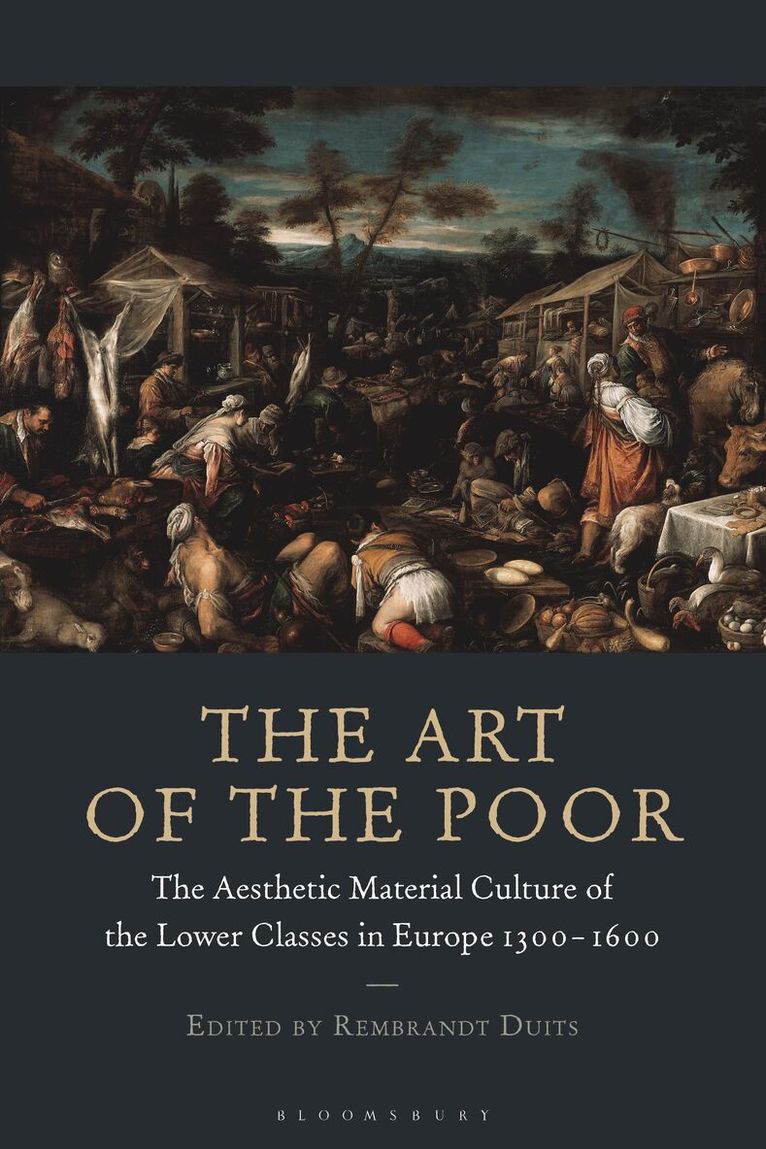
Häftad, Engelska, 2022
Art of the Poor
The Aesthetic Material Culture of the Lower Classes in Europe 1300-1600
469 kr
Beställningsvara. Skickas inom 10-15 vardagar. Fri frakt över 249 kr.
Beskrivning
Produktinformation
- Utgivningsdatum: 2022-04-21
- Mått: 154 x 232 x 20 mm
- Vikt: 460 g
- Format: Häftad
- Språk: Engelska
- Antal sidor: 310
- Förlag: Bloomsbury Publishing PLC
- Medarbetare: Rembrandt Duits
- ISBN: 9781350214576
Utforska kategorier
Mer om författaren
Rembrandt Duits is Deputy-Curator of the Photographic Collection at the Warburg Institute, London, UK.
Recensioner i media
Can we imagine the late Middle Ages and Renaissance without the sumptuous art and material culture they are known for? This book invites us to consider objects that usually linger in museum depots and are rarely depicted in catalogues and offers a new and unique assessment of the more modest, cheaper and mass-produced commodities that those who were not even moderately well-off could afford. In doing so, this collection of essays opens our eyes to the taste and aesthetic of the vast majority of people and to the everyday objects that are its witnesses. From mass-produced tableware, to pilgrim badges and from frescoes in remote villages to candlesticks, firebacks and woodcuts, the essays in this pioneering collection are treading new ground and creating a new field in the study of material culture along the way.
Betyg & recensioner
0 recensioner
Inga recensioner tillgängliga.