• Fri frakt över 249 kr
  • •
  • Snabba leveranser
  • •
  • Billiga böcker
Kundservice

Du är på sajten för privatpersoner.

Företag, bibliotek eller offentlig verksamhet?

Du handlar på classic.bokus.com, där alla dina funktioner finns intakta.
Till classic.bokus.com
Bokus logotyp. Gå till startsidan.
  • Erbjudanden
  • Nyheter
  • Student
  • Topplistor
  • Barn & ungdom
  • Bokus Play
  • E-böcker
  • Pocketböcker
  • Spel & pussel

10% rabatt på allt med kod NYSTART10 →

Sidfot

Mina sidor

    Hjälp

    • Kundservice
    • Vanliga frågor och svar
    • Frakt och leverans
    • Retur vid ångerrätt
    • Reklamera vara
    • Betalning
    • Köpvillkor
    • Allmänna villkor
    • Information om webbplatsens tillgänglighet

    Om Bokus

    • Om oss
    • Pressrum
    • För studenter
    • För företag
    • För bibliotek och offentlig verksamhet
    • För leverantörer
    • Hållbarhet

    Populärt

    • Aktuella erbjudanden
    • Presentkort
    • Studentlitteratur
    • Nya böcker
    • Topplistor
    • Signerade böcker
    • Engelska böcker

    Inspiration

    • Boktips
    • BookTok
    • Populära bokserier
    • Barnbokskaraktärer
    • Populära författare
    Logotyp för Bokus
    Följ oss på Facebook (extern länk)Följ oss på Instagram (extern länk)Följ oss på YouTube (extern länk)Följ oss på TikTok (extern länk)
    bokus @ CookiesAnpassa cookiesIntegritetspolicyKöpvillkor
    Till Citymail hemsida (extern länk)Till Budbee hemsida (extern länk)Till Postnord hemsida (extern länk)Till Schenker hemsida (extern länk)Till Early Bird hemsida (extern länk)Till Walleys hemsida (extern länk)
    1. Historia och arkeologi
    2. Arkeologi
    3. Arkeologiska perioder och områden

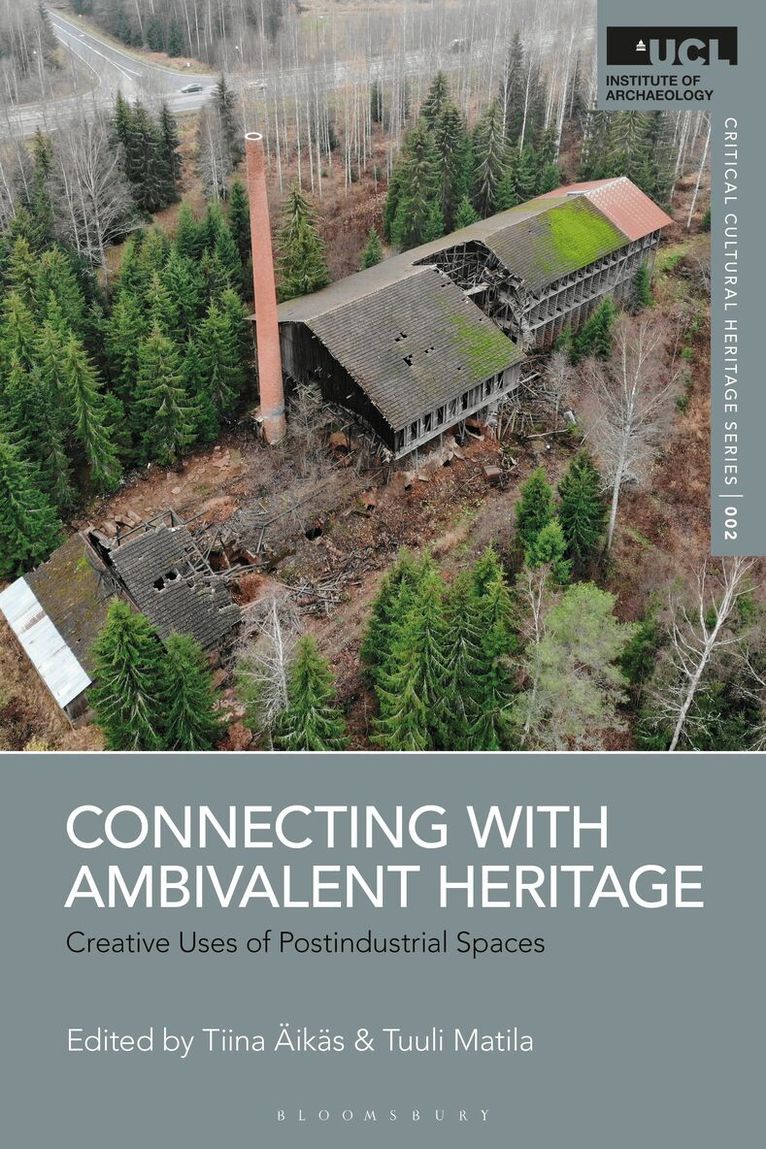
    Connecting with Ambivalent Heritage

    Creative Uses of Postindustrial Spaces

    AvTiina Äikäs,Tuuli Matila

    Inbunden, Engelska, 2024

    Del i serien UCL Critical Cultural Heritage Series

    1 366 kr

    Beställningsvara. Skickas inom 10-15 vardagar. Fri frakt över 249 kr.

    Beskrivning

    Exploring the difficult and contested sites of deindustrialized society on the brink of transformation to either heritage or wasteland, this open access volume looks at the creative ways that such sites are (re)used and suggests that they are not always merely abject or abandoned. As a result, our understanding of the meanings given to left over spaces is enhanced by an examination of the ways they are used.Ambivalent heritage sites are not always recognized for their potential, although artists and people from different recreational activities, such as industrial sites and parkour, use and experience these places in different ways. The contributors introduce fresh ideas on how to approach these sites and the people invested in them, employing multidisciplinary methodologies from archaeology and heritage studies to ethnography and sociology. Through the use of Northern-European case studies such as a former sanatorium, a prison and the Chornobyl Exclusion Zone, the reader gains a new perspective on these sites of contestation, which are cherished despite their problematic status. The conclusion is that due to the rapid societal change we are experiencing in the contemporary world, heritage professionals must start to acknowledge and deal with the difficulties that ambivalent heritage sites pose.The ebook editions of this book are available open access under a CC BY-NC-ND 4.0 licence on bloomsburycollections.com. Open access was funded by University of Oulu.

    Produktinformation

    • Utgivningsdatum:2024-09-05
    • Mått:160 x 240 x 26 mm
    • Vikt:570 g
    • Format:Inbunden
    • Språk:Engelska
    • Serie:UCL Critical Cultural Heritage Series
    • Antal sidor:264
    • Förlag:Bloomsbury Publishing PLC
    • ISBN:9781350426740

    Utforska kategorier

    • Arkeologiska perioder och områden inom Historia och arkeologi
    • Referensverk och tvärvetenskap inom Samhälle och politik
    • Miljövetenskap och miljöpolitik inom Naturvetenskap och teknik

    Mer om författaren

    Tiina Äikäs is a Senior Researcher in Archaeology at the University of Oulu, Finland. She specialises in contemporary archaeology and heritage, with an emphasis on industrial heritage and sacred places.Tuuli Matila is a Postdoctoral Researcher in Archaeology at the University of Oulu, Finland. She specializes in contemporary archaeology, heritage and representational studies.

    Recensioner i media

    This is an important collection of cutting-edge research on the politics and creative use of industrial heritage.

    Innehållsförteckning

    • List of IllustrationsList of ContributorsPrefaceAcknowledgementsIntroduction: Connecting with Ambivalent Heritage – Creative uses of Post-industrial SpacesEerika Koskinen-Koivisto (University of Jyväskylä, Finland), Tiina Äikäs (University of Oulu, Finland) and Pauliina Latvala-Harvilahti (University of Turku, Finland)1. “Renegade Care”: Conservation, Co-curation, and Heritage Place-Making in Liminal SpacesAlexa Deanne Spiwak (University of Oslo, Norway)2. Suburban Heritage as Tourist Attraction?Minni Haanpää, Maria Hakkarainen and Anu Harju-Myllyaho (University of Lapland, Finland)3. Local Activism and Agency in the Heritagisation Processes - The Case of Forests in the Paimio Sanatorium, FinlandMaija Mäki and Helena Ruotsala (University of Turku, Finland)4. Masculinity, Smokestacks and the Decline of Industry: Visualizing Industrial Heritage in Social MediaTuuli Matila (University of Oulu, Finland)5. Co-constructing Chornobyl: Investigating Visitors’ Heritage Meaning-Making through Performativity in the Chornobyl Exclusion ZoneVeera Ojala (University of Turku, Finland)6. Spiralling into a Labyrinth of Cultural Fantasies and Extractivism: Treasures, Extraordinary Undergrounds, and the ‘Temple of Lemminkäinen’ (Sipoo, Finland)Vesa-Pekka Herva (University of Oulu, Finland), Oula Seitsonen (University of Oulu, Finland), Tina Paphitis (University of Bergen, Norway), Teresa Komu (University of Lapland, Finland), Gabriel Moshenska (UCL, UK) and Risto Nurmi (University of Oulu, Finland)7. Uses of the Industrial Mining Past: The Revitalisation of Old Mines as New Outdoor Spaces in SwedenAlbina Pashkevich and Daniel Brandt (Dalarna University, Sweden)8. 8.What the Muggles Don’t See: Affordances of Abandoned Industrial Sites for HobbyistsTiina Äikäs, Marjo Juola, Oula Seitsonen (University of Oulu, Finland) and Gabriel Moshenska (UCL, UK)9. Photo Essay: Remaining without Preservation: The Zombie Standing of Kino Rodina in EstoniaFrancisco Martinez (Estonian Academy of Arts, Estonia)10. Discussion: The Discomforting Appeal of Ambivalent Heritage Hilary Orange (Swansea University, UK)NotesBibliographyIndex